
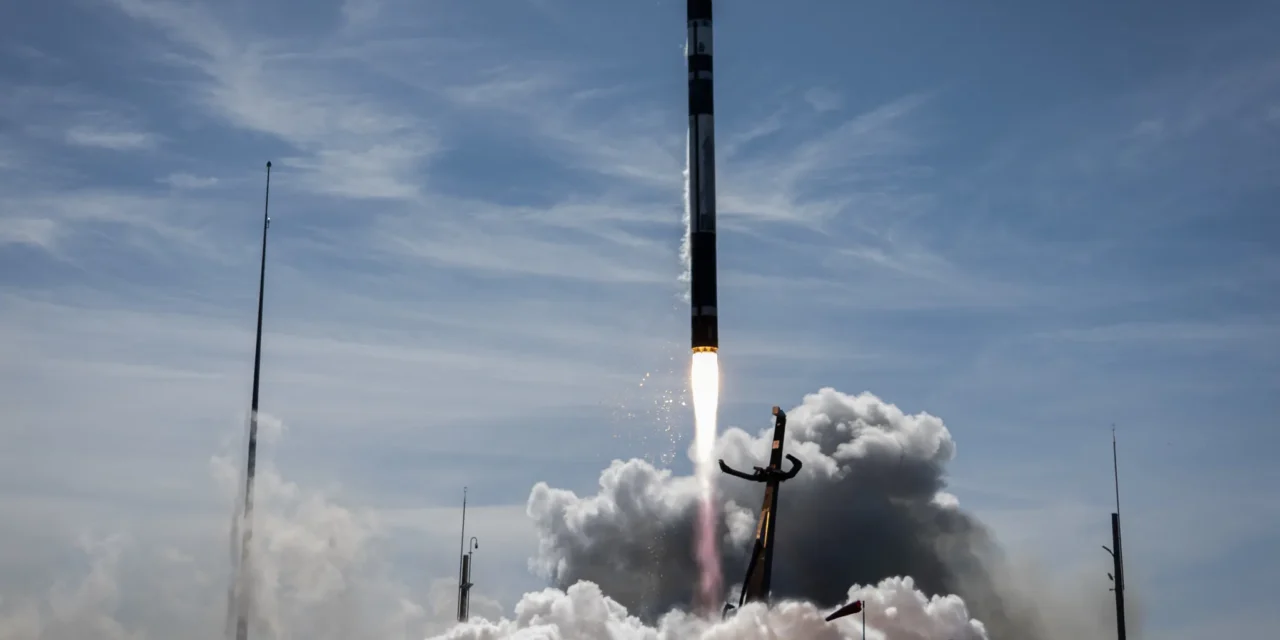
Rocket Lab (NASDAQ: RKLB) is trading at approximately $73 per share, roughly half its 52-week high of $151, yet still commands a market capitalization of nearly $45 billion.
That valuation places the company at approximately 59 times the $769 million in revenue it generated over the four quarters through June 30, based on its last two earnings reports.
The figure is striking because the medium-lift Neutron rocket, which anchors the company’s long-term growth narrative, has never left the ground.
Second-quarter revenue rose 62% year over year to $234 million, a result that came in $34 million above the prior quarter’s record and demonstrated continued operational momentum.
The company’s backlog reached $2.36 billion at the end of the second quarter, representing a 137% increase year over year and climbing from $1.85 billion at the end of 2025.
Founder and CEO Sir Peter Beck stated that the company had already signed more than $1 billion in new contracts across launch and space systems since the quarter closed.
The contract momentum and backlog growth paint a picture of a business accelerating in demand, but the valuation demands far more than current performance can justify on its own.
At 59 times revenue, the market is not pricing the company that exists today but rather the one Rocket Lab intends to become, where Neutron flies routinely and major contracts convert into sustained revenue streams.
Until Neutron successfully reaches orbit, the premium embedded in the stock reflects milestones that remain aspirational rather than achieved, which is a significant distinction for investors evaluating risk.
For bulls, the backlog growth and new contract signings offer evidence that commercial and government customers are betting on that future alongside the company’s ambitions.
For more cautious investors, the gap between today’s revenue base and a valuation approaching $45 billion represents a level of speculative pricing that requires near-flawless execution over several years.
The stock’s position at roughly half its 52-week high suggests some of that optimism has already been tempered by the market, though the multiple remains exceptionally elevated by conventional metrics.
Until Neutron demonstrates it can fly reliably, the valuation leaves little margin for delay, setback, or competitive disruption in the rapidly evolving commercial launch sector.
