
Nevada’s transportation authority has handed a major regulatory green light to three of the biggest names in autonomous mobility, setting the stage for a fierce commercial battle in Las Vegas.
The Nevada Transportation Authority unanimously approved permits Thursday allowing Tesla (NASDAQ: TSLA), Uber (NYSE: UBER), and Waymo to operate commercial robotaxi services in Clark County, home to Las Vegas.
The three permits collectively authorize the deployment of up to 8,000 autonomous vehicles across the county over the next 12 months, representing one of the largest regulatory approvals for robotaxis in U.S. history.
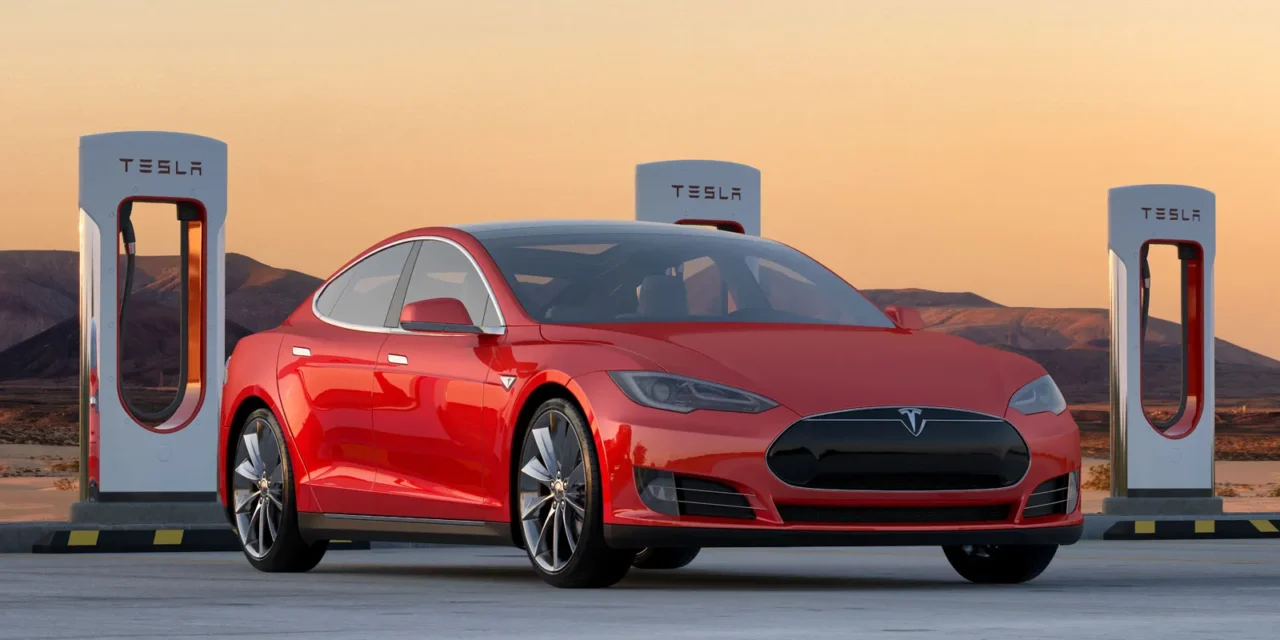
Tesla received the largest allocation, with its permit allowing the company to deploy up to 5,000 robotaxis within the approved timeframe.
Waymo and Uber each received permits for up to 1,000 autonomous vehicles, with Uber set to operate its fleet through partnerships with Hyundai subsidiary Motional and autonomous vehicle company Zoox.
Zoox already holds a separate autonomous vehicle network permit allowing it to operate 100 robotaxis independently of its arrangement with Uber.
Whether any of these companies will come close to their permitted ceilings remains an open question, with testimony from company representatives at the hearing suggesting full deployment is unlikely within the year.
Eric Early, Tesla’s Cybercab chief engineer, was candid about the company’s realistic near-term expectations, stating at the meeting: “The 5,000 has always been a ceiling for us. I don’t think we’ll be in a position by this time next year to deploy 5,000 vehicles, and it’s not [because of] the technology. I think we would be extremely happy and satisfied if we could get ourselves up to 2,500, maybe a bit higher than that in the next year.”
Even at half capacity, the combined rollout would transform Clark County into one of the most competitive robotaxi markets in the world, with multiple operators vying for the same pool of riders.
The rapid expansion has drawn sharp opposition from existing transportation operators, who argue the approvals are moving too quickly and risk destabilizing the local industry.
Kimberly Maxson-Rushton, a lawyer representing the Livery Operators Association, voiced her concerns directly at the hearing, saying: “These applications raise two grave concerns. One deals with the oversaturation of the commercial transportation industry as a whole in Nevada. And the second one deals with the overcrowding of the roadways, and specifically the Golden Triangle.”
The Golden Triangle, the area between the airport and Las Vegas Boulevard, has been the primary zone for autonomous vehicle testing to date, with Motional also conducting tests downtown and in the Town Square shopping district.
Beyond traffic and industry saturation, the permits have reignited debate about the broader workforce implications of large-scale robotaxi deployment in a city heavily reliant on service and gig economy jobs.
Uber has sought to position itself as a moderate voice in the dispute, advocating for a hybrid model in which ride-hailing networks incorporate both human drivers and autonomous vehicles rather than replacing one with the other entirely.
The company repeated that pitch during the NTA meeting, arguing that a gradual, hybrid integration would allow cities to absorb autonomous vehicles more smoothly and meet peak demand without flooding the market all at once.
