
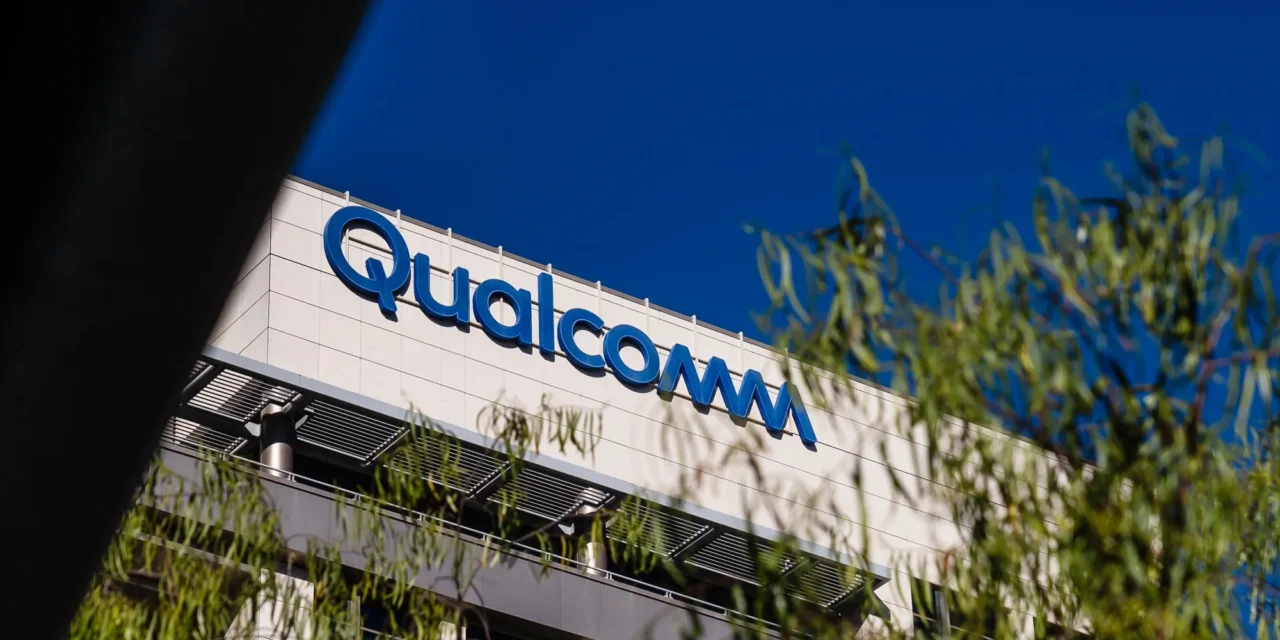
Qualcomm (NASDAQ: QCOM) is no longer just a smartphone chip company, and understanding what it is becoming matters far more than any single quarterly earnings figure.
The company’s leadership has been explicit that whoever wins the edge AI race will have a claim on the broader AI opportunity, given how much of daily computing happens on personal devices rather than data centers.
Edge AI refers to running artificial intelligence models directly on phones, laptops, vehicles, and sensors rather than sending data to a remote cloud server for processing.
Qualcomm is pushing that vision hard through its Snapdragon platforms, embedding on-device AI capabilities into smartphones, wearables, industrial sensors, and home devices.
The automotive opportunity may be the most significant long-term growth driver, with the company reporting a design-win pipeline valued at roughly $45 billion through its Snapdragon Digital Chassis platform.
The underlying logic is straightforward: every new car becomes a rolling, connected computer that can be updated, personalized, and monetized over time, with Qualcomm supplying the core building blocks.
If that pipeline converts into production contracts at scale, the company’s automotive revenue profile in five years will look nothing like what investors historically associated with a handset-dependent chip supplier.
On the PC front, Qualcomm is challenging established processor makers with its Snapdragon X Elite and X2 Elite chips, which pair custom Oryon CPUs with powerful neural processing units and battery life measured in days rather than hours.
Early in 2026, the company expanded its laptop lineup with the more affordable Snapdragon X2 Plus and unveiled a humanoid robotics initiative built on similar underlying technology, pushing its ambitions well beyond consumer electronics.
Qualcomm also acquired AI tooling company Modular and has been constructing a software platform designed to help developers deploy AI models on Snapdragon hardware without navigating complex low-level code.
That software layer matters strategically because it shifts Qualcomm’s positioning from a component vendor to a full-stack development partner, making its ecosystem stickier across phones, cars, and PCs simultaneously.
The stock has faced some selling pressure this year, yet it offers investors a roughly 2.5% dividend yield alongside what the company frames as substantial growth potential in automotive, AI laptops, and non-handset markets.
If Qualcomm continues winning automotive design contracts, secures a durable position in the AI PC market, and demonstrates real monetization from its software and robotics initiatives, the stock could be roughly two to three times higher within five years.
The investment case ultimately rests on whether Qualcomm can complete its transformation from a royalty-driven handset business into the connective tissue of edge AI across an expanding range of intelligent devices and machines.
