
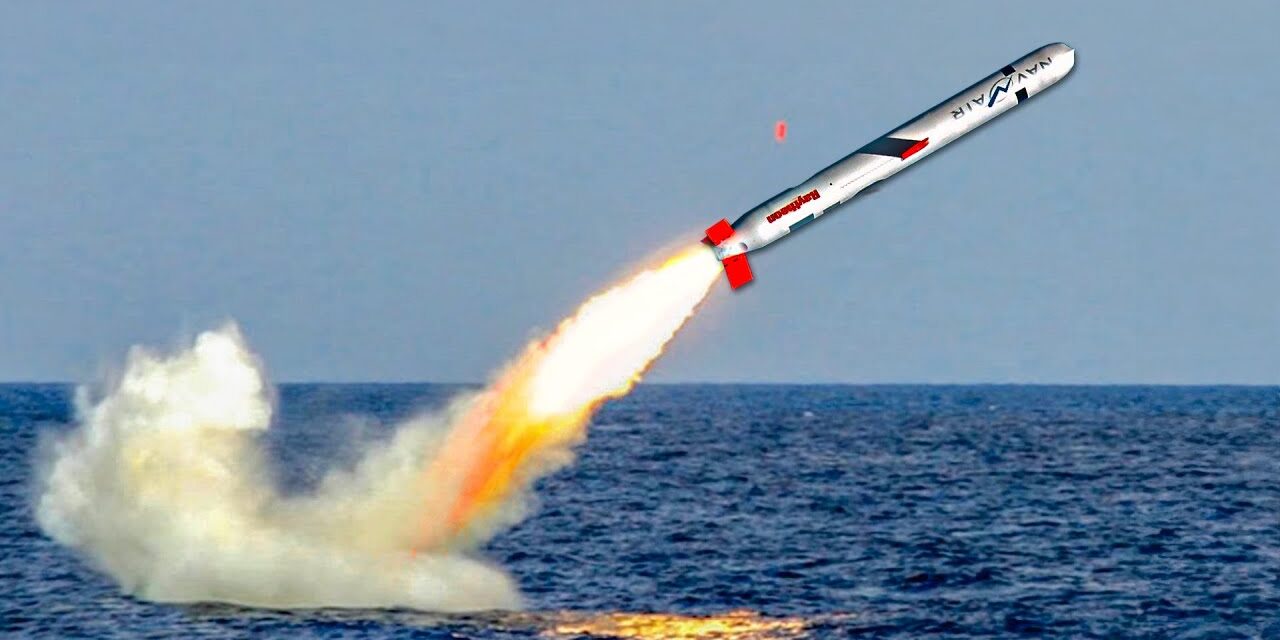
RTX (NYSE: RTX) unit Raytheon has landed a landmark $22.9 billion contract with the U.S. Navy to produce Tomahawk cruise missiles over a seven-year period.
The agreement represents one of the largest single missile production awards in recent memory, cementing Raytheon’s central role in American naval strike capability.
Under the terms of the contract, Raytheon is required to ramp production to more than 1,000 Tomahawk missiles per year, a significant scaling of manufacturing operations.
Achieving that output will require coordination across hundreds of suppliers, making the deal a major driver of activity throughout the broader U.S. defense industrial base.
RTX is a $300.5 billion aerospace and defense company that provides systems and services to commercial, military, and government customers around the world.
The seven-year structure of the contract gives Raytheon’s missile manufacturing pipeline a degree of long-term visibility that analysts often associate with more stable cash flow generation.
RTX has reported a book-to-bill ratio of 1.86 for the most recent quarter, alongside a $236 billion backlog, underscoring the strength of its order pipeline heading into this new award.
The Tomahawk deal adds further weight to that backlog, reinforcing the company’s position as a core long-duration contractor within the U.S. defense sector.
RTX competes in the long-cycle defense program space alongside peers such as Lockheed Martin and Northrop Grumman, both of which also rely heavily on program longevity to support their financial outlooks.
However, the contract does not eliminate concerns around RTX’s concentration in government budgets, its high fixed cost base, or the potential for supply chain scaling and tariffs to pressure margins as production volumes increase.
Investors watching the company will need to weigh how dependent RTX remains on continued U.S. and allied procurement decisions over the life of the seven-year deal.
The Tomahawk award nonetheless strengthens the core investment thesis around RTX, which centers on a growing defense backlog and a strategic focus on higher-margin, technology-intensive programs.
