
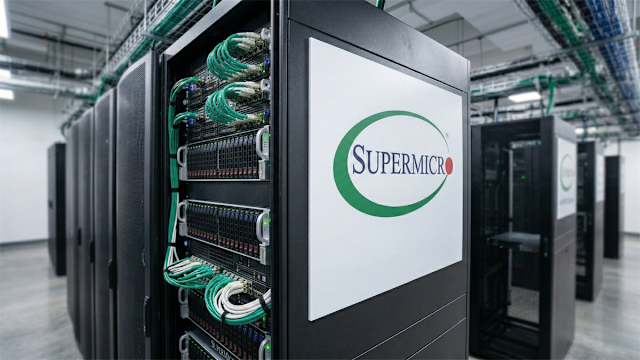
Super Micro Computer (NASDAQ: SMCI) has delivered a revenue forecast that cuts through the ongoing debate about whether the artificial intelligence boom has become overpriced.
The AI server specialist expects fiscal 2027 revenue of between $65 billion and $72 billion, dramatically above the $52.5 billion analysts had been forecasting, according to LSEG data cited by Reuters.
That gap between Wall Street expectations and Super Micro’s own outlook is the defining feature of this forecast, and it is difficult to dismiss.
The announcement sent shares up roughly 7% in after-hours trading, reflecting investor appetite for any concrete sign that AI infrastructure spending is translating into real business results.
Big technology corporations are preparing to spend more than $730 billion this year building the data centers required to power increasingly capable artificial intelligence systems, according to Reuters.
Super Micro sits directly in the path of that capital deployment, supplying the physical server infrastructure that makes those data centers operational.
The company has always carried an uncomfortable trade-off, however, since selling billions of dollars worth of AI servers drives revenue but server hardware typically generates thinner margins than the software and semiconductor businesses investors associate with the AI boom.
That is what made the gross margin result for the fiscal fourth quarter particularly significant, coming in at 17.5%, above initial guidance of 15% to 17% and far above a previous projection of 8.2% to 8.4%, as reported by The Wall Street Journal.
The core bear case on AI infrastructure suppliers has quietly shifted, as investors are no longer questioning whether revenue can expand and are instead asking whether companies can preserve healthy economics while chasing that growth.
Super Micro’s latest figures suggest the answer to that question may be improving, with both the revenue outlook and margin performance moving in the same direction simultaneously.
The company has built its position by leveraging powerful processors from major chip vendors to assemble server systems, while maintaining a reputation for bringing new designs to market quickly.
That speed has made Super Micro a preferred supplier as cloud providers and large enterprises race to build infrastructure capable of running generative AI applications at scale.
The harder challenge now is whether Super Micro can sustain those economics as volumes ramp aggressively toward the upper end of that $65 billion to $72 billion range.
Competition in the AI server market remains fierce, and large customers retain significant pricing power that could compress margins if the market dynamic shifts.
Data center deployment also faces practical constraints, from power grid availability to cooling infrastructure, any of which can slow the pace at which ambitious forecasts become actual revenue.
A forecast of this magnitude also creates expectations that are equally remarkable, leaving little room for execution missteps as the company moves into fiscal 2027.
What this quarter has demonstrated, however, is the clearest evidence yet that Super Micro is not simply promising AI growth but is beginning to show that the financial mechanics behind that growth may be more durable than critics had assumed.
For an AI trade that investors are increasingly evaluating on actual returns rather than future potential, that distinction may prove to be the most important signal of all.
