
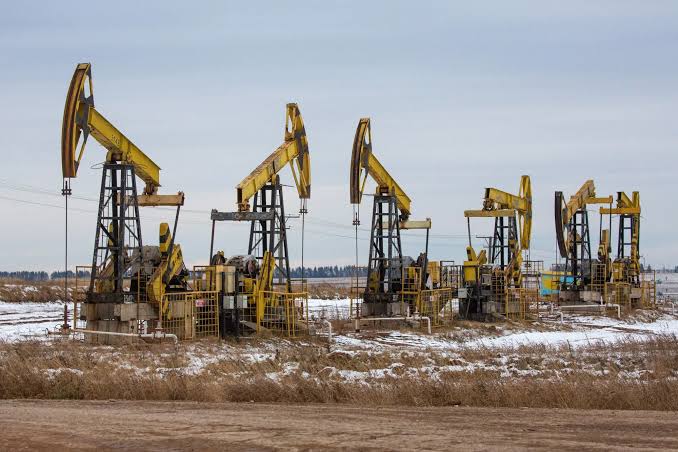
Russia’s oil industry is approaching a critical inflection point, with analysts warning that its capacity to absorb further disruptions is rapidly diminishing.
Rystad Energy has downgraded its 2026 Russian crude production forecast to 8.95 million barrels per day, reflecting mounting pressure on an industry already stretched thin.
The revised outlook represents a significant deterioration, with output projected to slide further to 8.6 million barrels per day in 2027, a 90,000 barrels per day downgrade from Rystad’s prior forecast.
Refinery throughput is expected to average just 4 million barrels per day across the second half of 2026, a figure that underscores how severely infrastructure stress has compounded production challenges.
That refinery figure sits nearly 30% below the 2016-2023 seasonal average, a stark illustration of how dramatically operational conditions have deteriorated in a relatively short period.
Intensifying drone strikes on energy infrastructure have emerged as a central driver of the throughput collapse, disrupting refining capacity at a pace that Russian operators are struggling to counter.
Russia’s spare production capacity now stands at approximately 620,000 barrels per day, a buffer that sounds substantial in isolation but is increasingly constrained by the quality and condition of underlying assets.
Much of that remaining spare capacity is tied to aging wells that face a growing risk of permanent abandonment the longer they remain shut in, creating a compounding long-term threat to overall output potential.
Once mature wells are left idle beyond a certain threshold, restoring them to productive operation becomes economically unviable, meaning temporary shutdowns can quickly translate into permanent production losses.
The combination of sanctions pressure, infrastructure attacks, and a deteriorating well base means Russia’s oil sector faces structural headwinds that go well beyond short-term geopolitical turbulence.
OPEC-plus production commitments have added a further layer of complexity, limiting Moscow’s flexibility to compensate for localized losses by ramping output elsewhere in its production network.
The cumulative effect of these pressures suggests that Russia’s ability to sustain current export volumes, let alone recover lost capacity, will remain severely tested through 2027 and potentially beyond.
