
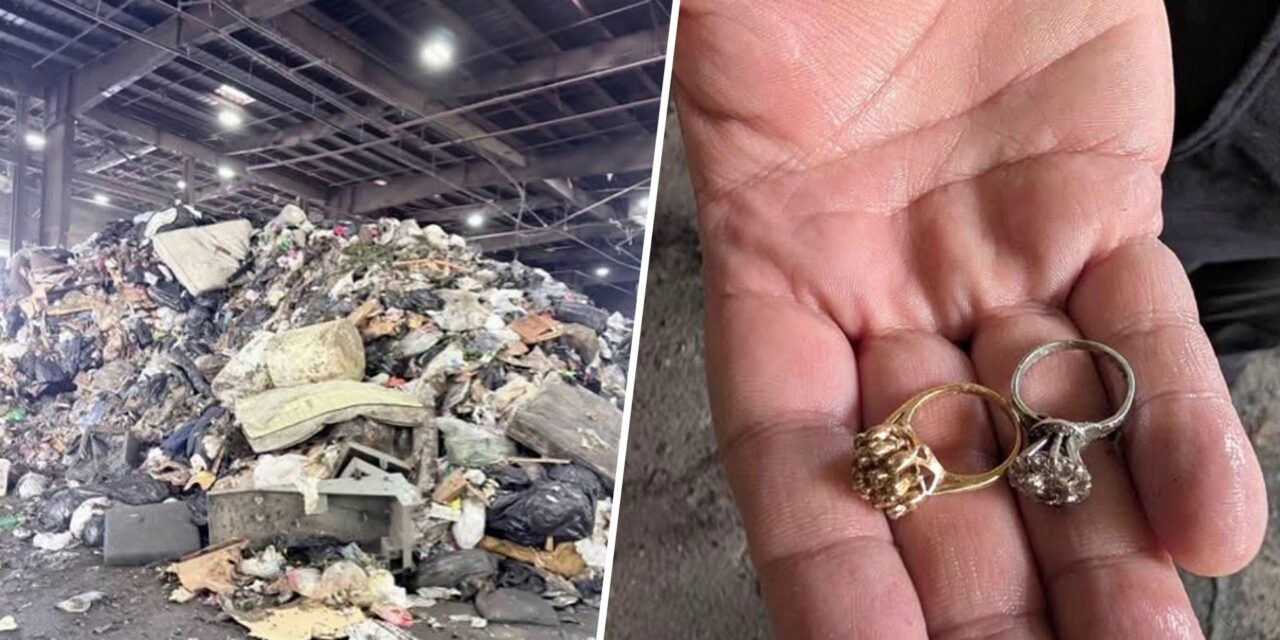
A Brooklyn man successfully recovered two priceless family rings after they were accidentally discarded into a building’s trash compacting system alongside nearly 20,000 pounds of waste.
The rings, a gold-and-diamond promise ring and a platinum-and-diamond engagement ring, had been passed down through four generations of the family before the incident.
The resident realized the mistake before the trash was collected and met sanitation workers at the curb on July 28 to explain what had happened, according to a spokesperson for the New York City Department of Sanitation.
Workers from the New York City Department of Sanitation (DSNY) were able to isolate the collection truck and slowly dump its entire load across a concrete floor to conduct a manual search.
Remarkably, the rings were located within just 10 minutes of searching, sparing four generations of family history from permanent loss.
The DSNY spokesperson explained that the speed of the resident’s response was the critical factor that made the search possible in the first place.
When residents report an accidentally discarded item quickly enough, the department can isolate the relevant collection truck and arrange a controlled search of its contents before further processing.
Once garbage reaches a transfer station, however, the situation becomes far more complicated, as refuse is rapidly mixed with material from other trucks and loaded onto a barge or rail car.
At that stage, locating a small piece of jewelry among thousands of pounds of mixed waste would be virtually impossible, the department confirmed.
The DSNY advises that anyone who realizes they have accidentally thrown away something valuable should call 311 as soon as possible to improve the chances of recovery.
This latest recovery adds to a growing list of success stories for the department, which has previously helped residents retrieve items ranging from wallets to laptops that were unintentionally discarded.
The story serves as a reminder of how quickly city sanitation systems process residential waste, and how a fast response can make the difference between recovery and permanent loss.
