
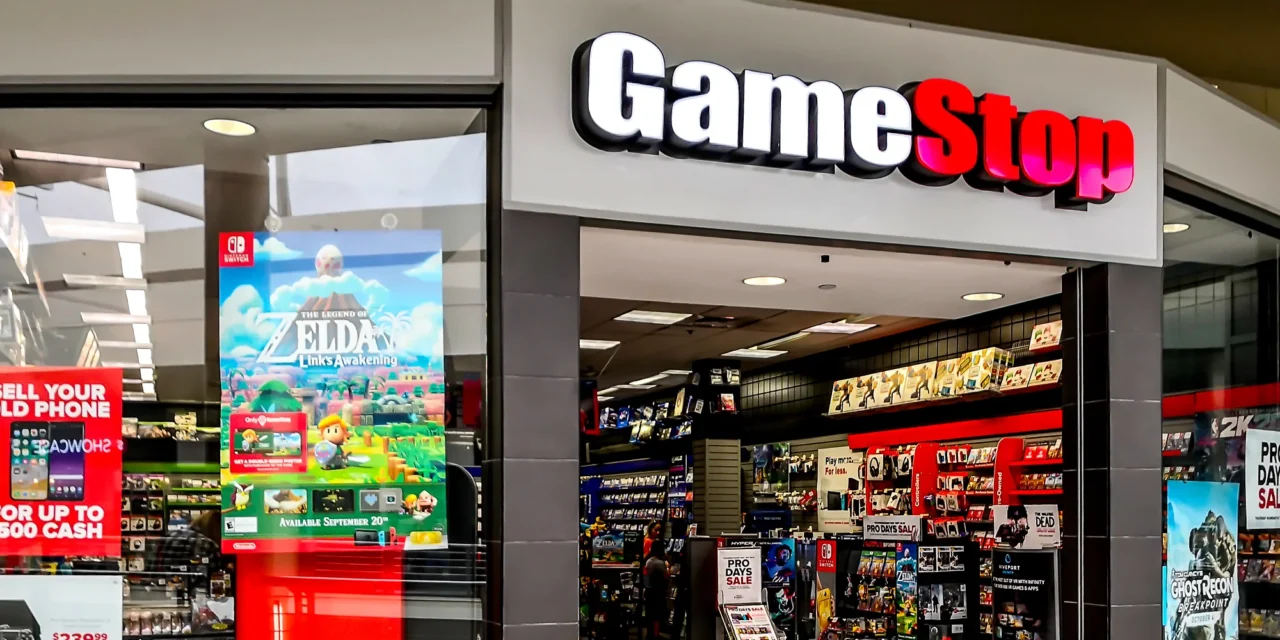
Three months after stunning Wall Street with an unsolicited $56 billion bid for eBay Inc. (NASDAQ: EBAY), GameStop Corp. (NYSE: GME) CEO Ryan Cohen appears to be retreating from the deal entirely.
Bloomberg reported on August 10 that Cohen is now considering withdrawing the offer and replacing it with a far more modest arrangement, potentially a partnership or joint venture.
Following reports of the probable change in direction, GameStop shares climbed 1.6% in early trade, while eBay shares fell 2.2%, a reaction that aligned closely with investor sentiment throughout the entire episode.
GameStop’s original approach, made in May, was a $125-per-share offer split evenly between cash and GME stock, an audacious attempt by the smaller video-game retailer to acquire a firm roughly six times its size.
eBay’s board rejected the bid within days, calling it “neither credible nor attractive” and raising serious questions about how GameStop, which held just $8.4 billion in cash against a market value that had slipped to $8.6 billion, could realistically finance the transaction.
Cohen did not immediately back down, continuing to purchase eBay stock through the summer and building GameStop’s stake to 9.75%, making it eBay’s second-largest shareholder behind only Vanguard’s index funds.
He stated on Bloomberg TV that he intended to close a deal “one way or another,” a declaration that now appears significantly less certain given the reported shift in strategy.
The revised approach under consideration would see eBay leverage GameStop’s approximately 1,600 U.S. retail locations to expand in high-margin categories such as trading cards and collectibles, with GameStop seeking one or two board seats at eBay in return.
The stock market had already delivered its verdict well before Cohen’s reported change of heart, with GameStop shares declining 28% since the bid was first revealed in May while eBay shares gained 7.6% over the same period.
Institutional data from Insider Monkey’s 13F database reinforces the divergence, showing hedge fund holders of GameStop declined from 31 in Q4 to 29 in Q1, while short interest in the stock stood at a notable 13.55% of the float.
By contrast, institutional backing for eBay increased from 59 fund holders in Q4 to 61 in Q1, with short interest remaining comparatively low at just 3.51% of float, reflecting greater confidence in the platform’s underlying business.
Dropping the $56 billion takeover bid would eliminate substantial equity risk for GameStop, while its 9.75% stake in eBay would continue to provide meaningful asset support despite persistent headwinds in its core retail operations.
For eBay, a de-escalation of the takeover situation removes a source of uncertainty that had clouded the company’s near-term outlook, leaving its consistent free cash flow and collectibles growth story more clearly in focus for investors.
