
These three companies share a defining characteristic: competitive moats that have survived recessions, technology upheavals, and leadership changes across multiple decades.
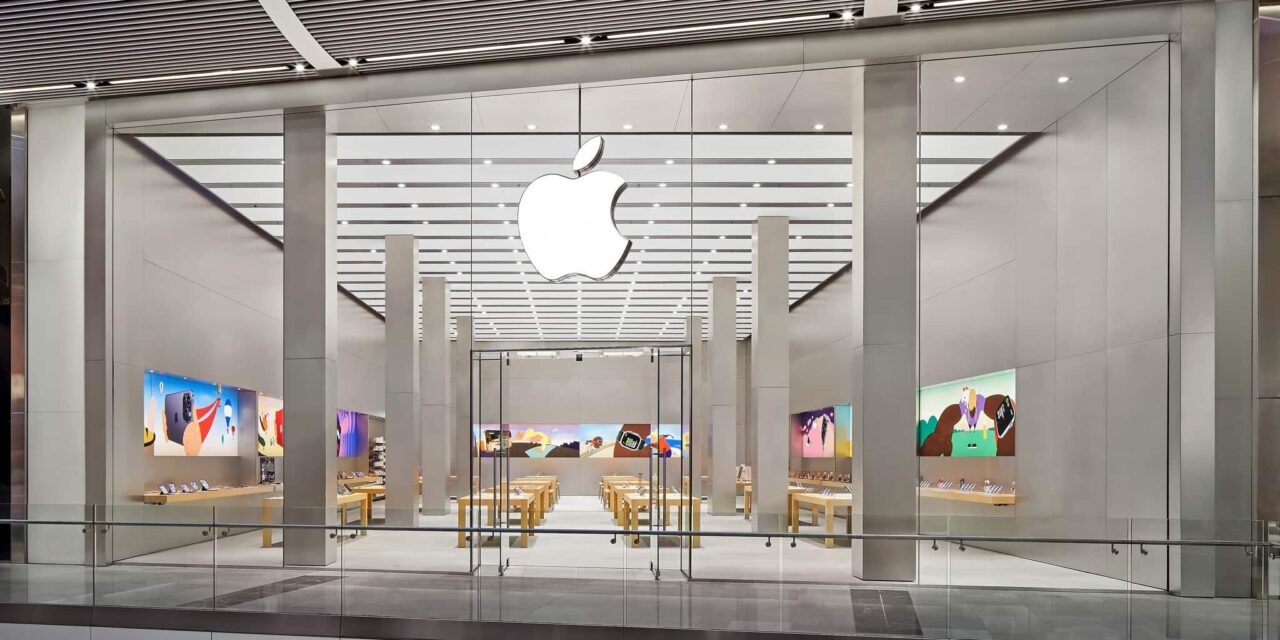
Apple (NASDAQ: AAPL) trades around $306.58 with a market capitalization of roughly $4.47 trillion, having delivered an adjusted 10-year return of 1,021% for long-term shareholders.
The company’s installed base now exceeds 2.5 billion active devices, generating the recurring revenue streams that underpin its durable competitive position.
In Q2 FY26, Apple reported earnings per share of $2.01 against a $1.94 estimate, with total revenue reaching $111.18 billion, up 17% year over year.
iPhone revenue climbed to $56.99 billion while the Services segment hit $30.98 billion, reinforcing the compounding engine that sits on top of that enormous hardware base.
Management authorized a fresh $100 billion buyback and lifted the quarterly dividend 4% to 27 cents, signaling continued confidence in cash generation.
Apple also remains Warren Buffett’s largest equity holding, representing approximately 22% of the Berkshire Hathaway portfolio according to the Q2 2026 13F filing.
Analyst consensus sits at 63% bullish with an average price target of $312.72, though the stock trades at a full 35x trailing earnings, reflecting a real premium for durability.
Coca-Cola (NYSE: KO) represents the dividend-compounder benchmark, trading around $86.60 and up more than 25% year to date, with an adjusted 10-year return exceeding 97%.
The company has now extended its streak of consecutive annual dividend increases to over 63 years, placing it firmly within the elite group known as Dividend Kings.
In Q1 2026, Coca-Cola posted earnings per share of 86 cents against an 81-cent estimate, with revenue of $12.47 billion rising 12% year over year.
Organic revenue grew 10%, unit case volume rose 3%, and Coca-Cola Zero Sugar volume climbed 13% across every geography, demonstrating genuine underlying demand strength.
Operating margin expanded to 35% from 33%, and free cash flow surged to $1.76 billion, while management raised 2026 guidance to comparable EPS growth of 8% to 9%.
Risks include a $960 million BODYARMOR trademark impairment, ongoing IRS tax litigation, and roughly a 4% revenue headwind from divestitures including the pending Coca-Cola Beverages Africa sale.
Microsoft (NASDAQ: MSFT) completes the trio, trading around $508.28 with a 10-year adjusted return exceeding 782%, and an AI and cloud cycle that looks more like a new growth chapter than a conclusion.
In Q3 FY26, Microsoft reported earnings per share of $4.27 against a $4.07 estimate, with revenue of $82.89 billion rising 18% year over year.
Intelligent Cloud revenue grew 30% to $34.68 billion, Azure expanded 40%, and the AI business crossed a $37 billion annualized revenue run rate, up 123% year over year.
CEO Satya Nadella stated plainly: “Our AI business surpassed an annual revenue run rate of $37 billion, up 123% year-over-year.”
Commercial remaining performance obligations, essentially contracted backlog, reached $627 billion, providing visibility that underpins the 95% bullish analyst consensus with a target of $561.39.
The central risk for Microsoft is capital intensity, with quarterly capital expenditures running at $30.88 billion, up 84% year over year, as the market debates whether AI infrastructure investment will generate adequate returns.
The thread connecting all three businesses is a competitive position resilient enough to outlast economic downturns, disruptive technology cycles, and shifts in consumer behavior over many decades.
Apple faces scrutiny around global trade friction and supply-chain concentration, Coca-Cola must navigate evolving consumer preferences, and Microsoft must prove its AI spending earns a worthy return.
For investors with a horizon that extends well past the current calendar year, those are precisely the questions worth sitting with rather than avoiding.
