
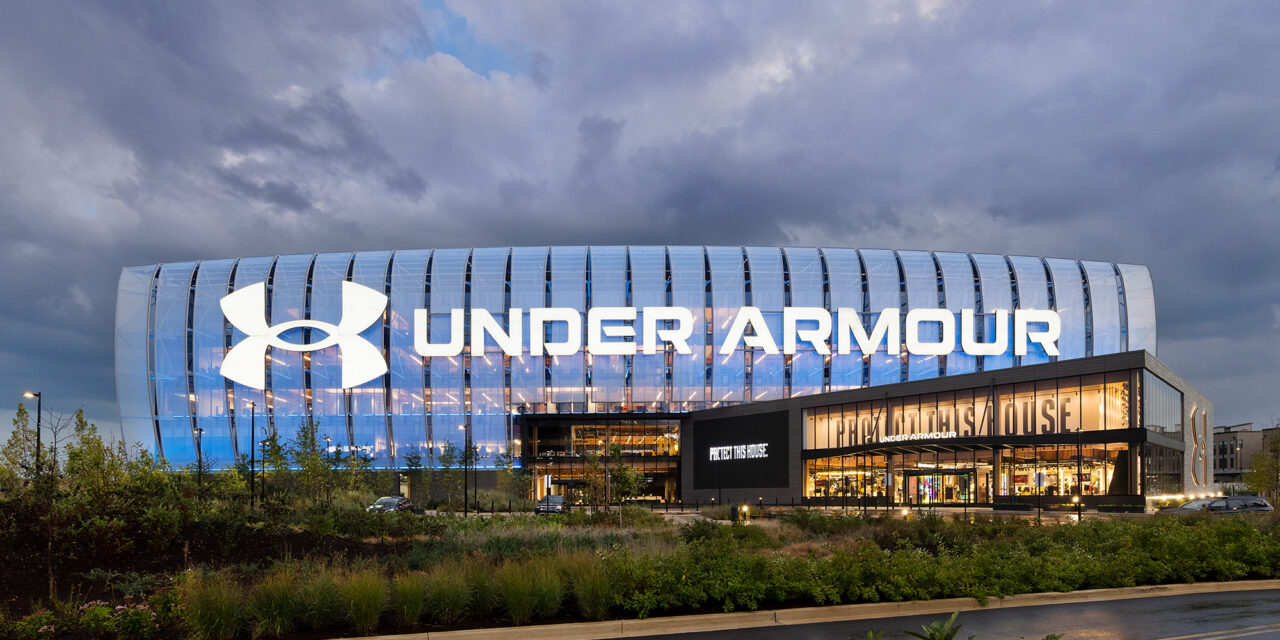
Under Armour (NYSE: UAA) shares tumbled 8.6% in a single session after the athletic apparel company delivered a disappointing outlook that rattled investors.
The company now expects revenue to decline at a mid-single digit percentage rate for 2027, a significant step down from its previous forecast of only a slight decline.
Yahoo Finance Senior Reporter Brooke DiPalma and Markets and Data Editor Jared Blikre examined the stock’s performance using Yahoo Finance’s AlphaSpace premium investment platform.
Comparing Under Armour against key rivals, DiPalma noted the stock has fallen roughly 10.4% over the past month alone, underperforming much of the broader athletic apparel sector.
Nike trailed behind with a 3.3% decline over the same period, while On Running and Lululemon outperformed both companies, highlighting the competitive pressure Under Armour faces.
Blikre pointed out that Under Armour’s stock chart has essentially gone nowhere since the middle of 2022, framing the current moment as a critical test of its turnaround strategy.
Revenue across the business declined 3%, driven largely by weakness in North America, with declines spread broadly across all major product categories rather than isolated to one area.
Footwear revenue dropped 8%, accessories fell 4%, and apparel declined 2%, reflecting what DiPalma described as softness that was “really across the board” for the company.
CEO Kevin Plank, who returned to lead the company in 2024, has pursued an aggressive restructuring that includes cutting roughly 25% of product styles, reducing promotions, and tightening distribution channels.
Blikre described Plank’s approach as a deliberate push to reposition Under Armour toward a premium market segment, though questions remain about how much the company must shrink before that strategy pays off.
The results highlight a widening performance gap between Under Armour and competitors like On Running and Lululemon, which have successfully captured consumer spending in both performance and lifestyle categories.
Investors will be watching closely to see whether Plank’s brand-tightening strategy can translate into improved margins and revenue stabilization, or whether further guidance cuts lie ahead.
