
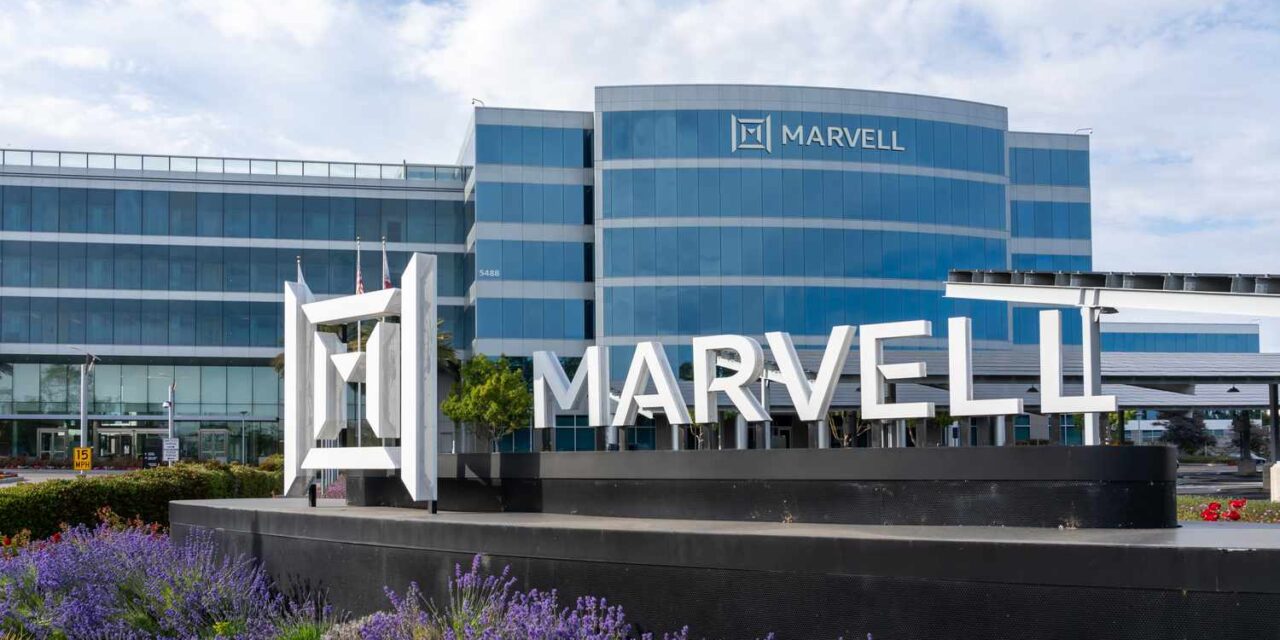
Marvell Technology (NASDAQ: MRVL), the semiconductor designer at the heart of the AI infrastructure boom, currently trades around $211, roughly 33% below its 52-week high.
That gap between intrigue and hesitation is exactly where a cash-secured put strategy can offer investors a compelling alternative to simply buying or ignoring the stock.
By selling a put option on MRVL expiring September 17, 2027, with a strike price of $85, investors can collect roughly $845 in premium per contract, with each contract covering 100 shares.
That premium alone translates to approximately 8.8% annualized on the $8,500 of capital set aside to secure the trade over the 407-day period.
Parking that collateral in a money market or savings account earning around 5.0% pushes the combined total yield to approximately 13.8% annualized.
If MRVL remains above $85 through expiration, the put expires worthless and the investor simply keeps the full $845 premium, with no shares ever changing hands.
If the stock closes below $85 at expiration, the investor is assigned and purchases 100 shares at $85, with the premium already collected lowering the effective cost basis to approximately $76.55 per share.
That effective entry represents roughly a 64% discount to the current price of $211.02, providing a substantial margin of safety for those willing to become long-term shareholders.
The bull case for ownership is built on aggressive growth projections, with management expecting overall revenue to grow approximately 40% in fiscal 2027 before accelerating to approximately 45% in fiscal 2028.
The company’s data center business grew 46% last year and is projected to accelerate to approximately 50% growth this year and 55% the year after, powered by rising demand across its product portfolio.
The interconnect business, which supplies high-speed networking infrastructure for AI data centers, is now expected to grow more than 70% this year alone.
The custom silicon division, which designs bespoke chips for the world’s largest cloud providers, is on a trajectory to more than double in fiscal 2028.
Skepticism, however, remains visible, with analyst questions on the company’s most recent earnings call centering on execution risk and customer concentration.
The growth forecasts depend heavily on flawlessly ramping a small number of enormous custom chip programs for a handful of giant customers, and any delay could create a significant gap in the financial outlook.
Supply chain access presents a second major risk, with the company needing priority allocation at the world’s most constrained advanced manufacturing facilities.
Management addressed this directly, noting it is “aggressively locking in additional capacity” and forecasting “approximately $1 billion in prepayments” to suppliers during the current fiscal year.
That level of commitment signals confidence but also underscores a critical dependency that could become a bottleneck if demand from other customers competes for the same capacity.
The put strategy does not require a definitive view on whether MRVL navigates these risks successfully, because the income is locked in the moment the trade is placed regardless of what happens next.
If the stock climbs, the premium is simply kept as income, and the trade can be repeated; if the stock falls hard, the investor becomes an owner at a price that already prices in a significant degree of concern.
The progress of the custom silicon business remains the single clearest signal to watch, as its ramp rate will determine whether the company’s multi-year growth ambitions are achievable or aspirational.
