
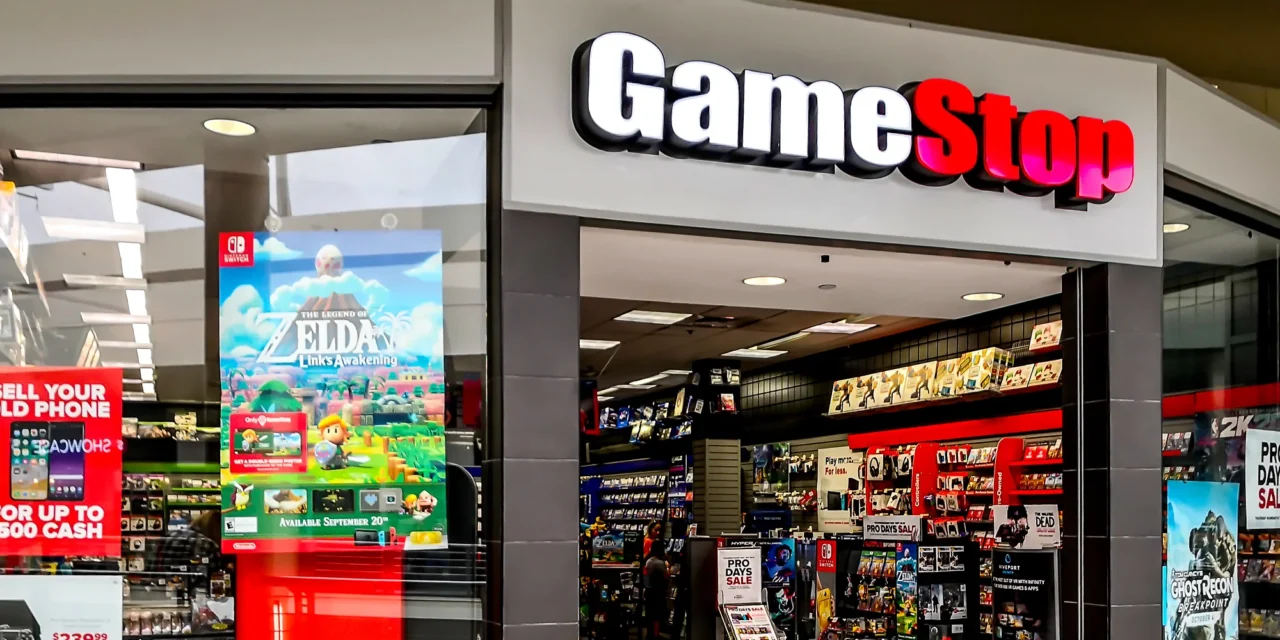
GameStop (NYSE: GME) has returned to the center of investor attention after agreeing to exchange approximately $1.4 billion of its convertible senior notes for Class A common stock.
The transaction reduces the company’s long-term debt obligations without requiring any cash outlay, a structure that reshapes the balance sheet but introduces meaningful share dilution.
Near-term sentiment has taken a visible hit, with the one-day share price return falling 12.25% and the 30-day return declining 16.48% following the announcement.
The one-year total shareholder return is also down 15.46%, suggesting that momentum had already been fading before the latest corporate action was disclosed.
At a last close of $19.06, the most widely followed GameStop narrative on Simply Wall St places a fair value estimate at $220 per share, implying that the stock may be 91.3% undervalued at current prices.
That $220 figure rests on a reshaped cost base, higher-margin collectibles demand, and a premium earnings multiple that treats the current business model as a foundation rather than a ceiling.
GameStop’s broader transformation from a legacy brick-and-mortar retailer into a crypto-invested, cash-rich entity is cited as the underlying driver of that longer-term growth argument.
The debt-for-equity swap does ease future financial obligations, but the immediate dilution effect is likely to weigh on the share price until the market can better assess the net impact.
The key risks to the bullish narrative include the possibility that acquisition plans disappoint or that demand for collectibles cools, removing the margin support that underpins the valuation thesis.
Investors considering whether this transaction creates an early entry point or argues for patience will need to weigh the dilution impact against the structural improvement in GameStop’s debt position.
The divergence between the $19.06 market price and the $220 fair value estimate reflects deeply split opinion on whether GameStop’s transformation is a genuine reinvention or a speculative overhang still working itself out.
Any meaningful re-rating will likely depend on whether management can deliver on acquisition plans and sustain the higher-margin product mix that the most optimistic narrative assumes is already taking shape.
