
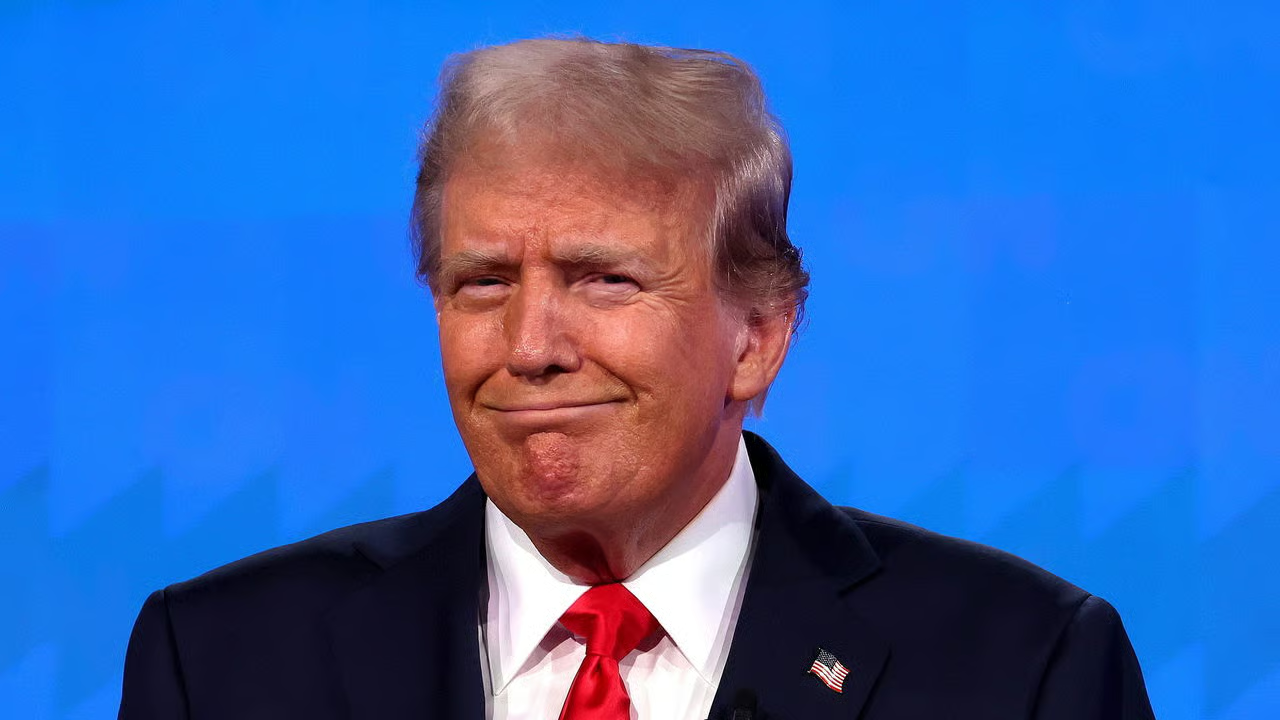
President Donald Trump publicly accused Chevron (NYSE: CVX) CEO Mike Wirth of ingratitude, demanding the executive lower gasoline prices as voter frustration over costs at the pump continues to grow.
Trump’s social media attack targeted Wirth directly, accusing him of failing to acknowledge the administration’s role in supporting the oil industry during a television interview.
The president made similar remarks in a Truth Social post, arguing his administration had created significant opportunities for oil companies, including reopening Venezuela as an energy market.
Chevron’s quarterly earnings soared nearly 400 percent to $12 billion, compared to $2.5 billion in the same period last year, marking one of the company’s strongest financial performances in years.
ExxonMobil (NYSE: XOM) also reported a dramatic surge in profits, with earnings more than doubling to $14.5 billion from $7.1 billion in the year-ago period.
Trump scolded both companies over their windfall results, declaring that the biggest US oil companies are “making too much money” and urging them to “give some of that back to the public.”
American drivers are now paying more than $4 a gallon at the pump on average, according to automotive group AAA, intensifying political pressure on the White House to act.
US crude oil prices have risen approximately 20 percent since the United States and Israel launched coordinated strikes against Iran on February 28, a military campaign that led to the effective closure of the Strait of Hormuz by Tehran and an American blockade of Iranian ports.
Rather than directing record profits toward investor returns, both supermajors have reportedly channeled the earnings toward reducing their outstanding debts.
Trump has sought to shift blame for rising fuel costs onto oil executives, and last month said he had ordered the Justice Department to investigate oil companies for not lowering prices, accusing them of “gouging consumers.”
The confrontation between Trump and the oil industry represents a notable political shift, as the president had campaigned heavily on fossil fuel expansion and enjoyed broad support from energy sector executives.
Chevron’s Wirth had previously been seen as an ally of the administration, making Trump’s public rebuke all the more striking as midterm political calculations begin to weigh on the White House’s energy messaging.
