
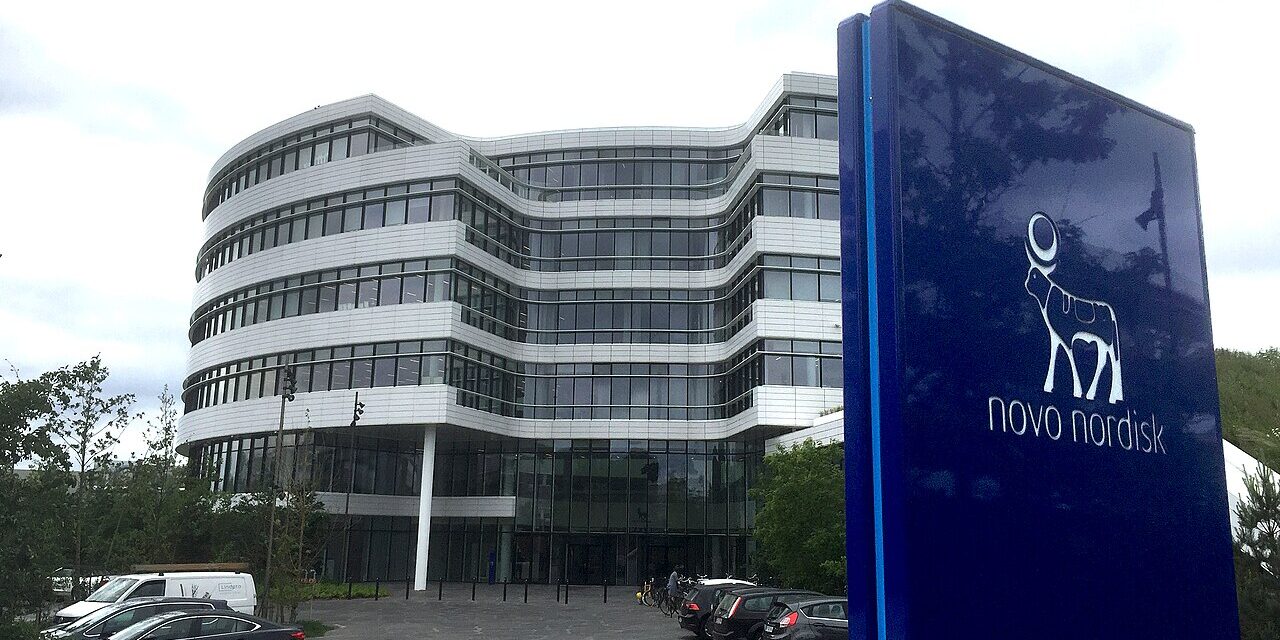
Novo Nordisk (NYSE: NVO) has seen its stock slide significantly over recent years, yet valuation metrics continue to suggest the market may be pricing the company too conservatively.
The share price has fallen 36.4% over three years, leaving investors who bought earlier sitting on weak overall returns that reflect a sustained period of negative sentiment.
Recent setbacks have only intensified scrutiny of the stock, with the failure of the ZEUS trial casting doubt over portions of Novo Nordisk’s cardiovascular pipeline.
An ongoing lawsuit against Eli Lilly has added a layer of legal and reputational uncertainty that investors are now factoring into how they assess the company’s outlook.
Despite these headwinds, Novo Nordisk passes 5 of 6 valuation tests, a result that suggests the current market price may be conservative relative to established benchmarks.
The central debate for investors is whether the three-year decline has already absorbed the trial and legal risks, or whether additional downside remains embedded in the current share price.
On an earnings basis, Novo Nordisk currently trades at a price-to-earnings multiple of 11.1x, well below the pharmaceuticals industry average of approximately 14.9x.
The stock also sits far beneath the peer group average of 24.7x, meaning the market is applying a notable discount to Novo Nordisk relative to comparable companies on headline earnings alone.
A tailored fair P/E ratio for Novo Nordisk, which incorporates factors such as profitability profile, scale, and sector risk, stands at 23.0x, more than double the current trading multiple of 11.1x.
That gap between the actual multiple and the fair ratio model indicates the stock is trading well below what that framework implies for a company with Novo Nordisk’s characteristics.
Even with the ZEUS trial disappointment and the Eli Lilly legal dispute adding extra uncertainty, the P/E analysis still points to a material difference between the market price and the fair multiple benchmark.
Community analysis on the stock has reflected a similarly constructive view, with one top narrative describing the situation as the stock being 50% undervalued.
That narrative notes that “current sentiment has swung deeply negative, but expectations are now low and the company’s GLP-1 pipeline still carries multiple embedded options.”
The GLP-1 franchise remains a significant factor in how analysts and investors model the company’s long-term earnings capacity, even as near-term setbacks have dented confidence.
The high value score across multiple cross-checks continues to lean in favor of the current discount, rather than signaling that the stock is approaching overvaluation territory.
The critical question now is whether the ZEUS trial outcome and the legal overhang with Eli Lilly are already fully reflected in the P/E gap, or whether they will continue to pressure how the market prices Novo Nordisk going forward.
