
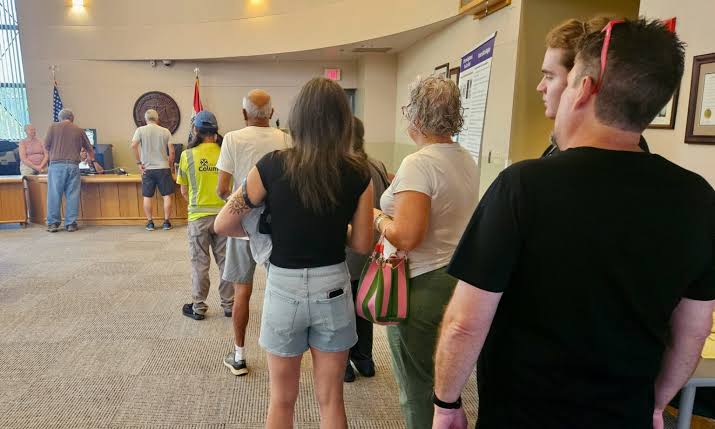
Missouri voters are heading to the polls Tuesday in a referendum that could significantly reshape how citizens participate in the state’s direct democracy process.
The vote represents a broader national pattern of Republican-led efforts to place new restrictions on citizen-initiated ballot measures across the country.
GOP lawmakers in Missouri have pushed to raise the threshold required for voter-approved initiatives to take effect, making it harder for grassroots campaigns to enshrine policy changes directly into state law.
Citizen-led ballot initiatives have increasingly been used to bypass Republican-controlled legislatures on issues including abortion rights, minimum wage increases, and marijuana legalization.
Republicans argue that raising approval thresholds is a necessary safeguard to ensure major constitutional changes reflect a true consensus among the state’s voters rather than a simple majority.
Critics and progressive advocates counter that these efforts are a direct attempt to dilute the power of ordinary voters after a string of high-profile initiative defeats for the Republican agenda.
Missouri has seen its own ballot initiative process used effectively in recent years to advance policies that the Republican-controlled legislature had blocked or refused to consider.
The outcome of Tuesday’s vote will be closely watched by political strategists and advocacy groups in other states where similar legislative efforts to restrict initiative processes are underway.
A successful move to tighten ballot initiative rules in Missouri could embolden Republican lawmakers in other states to pursue comparable measures ahead of future election cycles.
The referendum places Missouri voters in the position of deciding, in effect, how much direct democratic power they want to retain relative to the decisions made by their elected representatives in the statehouse.
Political analysts say the result will carry symbolic weight beyond Missouri’s borders, serving as a signal of how receptive the American public is to restricting one of the most direct tools of participatory democracy available at the state level.
Tuesday’s vote arrives at a moment of heightened tension over the future of ballot initiative processes nationwide, with both parties watching carefully to gauge where the electorate stands on the fundamental question of direct versus representative governance.
