
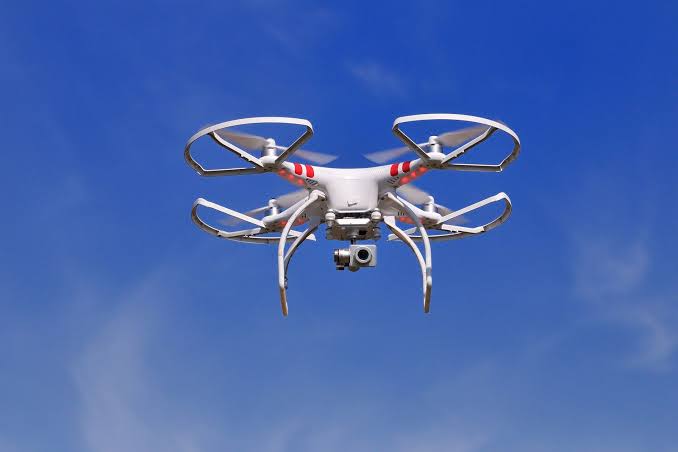
Schools in at least three states will deploy drones capable of pepper-spraying active shooters, with the aircraft manufactured by Austin-based Mithril Defense, The Washington Post reported.
At least nine schools — three in Florida, five in Georgia and one in Colorado — will house the plastic, nonlethal drones in dedicated storage boxes installed on campus.
Teachers can trigger the drones through an app or a panic button, with company pilots in Austin then steering the aircraft toward a suspected threat.
According to Mithril Defense, the drones can confront an active shooter within approximately 15 seconds, screeching, flashing strobe lights and deploying pepper spray on approach.
The aircraft can fly at 30 to 50 miles per hour inside a building and reach speeds of 100 miles per hour outdoors, covering a high school campus in roughly eight seconds.
That response speed is estimated to be two minutes faster than a police officer on foot, a gap that supporters argue could prove decisive in a mass shooting scenario.
The drones also feature two-way radio capability, allowing human operators to communicate directly with a suspected attacker and urge them to put down their weapon.
If an attacker is actively shooting, “we go straight to either kinetic impacts or we use our less lethal JPX pepper gel on the suspect,” according to a company representative named Oborski.
Deltona High School in Deltona, Florida, a campus of 1,700 students, plans to install 39 drones throughout its building in time for the 2026-27 school year.
The drones are roughly the size of a pizza and are designed to distract attackers through high-pitched chirping noises, pepper ball projectiles and direct physical ramming.
In 2025, U.S. schools endured 233 incidents involving firearms, according to a database called IntelliSee, underscoring the sustained pressure on administrators to bolster campus security.
One of the deadliest recent school shootings occurred in Uvalde, Texas in 2022, when 19 children and two teachers were killed, with police taking 77 minutes to neutralize the attacker.
State lawmakers backing the program have supported roughly $1 million in pilot funding, arguing the drones could buy critical time in the first moments of an attack.
Critics have raised concerns about the risk of misidentification, the potential for harm to fleeing students or responding officers, and whether strained school budgets should prioritize prevention over hardware.
Policy experts have also cautioned that any drone deployment program requires strict guidelines covering appropriate scenarios, data sharing, and limits on payloads and use of force.
“For example, we would never want to see drones authorized to use pepper spray against a shooter, then be used to deploy pepper spray against a student,” one warning noted.
Mithril Defense is also pitching the technology to additional states including Arkansas, and interest has reportedly emerged from parents in Houston seeking the system for their children’s schools.
