
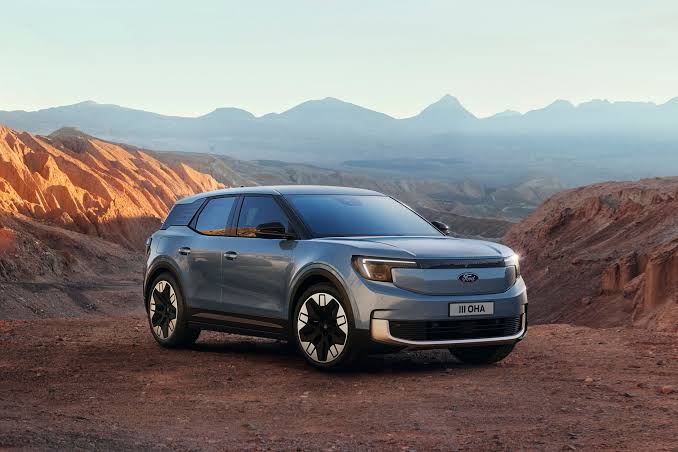
Ford Motor Company (NYSE: F) and Apple (NASDAQ: AAPL) have announced that Apple Maps will power the full navigation experience inside Ford’s Universal Electric Vehicle Platform beginning in 2027, according to a report from iBusiness.News.
The integration marks a significant departure from the existing CarPlay model, where navigation depends on a connected iPhone rather than being built into the vehicle itself.
Apple Maps will run natively on Ford’s in-car displays regardless of whether a driver has an iPhone present, making it a core component of the vehicle rather than a projection layer.
The first vehicle built on Ford’s Universal Electric Vehicle Platform will be a midsize electric vehicle priced at approximately $30,000, broadening the reach of Apple’s mapping technology to mainstream buyers.
Ford’s Latitude AI team will use road-level Maps data to construct a seamless hands-free driving experience, deepening the technical relationship between the two companies.
Using Apple’s new MapKit for Automotive SDK, the platform will deliver turn-by-turn directions using natural language, real-time traffic and incident information, and intuitive search with detailed place cards.
Drivers will also gain access to intelligent EV routing functionality, including battery preconditioning, which optimizes battery performance before arriving at a charging destination.
Eddy Cue, Apple’s senior vice president of services and health, said: “Apple Maps delivers the best map experience in the world, and we’re excited to bring the power of Maps’ navigation technology to Ford’s innovative Universal Electric Vehicle Platform.”
Buyers of the Ford UEV will not need a separate Apple subscription to access the Maps software embedded in the vehicle, lowering the barrier to adoption significantly.
Apple shelved its long-rumored electric vehicle project in 2024 after more than a decade of internal development, a move widely viewed at the time as a costly strategic failure.
What appeared to be a dead end has since evolved into a different kind of automotive presence, with Apple’s technology now integrated at the platform level inside one of Ford’s most consequential new vehicle lines.
The deal illustrates how technology companies can embed themselves deeply into the automotive industry without bearing the manufacturing costs or regulatory burden of building a car outright.
