
The New York Times will argue before a federal court Thursday that the Trump administration is abusing the justice system to expose its reporters’ confidential sources.
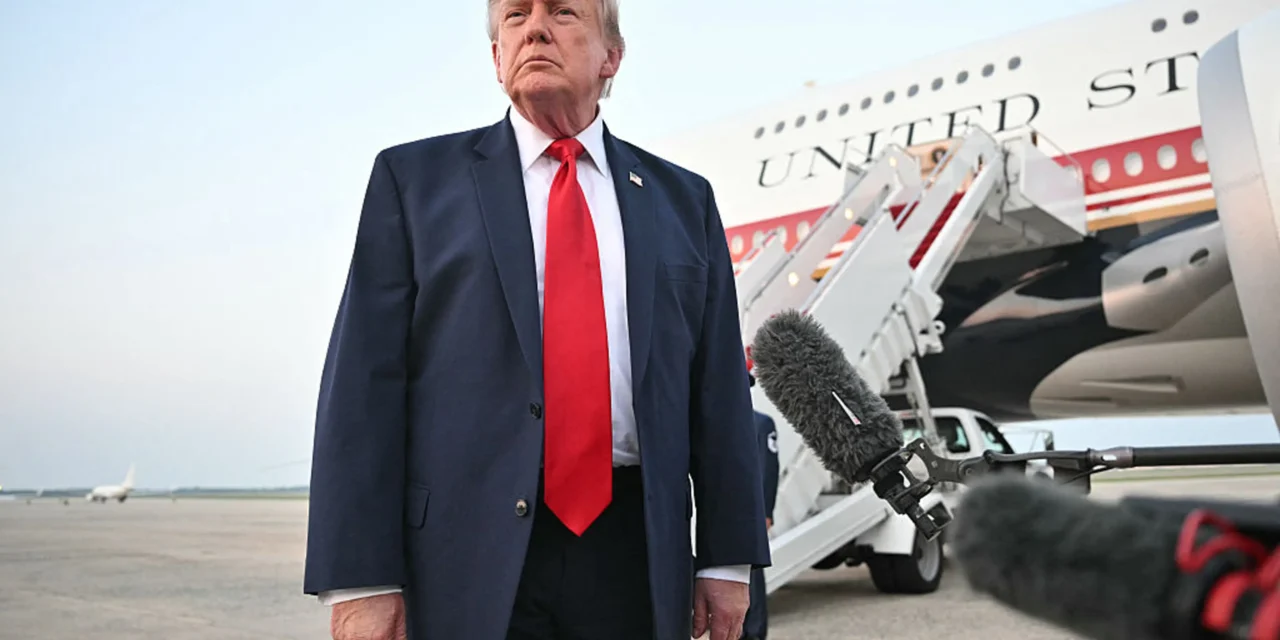
The dispute centers on articles the Times published about security concerns surrounding the Boeing 747 gifted to President Trump by the Qatari government, which now serves as his official Air Force One.
The Times legal team, led by David A. O’Neil of Debevoise and Plimpton, filed documents this week making a sweeping constitutional argument against the government’s conduct.
“The Government’s actions violate the most basic First Amendment protections for newsgathering activity,” O’Neil’s team wrote in court filings submitted this week.
“They represent the latest salvo in an escalating series of attacks on journalists to intimidate them from engaging in reporting that the Trump Administration openly detests,” the filing continued.
FBI agents arrived at the homes of several Times reporters on the night of Friday, July 10, just two days after the first Air Force One story was published, delivering subpoenas compelling grand jury testimony.
The paper said the FBI also pursued phone records from five reporters, the spouses of two of them, and the mother of one reporter, without initially disclosing this to the Times or its lawyers.
Katherine Marsh, wife of Times reporter Julian E. Barnes, told NPR that agents arrived while Barnes was watching a movie with his son and her at home that evening.
“When something like this happens, it’s very frightening,” Marsh said. “You almost feel like you’re being treated as an enemy of the state and we’re just reporters and reporters’ families.”
Marsh, a former reporter and published author, later learned the government had sought her own phone records as well, despite having no connection to the reporting at issue.
“If one were to look at my phone records, I do a lot of eldercare for my parents,” Marsh said. “There are my two teenagers, and there’s my career as a book author. So there’s nothing relevant at all to the larger case at hand.”
The Times pointed to reporting that FBI Director Kash Patel personally oversaw the issuance of the subpoenas while physically present at the White House, calling it extraordinary evidence of political motivation.
“The record is replete with glaring indications of bad faith,” the Times lawyers wrote in their filings, arguing the subpoenas were driven by the administration’s wishes rather than legitimate law enforcement need.
The paper is asking U.S. District Court Judge Arun Subramanian to quash the subpoenas at Thursday’s hearing, which will take place at a Manhattan federal courthouse.
In Senate testimony last week, U.S. Attorney Jay Clayton, the chief federal prosecutor for the Southern District of New York, said the government had followed all appropriate policies throughout the process.
“The Justice Department had sought to limit to the greatest extent possible any intrusion into the operation of the free press,” Clayton said, adding that he was “absolutely committed to and respect our First Amendment and the role of the press.”
Trump has since nominated Clayton to serve as the next director of national intelligence, a detail the Times argues further illustrates the political dimension of the case.
The Justice Department maintained in a memo filed Tuesday that its basis for seeking the subpoenas was sound, though it acknowledged that the Times was not told about subpoenas for phone records until days after they had been issued under non-disclosure orders.
The Times separately reported that after its Air Force One coverage, Trump initially denied any security concerns before later saying the aircraft would be taken off duty and “maxed out” for upgrades, a statement the paper characterized as validating its original reporting.
Marsh, whose 2023 novel The Lost Year depicts Soviet government agents suppressing press freedom and targeting family members in 1930s Ukraine, said the experience felt deeply out of place in America.
“I have scenes of government agents showing up at the door, of press freedom getting suppressed, and family members getting tainted by association,” Marsh said. “So to me this felt really un-American.”
