
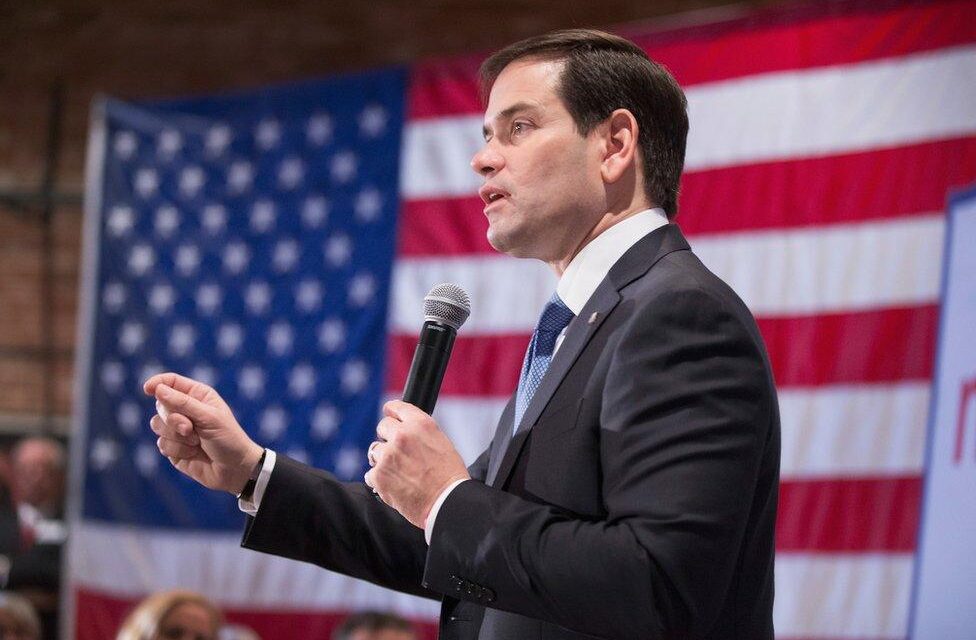
Secretary of State Marco Rubio has indicated that the United States remains willing to pursue diplomatic channels with Iran, keeping the door open for potential negotiations.
The statement marks a notable moment in U.S. foreign policy as tensions between Washington and Tehran have persisted across multiple administrations and years of stalled dialogue.
Rubio’s comments suggest the Trump administration is not entirely ruling out a negotiated path forward, even as pressure campaigns and sanctions continue to define much of the bilateral relationship.
The relationship between the U.S. and Iran has long been defined by mistrust, nuclear disagreements, and regional proxy conflicts that stretch from Yemen to Lebanon and Iraq.
Iran’s nuclear program remains the central point of contention, with Western powers demanding verifiable limits on enrichment activity in exchange for any meaningful sanctions relief.
Previous diplomatic frameworks, including the 2015 Joint Comprehensive Plan of Action, collapsed after the U.S. withdrew in 2018, leaving few formal mechanisms for direct engagement between the two governments.
Any renewed diplomacy would face significant domestic political resistance in both countries, where hardline factions on each side have historically opposed compromise with the other.
Regional dynamics have also shifted considerably, with the wars in Gaza and Lebanon, along with continued Houthi activity in the Red Sea, complicating the broader Middle Eastern security environment.
U.S. allies in the Gulf region and in Europe are watching closely, as any diplomatic breakthrough or breakdown with Iran carries major implications for regional stability and global energy markets.
Whether Rubio’s openness to diplomacy translates into formal talks remains to be seen, but the signal itself represents a meaningful data point in tracking the administration’s evolving Iran strategy.
