
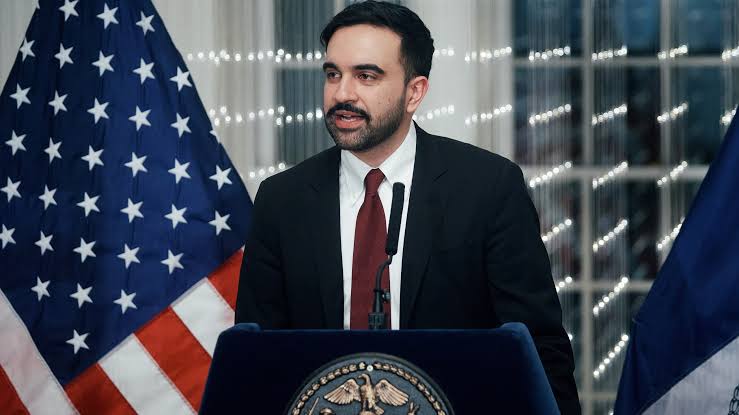
New York City Mayor Zohran Mamdani has ignited a fierce debate inside the Democratic Party after stating his administration is exploring whether it has the legal authority to arrest Israeli Prime Minister Benjamin Netanyahu.
Mamdani confirmed that the city’s Law Department is actively reviewing the question ahead of Netanyahu’s expected visit to New York for the United Nations General Assembly in September.
The mayor expressed support for the International Criminal Court’s existing arrest warrant against Netanyahu, framing his administration’s legal review as a natural extension of that position.
Netanyahu’s office responded sharply, accusing Mamdani of attacking the Jewish state as a distraction from his own record governing New York City.
The Israeli prime minister’s office also dismissed the ICC itself, calling it “a kangaroo court that has no jurisdiction over Americans or Israelis.”
The controversy exposed a widening schism within the Democratic Party over Israel policy, with prominent voices from within the party pushing back hard against Mamdani’s stance.
Former New York City Mayor Eric Adams wrote on X that “This isn’t a college protest. This is the City of New York,” making clear his disapproval of the mayor’s position.
Adams went further, writing that “Threatening to arrest the democratically elected leader of one of America’s closest allies during U.N. General Assembly week isn’t bold. It’s reckless.”
The episode reflects a broader shift in Democratic politics, where distancing from Israel is increasingly seen by some in the party as an electoral asset rather than a liability.
That shift is visible in Congress, where 103 House Democrats, representing 48 percent of the caucus, voted in favor of an amendment to eliminate all U.S. military aid to Israel.
An additional 10 House Democrats abstained from that vote, underscoring the degree to which Israel policy has become a genuinely contested question within the party’s ranks.
Representative Pat Ryan of New York moved quickly after the vote to declare publicly on X that he no longer wished to receive support from the American Israel Public Affairs Committee, known as AIPAC.
The combination of Mamdani’s arrest threat and the congressional vote signals that the traditional bipartisan consensus around U.S. support for Israel is under sustained and growing pressure.
Whether Mamdani’s administration ultimately concludes it has the legal authority to detain a sitting foreign leader remains an open question, with significant diplomatic consequences either way.
