
Prediction markets are flashing warning signs for Rocket Lab (NASDAQ: RKLB), even as Wall Street analysts maintain an overwhelmingly bullish stance on the space company.
Polymarket traders are pricing in continued downside for the stock, which has cratered 35.6% over the past month and is down 18.4% in just the last week.
The most active Polymarket contract, asking what price Rocket Lab will hit during July 2026, shows odds heavily stacked toward the downside with the stock trading at $67.35.
Bettors are assigning an 88% implied probability to a $64 target, a 64.5% implied probability to a $60 target, and just 5.2% and 2.1% odds to $108 and $112 recovery targets, respectively.
Total volume on the July market stands at just $9,836.60 with open interest of $3,450.93, making it a sentiment thermometer rather than a deep institutional-grade order book.
Polymarket’s recurring daily direction series showed a 43.5% probability that Rocket Lab would close higher on July 16, 2026, with the stock ultimately falling 11.6% that session to close at $67.35 from an open near $76.20.
Critically, across 21 resolved RKLB prediction markets on Polymarket, the crowd has been correct only 28.6% of the time, a track record worse than a coin flip on binary-style outcomes.
The crowd has repeatedly underestimated the stock, missing to the low side in recent months by as much as $62.41 in the May 2026 monthly market, where the implied price was $85.59 against an actual outcome of $104.
Wall Street’s analyst consensus price target sits at $116.57, implying 73.1% upside from current levels, placing analysts and prediction market bettors firmly on opposite sides of the trade.
Insiders have logged 91 recent transactions with a net selling direction, adding a complicating wrinkle to the bull thesis even as the composite prediction sentiment score sits at 57.88 with a 30-day change of negative 14.86 points.
Rocket Lab’s operational fundamentals stand in sharp contrast to the bearish market positioning, with Q1 FY2026 delivering record revenue of $200.35 million, up 63.5% year over year and beating consensus by 5.77%.
EPS came in at negative $0.07, ahead of the negative $0.079 estimate, while backlog reached $2.20 billion, up 20.2% sequentially, and non-GAAP gross margin expanded to 43.0% from 33.4% a year earlier.
CEO Peter Beck described the results directly: “Rocket Lab has delivered another exceptional quarter with record financial performance of more than $200 million in revenue. We exited the quarter with $2.2 billion in backlog and currently have access to more than $2 billion in liquidity, putting us in a very strong position for continued growth and M&A execution.”
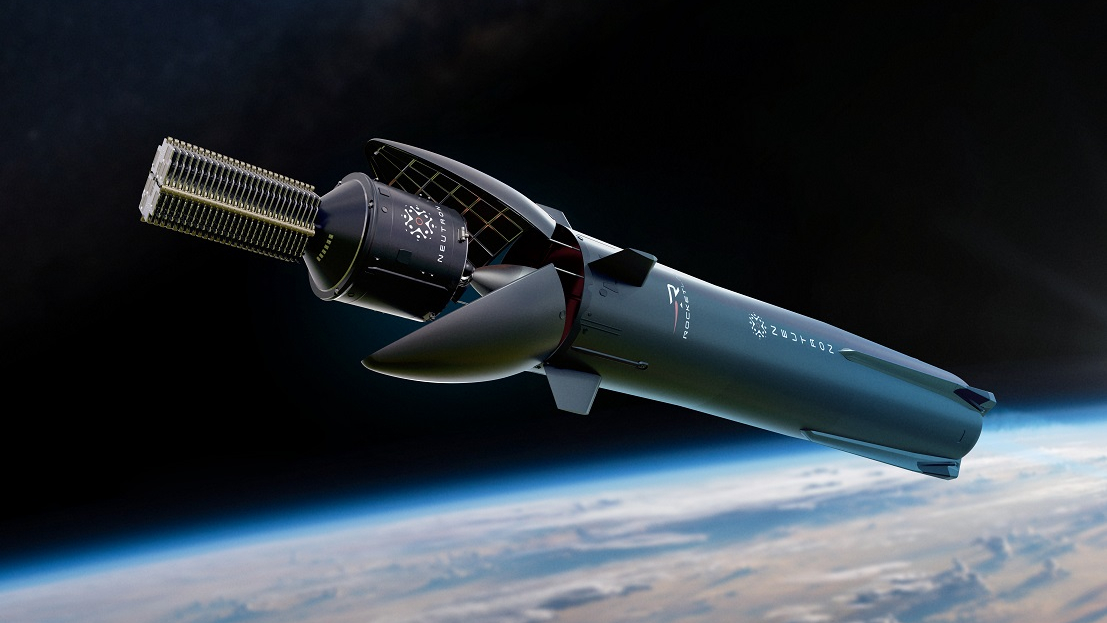
Guidance for Q2 2026 calls for revenue of $225 million to $240 million and non-GAAP gross margins of 38% to 40%, with the Neutron medium-lift rocket still on track for a debut launch later in 2026.
Three overlapping factors explain the current bearish Polymarket positioning: a 37.6% price decline between June 17 and July 16, broader sector fatigue, and execution overhang tied to Neutron’s delay and $28.1 million in stock-based compensation recorded in Q1 2026.
A late June Reddit thread titled “So did we stop caring about Space now?” drew 461 upvotes and 395 comments, capturing the prevailing mood among retail investors during that period.
Sentiment did spike into the 66 to 76 bullish range following the June 29, 2026, Iridium acquisition announcement, before cooling again by mid-July as another widely engaged thread questioned why Rocket Lab and AST SpaceMobile were both down more than 40% from their May highs.
The gap between Polymarket’s bearish cluster below $70 and the $116.57 analyst consensus reflects a wide range of outcomes, with sell-side models pricing in Neutron’s commercial ramp and the $816 million SDA Tranche 3 contract.
Rocket Lab’s one-year return remains 41.2% and its five-year return stands at 523.6%, historical context that matters when evaluating whether the current crowd positioning represents a genuine inflection or another anchoring miss.
Q2 2026 earnings and any updated timeline on Neutron’s Q4 debut launch represent the next major catalysts that will determine which side of this wide prediction gap proves correct.
