
Rocket Lab (NASDAQ: RKLB) has dropped 5.5% even as the company delivered a string of headline-grabbing milestones that would typically send a growth stock sharply higher.
Earlier this month, the company announced full success on the U.S. Space Force’s VICTUS HAZE mission, completing launch, spacecraft delivery, and rapid on-orbit rendezvous and proximity operations under a single contract.
The VICTUS HAZE contract was structured as a record-setting Tactically Responsive Space agreement, underscoring the Pentagon’s growing reliance on commercially agile launch providers.
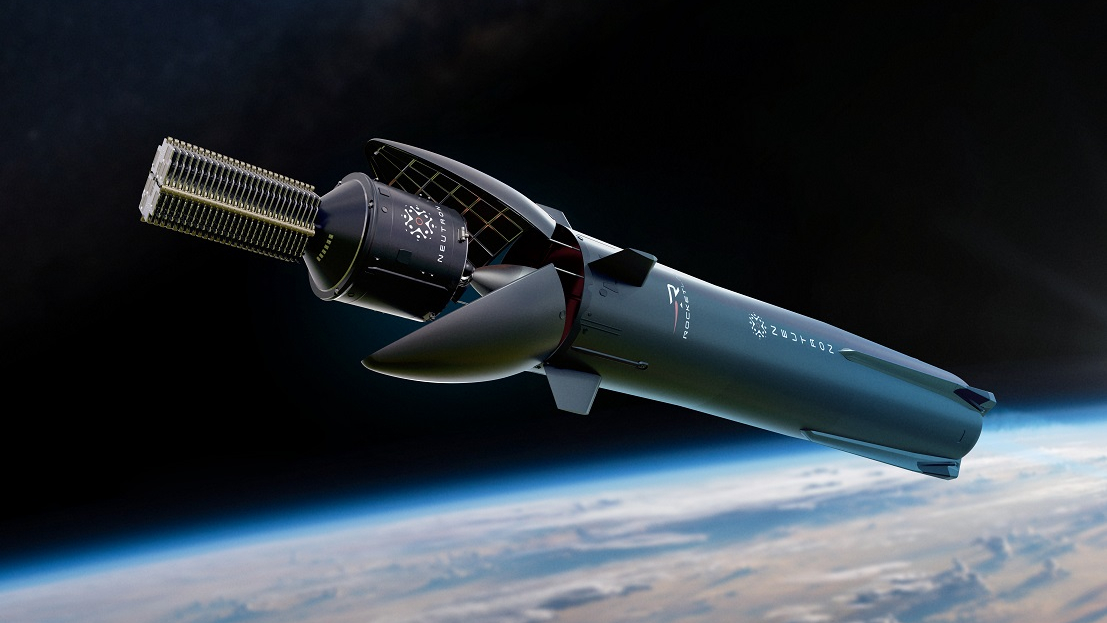
Alongside the defense win, Rocket Lab completed a full-duration second-stage engine test for its Neutron rocket, marking a significant step forward in the company’s medium-lift reusable launch program.
The company is also pursuing a planned acquisition of Iridium valued at US$8.00 billion, a move that signals a fundamental shift away from its origins as a small-satellite launcher.
Together, these developments position Rocket Lab as an emerging vertically integrated space infrastructure and services provider spanning defense, communications, and reusable medium-lift rockets.
Despite the positive operational headlines, the investment case still hinges heavily on Neutron’s development timeline, which remains the single largest execution risk facing the business today.
The completed full-duration Neutron second-stage engine test is the most consequential of the recent announcements, as it ties the bull case directly to whether the company can deliver a working reusable medium-lift rocket on schedule.
Analyst projections show a wide range of outcomes, with the most optimistic models forecasting revenue near US$2.2 billion and earnings of US$365 million by 2029, contingent on continued VICTUS HAZE-style defense contract wins and successful Neutron deployment.
A separate narrative analysis projects US$1.7 billion in revenue and US$167.5 million in earnings by 2029, with a calculated fair value of US$103.91 per share, implying roughly 32% upside from current trading levels.
The core question for investors is whether Rocket Lab can convert today’s unprofitable, cash-intensive operations into a durable, scaled platform before capital requirements outpace market confidence.
Any setbacks on Neutron’s path to first launch would likely weigh more heavily on the stock than progress in space systems or communications infrastructure, given how central the reusable rocket program is to the long-term thesis.
The 5.5% share decline following genuinely positive news may reflect broader investor caution around cash burn, execution timelines, and the sheer scale of transformation the company is attempting across multiple high-risk programs simultaneously.
