
SWIFT (NYSE: XRP) (NYSE: XLM) officially launched its blockchain-based shared ledger on July 9, with 17 banks spanning six continents preparing to pilot around-the-clock tokenized cross-border payments.
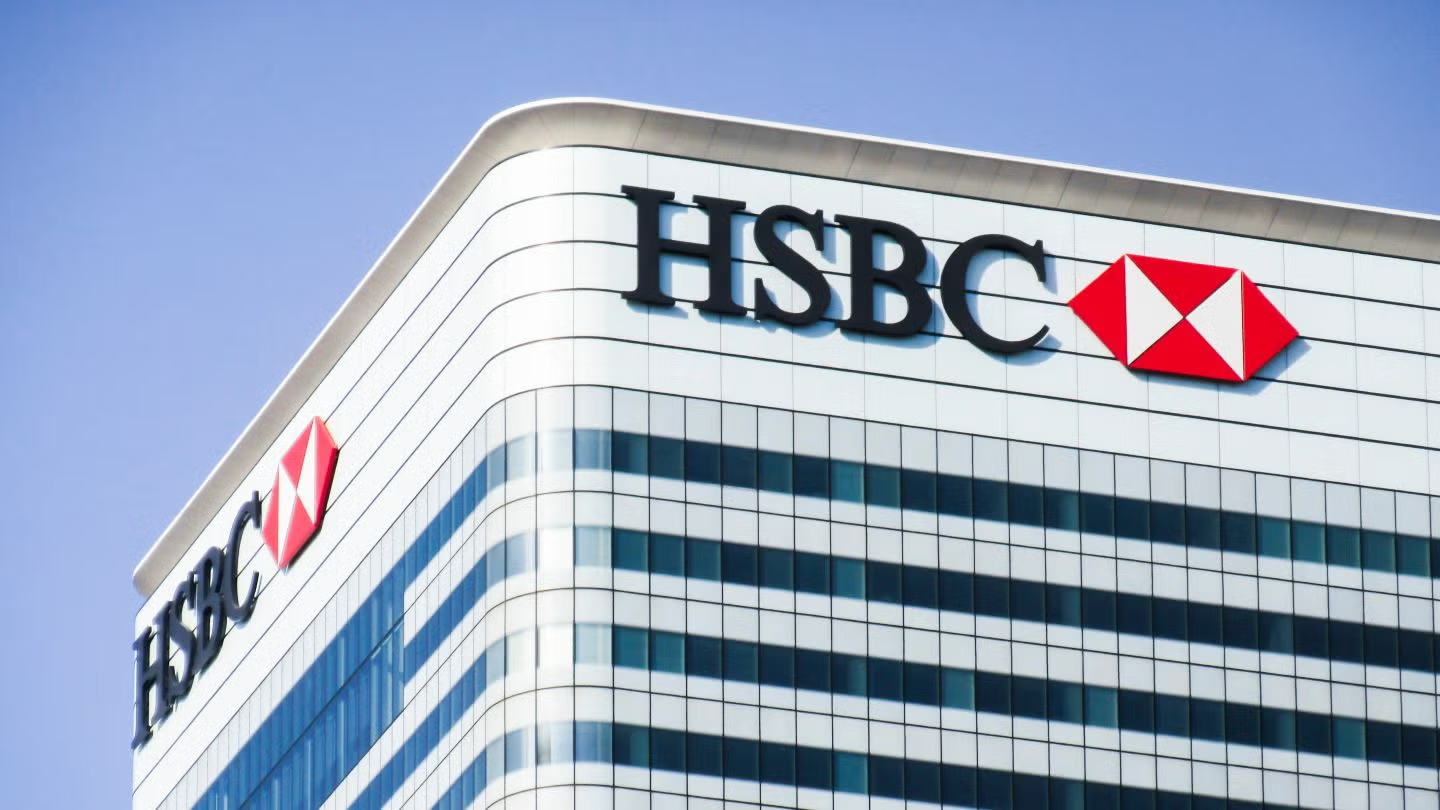
Participating institutions include HSBC, Citi, UBS, BNY, Wells Fargo, Standard Chartered, and BNP Paribas, representing some of the largest financial players in global capital markets.
The system was designed and built in just nine months following direct feedback from international financial institutions, an unusually rapid development timeline for infrastructure of this scale.
SWIFT Chief Business Officer Thierry Chilosi described the launch as a step that “extends the trust and stability of established finance into the frontiers of digital money.”
The ledger enables banks to move tokenized deposits overnight and on weekends, completing final settlement through existing infrastructure rather than replacing it entirely.
Critically, the system runs entirely on tokenized bank deposits and is not built on any public blockchain or crypto asset, meaning nothing in its architecture requires XRP or any other digital token.
The launch has reignited a long-running debate about what bank-led blockchain infrastructure means for crypto assets positioned as cross-border settlement tools, with data supporting arguments on both sides.
SWIFT’s network is equally distant from Stellar’s blockchain as it is from the XRP Ledger, meaning the competitive pressure applies to XLM just as directly as it does to XRP.
Earlier SWIFT-linked commentary explicitly named both Ripple and Stellar as blockchain-native networks that its new infrastructure could directly compete with, grouping the two rivals together in its broader market framing.
Stellar’s institutional position carries one notable distinction, as the Depository Trust and Clearing Corporation, which oversees $114 trillion in U.S. capital market assets, selected Stellar as the first public blockchain to host tokenization of DTC-custodied assets, with availability targeted for the first half of 2027.
That DTCC announcement alone sent XLM up 28% in a single trading day against a broadly falling crypto market, underscoring how sensitive token prices remain to institutional partnership news.
However, the structural weakness for both XRP and XLM is the same: token demand and network usage remain largely disconnected, since banks can transact on these public chain infrastructures without materially increasing demand for the underlying tokens.
XLM has historically struggled to convert network usage into sustained price appreciation, trading well below its highs even as institutional integrations accumulated through 2025 and 2026.
For both assets, SWIFT’s ledger launch reinforces an unresolved question rather than answering it: whether deep institutional plumbing will eventually force real token demand, or whether banks simply route value through public chains without ever needing to hold the coins that underpin them.
