
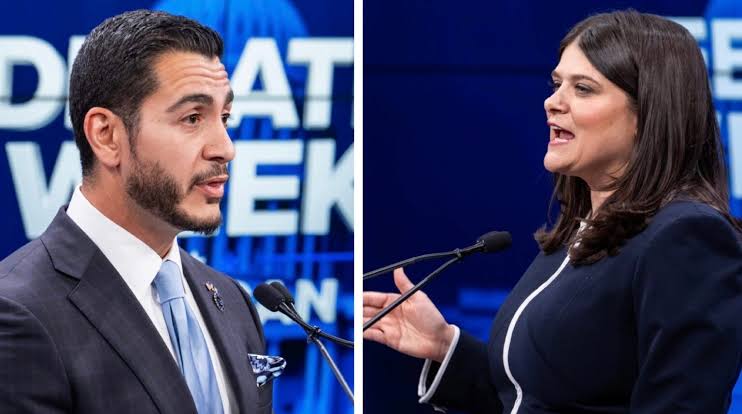
The Michigan Democratic Senate primary has emerged as the most significant test yet of the party’s deepest internal divisions heading into the 2026 midterm elections.
State Sen. Mallory McMorrow’s exit from the race, driven by fundraising and polling struggles, has narrowed the contest to a direct clash between the party’s establishment and progressive wings.
Rep. Haley Stevens now carries the banner for establishment Democrats, backed by Senate Minority Leader Chuck Schumer and EMILYs List, making her the preferred candidate of the party’s institutional power structure.
On the other side, Abdul El-Sayed, a former public health official, has consolidated progressive support and is backed by Sen. Bernie Sanders, positioning the race as a referendum on the direction of the Democratic Party.
Rep. Alexandria Ocasio-Cortez added fuel to the fire last week, endorsing El-Sayed in her first contested Senate primary endorsement of the 2026 cycle, sharply raising the national profile of the contest.
The endorsement has intensified scrutiny of Stevens’s relationship with Schumer, and when asked whether Schumer is the right person to lead Senate Democrats, Stevens declined to answer directly, saying, “I don’t think we should be talking about that and giving Trump any more wins.”
The stakes are unusually high because this is the only open Democratic-held Senate seat up for election in a state that Donald Trump carried in the 2024 presidential election.
Unlike recent progressive victories concentrated in safely Democratic districts, the eventual nominee will face a competitive general election in one of the country’s most consequential battleground states.
Policy disagreements between the two candidates span immigration, foreign policy, and healthcare, with Stevens’s receipt of support from the pro-Israel lobby group AIPAC emerging as a notable flashpoint in the race.
El-Sayed has recently emerged as the apparent front-runner, with polling showing him leading Stevens by roughly 5 points as progressives attempt to prove their movement can compete statewide in a battleground environment.
Analysts caution that the race may ultimately turn on voter turnout mechanics rather than national ideological narratives, with younger voters seen as a critical variable in determining the outcome.
The key question heading into the August 4 primary is whether El-Sayed can mobilize younger voters, with one observer noting: “The thing to watch for is, as we start to get absentee returns, are they having success getting young people to vote absentee?”
The competing endorsements from Schumer and Ocasio-Cortez underscore a broader debate inside the party over whether its path back to power lies in energizing the progressive base or appealing to moderate and independent voters in competitive states.
