
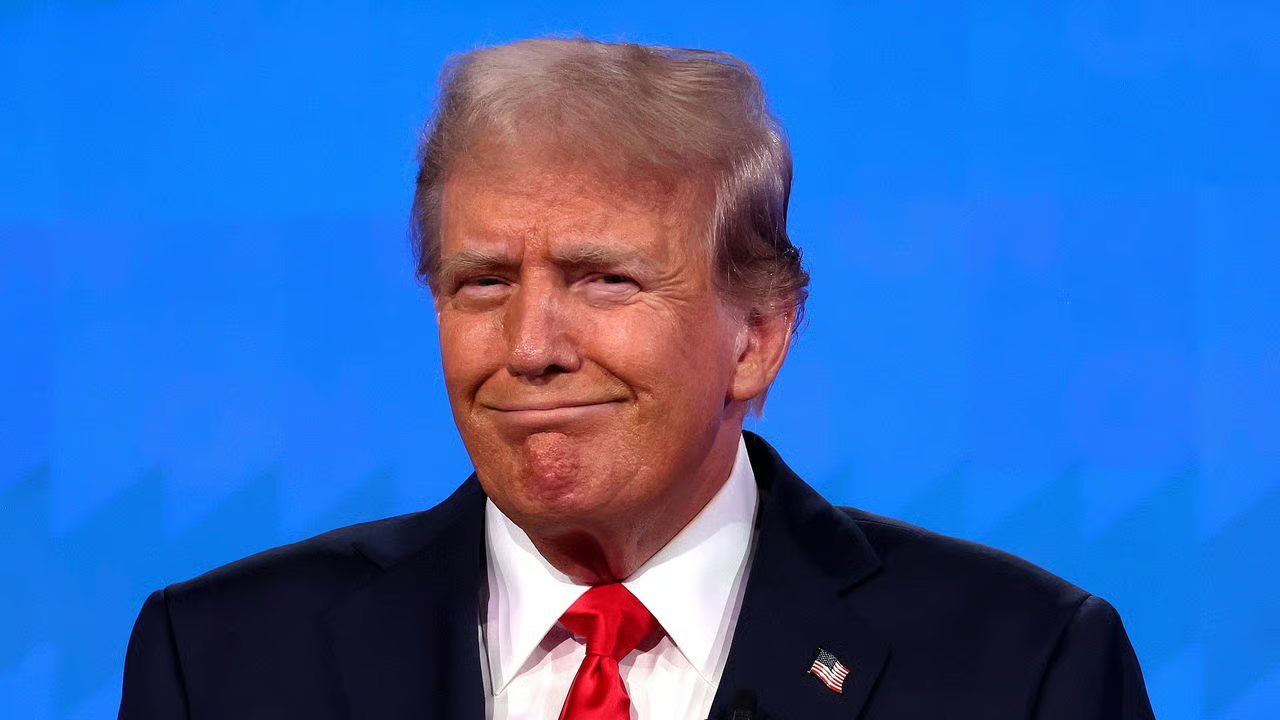
Oil markets lurched back into crisis mode after President Donald Trump declared the U.S.-Iran ceasefire finished, triggering sharp price swings across global energy markets.
Trump made the remarks on the sidelines of the NATO summit in Ankara, Turkey, telling reporters plainly: “To me, I think it’s over,” in reference to the ceasefire agreement signed just weeks prior.
The comments came hours after U.S. Central Command announced it had struck targets in Iran following Iranian attacks on commercial vessels in the Strait of Hormuz.
U.S. crude oil prices surged as high as $76 per barrel in the immediate aftermath, marking the largest single-day move upward since the beginning of June.
Prices ultimately closed the day at $73.52 per barrel, a gain of 4.4%, bringing the two-day advance to more than 7% as traders scrambled to reprice supply risk.
International benchmark Brent crude also spiked sharply, rising as high as $80 per barrel before settling at $78.02, up 5.2% on the day.
The renewed hostilities unraveled weeks of relative calm that had followed a memorandum of understanding signed in mid-June, during which U.S. oil prices had stabilized in a narrow band between $69 and $70 per barrel.
Despite the dramatic single-day moves, current prices remain well below the wartime peaks that had pushed U.S. crude near $120 per barrel at the height of the conflict.
Trump also floated the possibility of reimposing a naval blockade on Iran and threatened further military strikes, while describing peace negotiations as “a waste of time dealing with” the Iranian side.
The ceasefire agreement had required Iran to reopen the Strait of Hormuz to oil tanker traffic and included a lifting of U.S. sanctions on Iranian oil, both of which are now effectively reversed amid the renewed confrontation.
Geoff Yu, senior market strategist at BNY, warned that “for markets and the global economy, the prospect of a swift return to pre-conflict energy and goods flows through the waterway is fading.”
The political fallout is already being felt domestically, with Republican candidates who had banked on stabilized fuel prices heading into the midterm elections now facing renewed uncertainty at the pump.
According to AAA tracking data, the average price of a gallon of regular gasoline stood at $3.80 nationally on Wednesday, up slightly from the prior day but still 5 cents lower than a week earlier.
Analysts cautioned that the situation remains deeply fluid, with one market observer noting that “the latest attacks have reminded investors that while a ceasefire remains in place, a lasting agreement between the U.S. and Iran is far from guaranteed.”
