
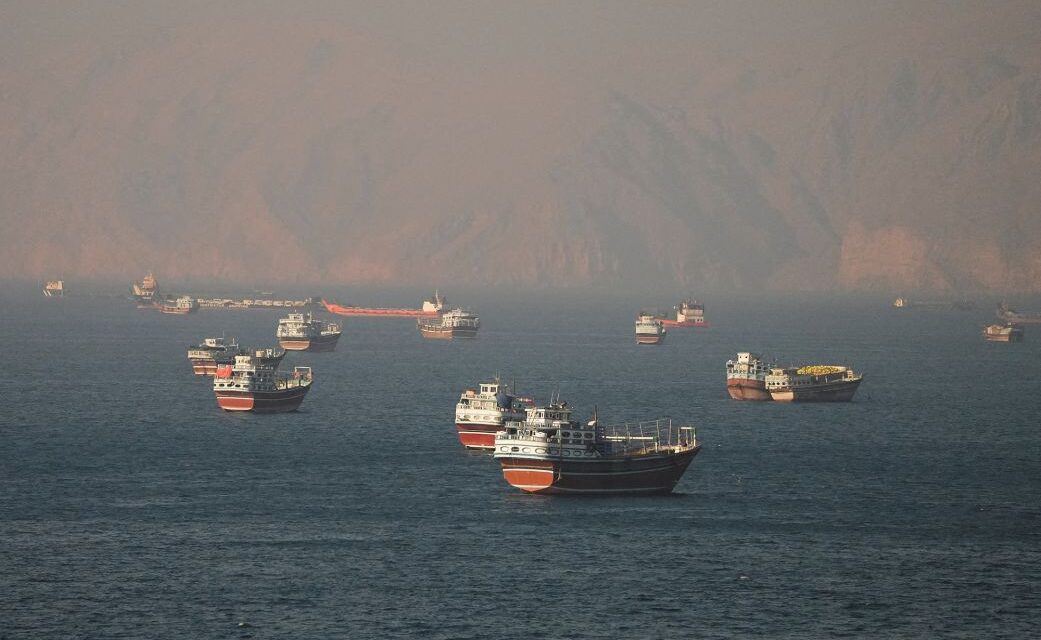
Tanker traffic through the Strait of Hormuz is showing signs of serious disruption, with multiple vessels making abrupt course reversals in recent days.
At least eight oil tankers and LNG carriers made unexplained U-turns near the Omani coast on Friday and Saturday while outbound from the Persian Gulf, according to vessel-tracking data compiled by Bloomberg.
Following those incidents, at least six additional tankers carrying oil or LNG moved to exit the Persian Gulf through Hormuz on a route close to Oman’s coast on Sunday, the Bloomberg data showed.
Of the tankers that made U-turns, four moved north and ultimately exited the Strait of Hormuz close to Iran, navigating what is likely an Iran-controlled lane through the waterway.
The remaining vessels that reversed course were observed sticking to the route along the Omani coast, according to the Bloomberg vessel-tracking data.
Iran reiterated this past weekend its intention to charge vessels for passage through the Strait of Hormuz, a move the United States has strongly and publicly opposed.
The Strait of Hormuz remains one of the world’s most critical energy chokepoints, with a significant portion of global oil and liquefied natural gas exports transiting the narrow waterway each day.
Some shipowners and operators continue moving vessels through the area with transponders switched off, a tactic used to avoid detection and reduce the risk of being targeted amid the ongoing tensions.
The practice of disabling transponders makes it significantly harder for analysts and governments to track actual volume flows through the strait, adding uncertainty to global oil supply and demand calculations.
The lack of reliable estimates of actual volume flows through Hormuz remains a major unknown for the global oil market, complicating efforts by traders and governments to assess supply balances accurately.
The situation along the strait remains highly volatile, with no clear resolution in sight regarding Iran’s stated ambitions to impose transit fees on vessels passing through the critical shipping lane.
