
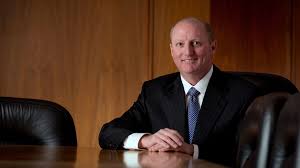
Berkshire Hathaway (NYSE: BRK.A) under Greg Abel is signaling a decisive pivot toward technology, with roughly 30% of its $343 billion investment portfolio concentrated in two foundational AI stocks.
The two companies anchoring that position are Apple (NASDAQ: AAPL) and Alphabet (NASDAQ: GOOGL), the parent company of Google, representing a substantial bet on the future of artificial intelligence.
Abel, who succeeded Warren Buffett as Berkshire’s chief executive, has used his first quarter at the helm to make clear that technology stocks are firmly on the agenda in the post-Buffett era.
The combined weighting of Apple and Alphabet in the portfolio sits at approximately 28% to 30%, underscoring just how central these two AI titans have become to Berkshire’s investment identity under new leadership.
Berkshire first initiated a position in Alphabet during the third quarter of 2025, before adding more shares in the first quarter of 2026, suggesting Abel was building conviction in the stock well before formally taking the top job.
Alphabet recently announced an $80 billion equity capital raise designed to fund its aggressive artificial intelligence ambitions, a move that drew significant institutional attention and capital.
As part of that raise, Berkshire participated in a $10 billion private placement with Alphabet, further deepening its exposure to the company and signaling a long-term strategic alignment between the two firms.
Alphabet’s shares have roughly doubled over the past 12 months since Berkshire first purchased the stock, validating Abel’s early confidence in the company’s AI-driven growth trajectory.
Apple remains the other cornerstone of this concentrated bet, a position that dates back to the Buffett era but which Abel has chosen to maintain as a foundational holding within the portfolio.
The scale of this two-stock concentration reflects a broader philosophical shift at Berkshire, with Abel appearing far more comfortable than his predecessor in accepting meaningful exposure to large-cap technology companies at the center of the AI transformation.
Whether this strategy delivers the returns Abel is clearly expecting will depend heavily on how both Apple and Alphabet navigate an increasingly competitive and capital-intensive artificial intelligence landscape in the years ahead.
