
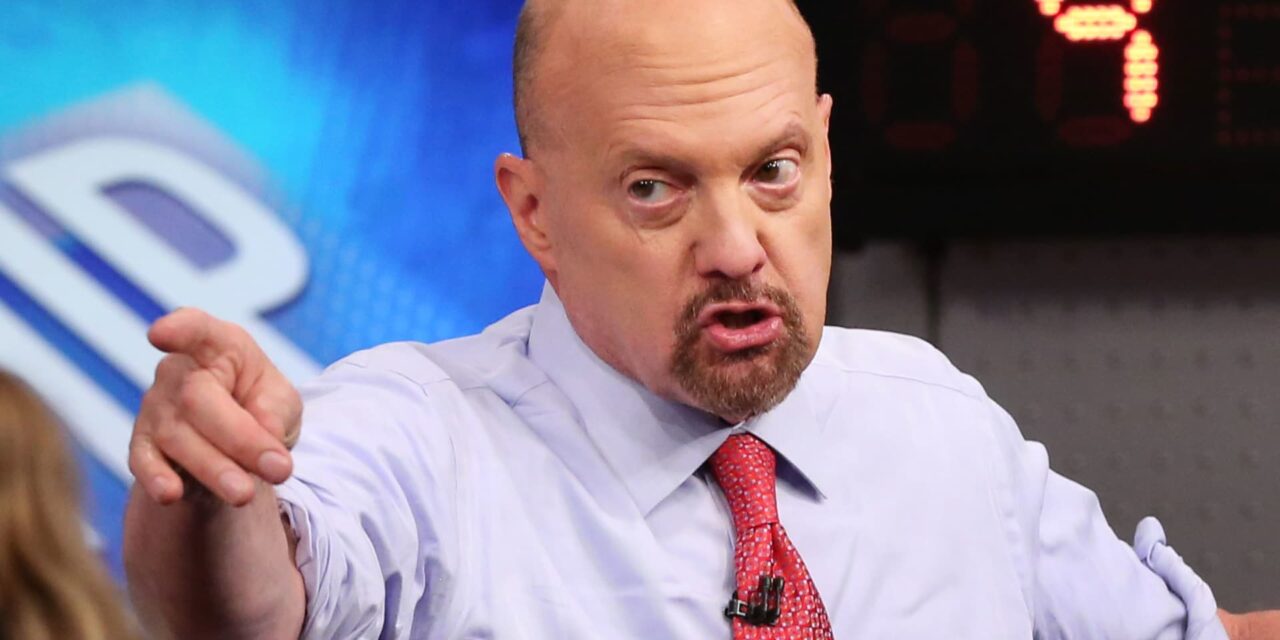
GE Vernova Inc. (NYSE: GEV) appeared on Jim Cramer’s Mad Money radar as the host walked investors through how to profit from an anticipated wave of corporate takeovers.
During the program’s lightning round, a caller asked Cramer for his take on GEV stock, prompting a notably enthusiastic response from the longtime market commentator.
Cramer stated plainly: “GE Vernova of those is my favorite. It’s one that the Charitable Trust has a very big position in.”
He continued: “I believe in Scott Strazik. I think it is a terrific situation. Held up very well. I say still, buy GE Vernova.”
The endorsement was not the first time Cramer had spoken favorably about the company, having also addressed the stock during an earlier episode of the program on May 29.
On that occasion, Cramer told viewers: “I think GE Vernova is absolutely terrific. We know that it’s come down nicely from its top. It’s at a very good level.”
GE Vernova provides products and services for generating, converting, storing, and managing electricity, with operations spanning gas, nuclear, hydro, and wind technologies.
The company’s diversified energy portfolio has positioned it as a key player in the ongoing global transition toward more flexible and resilient power infrastructure.
Cramer’s Charitable Trust holding a significant position in GEV signals a degree of personal conviction that goes beyond a casual on-air recommendation, adding weight to his bullish stance.
The stock has faced some volatility, trading down approximately 1.87% at the time the comments circulated, though Cramer’s remarks suggest he views any pullback as an opportunity rather than a warning sign.
With energy demand surging globally, particularly as artificial intelligence data centers require significantly more power capacity, companies like GE Vernova are drawing increasing attention from institutional and retail investors alike.
Cramer’s repeated endorsement of GEV across multiple Mad Money segments underscores his view that the stock remains attractively positioned despite near-term market fluctuations.
