
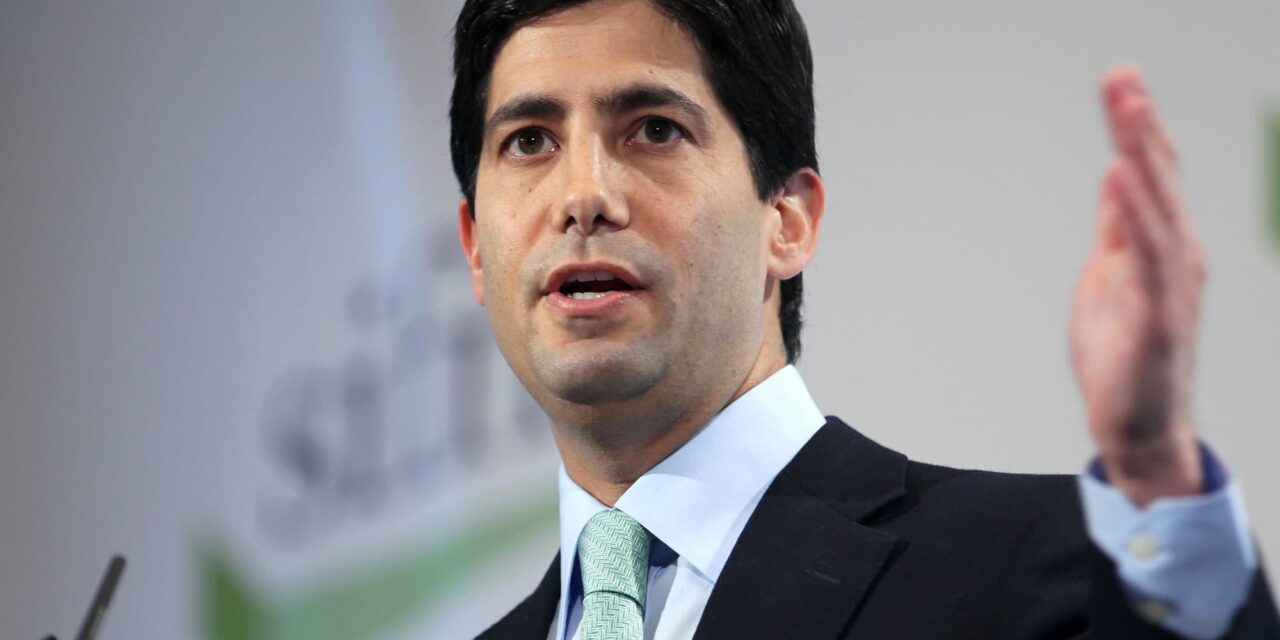
Kevin Warsh, President Trump’s pick to chair the Federal Reserve, has positioned artificial intelligence as central to his economic outlook and future monetary policy decisions.
Warsh has described AI as “the most productivity-enhancing wave of our lifetimes — past, present and future,” framing it as a potential justification for lower interest rates down the road.
His argument holds that massive capital investment in AI data centers will eventually lift worker productivity, driving stronger U.S. economic growth without reigniting inflation.
But significant disagreement remains over the timeline, with former Dallas Federal Reserve President Robert Kaplan speculating it may not be “until late 2026 or sometime in 2027” before Warsh could start convincing Fed policymakers to lower interest rates while citing AI.
The debate arrives at a pivotal moment, with AI still firmly in an adoption phase and only 20% of firms currently employing some form of AI in their operations.
That share is steadily growing, and corporate spending commitments suggest the buildout is accelerating at a pace that is already reshaping the broader macroeconomic picture.
Amazon, Google, Microsoft, and Meta reported a combined $131 billion in AI-related capital expenditure during the first quarter alone, with all four companies subsequently raising their forecasts.
Many analysts argue these staggering investment levels are a key reason the U.S. economy has maintained robust growth even as broader conditions remained uncertain.
A notable data point has caught the attention of policymakers: the economy expanded by 2.2% in 2025 even as hiring slowed, suggesting workers are becoming more productive even as fewer workers enter the labor market.
Not everyone is convinced the Fed should anchor policy expectations to AI optimism, with senators on both sides of the aisle urging Warsh to approach the subject with caution.
During his confirmation hearing, Sen. John Kennedy of Louisiana warned that “a lot of this stuff about artificial intelligence making us more productive is a bunch of hype by people who want to sell stock and an IPO.”
Sen. Thom Tillis echoed that skepticism, telling reporters, “I hope the Fed filters out all that noise,” and pressing for an empirical rather than hype-driven approach to monetary policy.
Historians of technology point to instructive precedent in how long transformative innovations take to register in productivity statistics in a meaningful way.
Electricity began powering commercial grids in the 1880s but required decades of grid-building, factory redesign, and worker retraining before delivering its full economic impact.
If AI follows a similar adoption curve, the productivity gains Warsh is counting on may materialize well after the window when rate decisions need to be made.
