
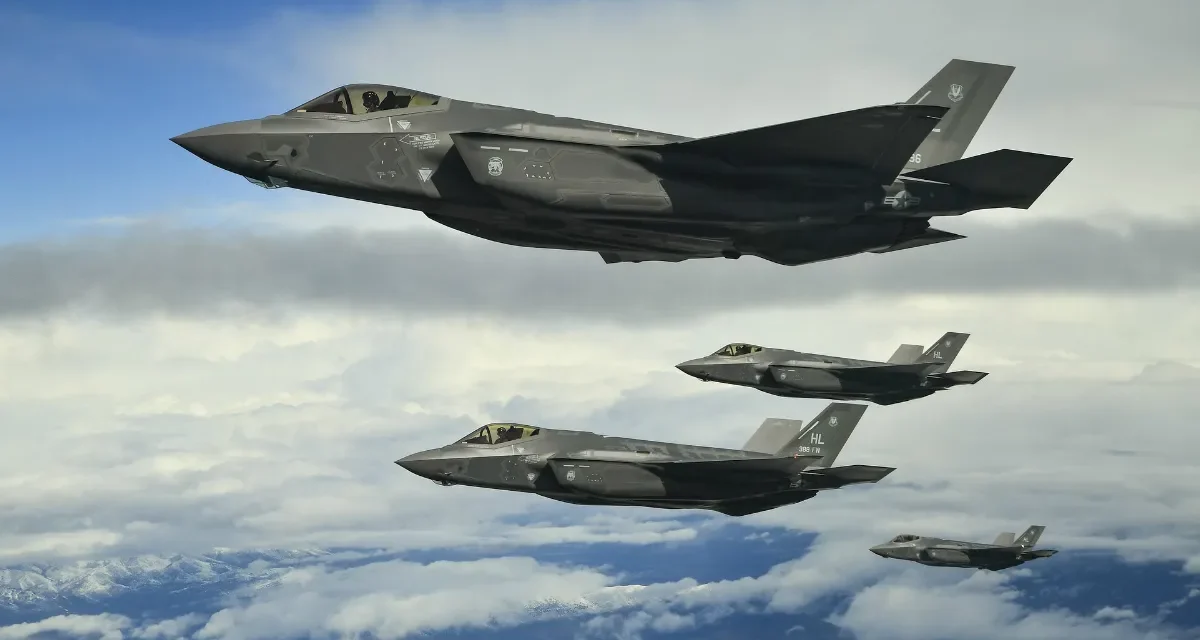
The U.S. military launched strikes against Iranian missile and drone storage facilities and coastal radar positions following a drone attack on a cargo ship in the Strait of Hormuz.
U.S. Central Command, known as Centcom, described the American military action as “a powerful response” to the Iranian drone strike, which occurred on Thursday and disrupted a planned evacuation of stranded sailors.
The targeted vessel was the Ever Lovely, a Singapore-flagged cargo ship owned by Evergreen, which was struck approximately 7.5 nautical miles south-east of Oman’s port of Dahit.
Evergreen confirmed that the Ever Lovely had been following the United Kingdom Maritime Trade Operations recommended route through the strait at the time of the attack.
“All crew members remain safe as does the vessel itself and all cargo,” Evergreen said in a statement following the incident.
Centcom stated that “the unwarranted aggression against commercial shipping by Iranian forces clearly violated the ceasefire,” warning that freedom of navigation through the vital trade corridor had been undermined.
Tehran responded by accusing the United States of violating the interim agreement, with Iran’s Islamic Revolutionary Guard Corps claiming its navy had struck U.S. military positions in the region.
Bahrain’s foreign ministry also reported that its territory had come under attack from “several Iranian drones” early Saturday, condemning the action as a “flagrant violation” of its sovereignty.
The United Kingdom Maritime Trade Operations separately reported that a tanker was struck by an unidentified projectile in the Strait of Hormuz on Saturday, sustaining damage to its bridge, though all crew were reported safe.
The escalation threatens a fragile ceasefire agreement reached on June 17, under a 14-point memorandum of understanding that called for Iran to use its “best efforts for the safe passage of commercial vessels with no charge for 60 days.”
Vice President JD Vance warned following the U.S. retaliatory strikes that if Iran “has disagreements about how the MOU is being applied, they can pick up the phone,” before adding bluntly, “But violence will be met with violence.”
Ebrahim Azizi, head of the Iranian parliament’s national security commission, hit back on social media, writing that “this reckless violation of the ceasefire will, as always, lead to retreat and regret on their part.”
Speaking to reporters at the White House on Friday, President Donald Trump declined to detail the U.S. response but said, “I don’t like the fact that they took a shot yesterday. They shouldn’t be doing that.”
When pressed on Iran’s motivations, Trump offered only that “they’re a little bit different,” stopping short of elaborating on the diplomatic implications of the attack.
On Wednesday, Trump had posted on Truth Social that Iran informed the U.S. there would be “no tolls, no insurance costs and no other charges of any kind being sought or received,” warning that “if this is false information, negotiations would end, immediately.”
Iran’s chief negotiator, Mohammed Bagher Ghalibaf, had struck a harder tone in remarks to state-affiliated outlets, declaring that “everyone should know that the administration of the Strait of Hormuz will never go back to the way it was before the war.”
The shutdown of the strait earlier this year, following U.S. and Israeli attacks against Iran beginning in late February, caused a spike in global oil prices and choked shipments of key commodities including fertilizer.
The United Nations’ International Maritime Organization paused its planned evacuation of more than 11,000 sailors stranded in the shipping lane since the conflict began, citing the renewed threat environment following Thursday’s attack on the Ever Lovely.
