
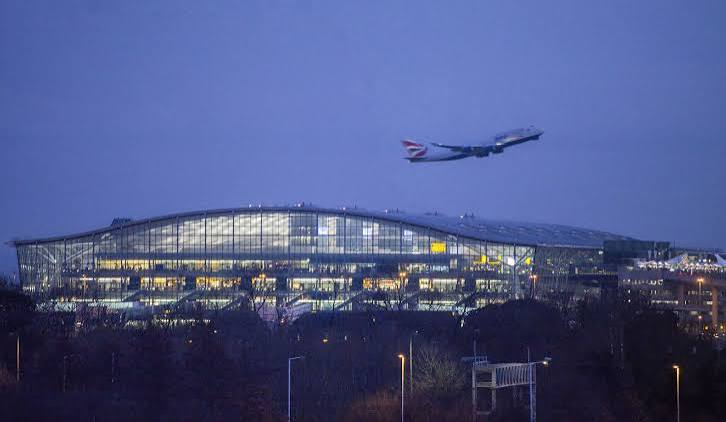
Heathrow Airport has revised its annual passenger and earnings forecasts downward, citing growing geopolitical uncertainty as a significant drag on global travel demand.
The move signals a broader shift in confidence across the aviation sector, as airlines and airports worldwide grapple with an increasingly unpredictable operating environment.
Heathrow, one of the world’s busiest international aviation hubs, has long served as a bellwether for global travel trends and transatlantic passenger flows.
A reduction in the passenger outlook suggests that traveler confidence may be softening in key markets, particularly on long-haul routes that form the backbone of the airport’s commercial model.
Geopolitical tensions have been a persistent source of disruption across the travel industry in recent years, dampening forward bookings and causing carriers to reassess capacity planning.
Airports of Heathrow’s scale are particularly sensitive to such shifts, given their dependence on high-volume international routes connecting Europe, North America, Asia, and the Middle East.
The revised earnings forecast adds further pressure to an industry still managing the residual effects of post-pandemic recovery costs, infrastructure investment, and rising operational expenses.
For passengers, a more cautious outlook from Heathrow could translate into route adjustments, changes in airline scheduling, and potential shifts in pricing across key travel corridors.
The wider travel industry will be watching closely, as Heathrow’s revised projections may prompt other major European hubs to reassess their own forward guidance in the coming weeks.
Investors and analysts tracking the aviation and infrastructure sectors will likely scrutinize the revised figures for any indication of longer-term structural change in international passenger demand.
The situation reflects a recurring challenge for major global airports: balancing long-term capital commitments against the inherent volatility of geopolitically driven travel patterns.
Until greater clarity emerges on the international stage, airports like Heathrow may continue to err on the side of caution when setting forward expectations for both passenger volumes and financial performance.
