
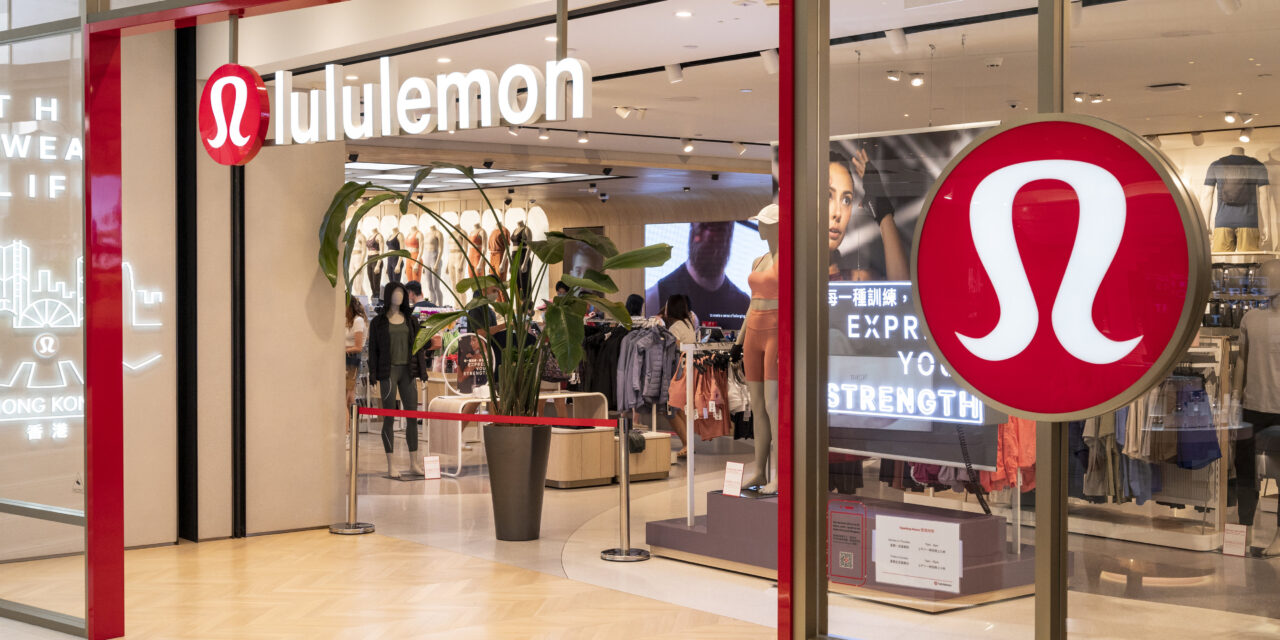
Famed investor Michael Burry has publicly identified Lululemon Athletica (NASDAQ: LULU) as a compelling value opportunity, arguing Wall Street is too focused on short-term setbacks.
Burry made his case in a Substack post, contending that temporary challenges have pushed Lululemon’s share price to unjustifiably depressed levels relative to its underlying fundamentals.
The stock has collapsed roughly 45% year-to-date, falling from more than $423 in early 2025 to around $104, placing it at a seven-year low.
Burry pointed to a long history of crises at Lululemon, including controversies linked to founder Chip Wilson, tariff-related margin pressure, and repeated leadership instability that rattled investor confidence.
He noted that a tax law introduced during President Trump’s first term increased costs for Lululemon’s overseas operations, cutting the company’s gross margin by approximately 2.5 percentage points.
“As shares languished, LULU’s infamous CEO carousel continued to spin. A management void developed. It was as if no one is in charge. The stock fell more,” Burry wrote.
He said the company staged a strong comeback when CEO Calvin McDonald took office in 2018, with profit margins recovering to record levels and the stock eventually quadrupling from its 2014 low.
Lululemon now faces a fresh round of pressure, with Burry noting that President Trump’s second-term tariffs are once again squeezing gross margins, even though the company had already shifted production away from China.
Management has confirmed that tariffs alone reduced product margins by nearly three percentage points in the most recent quarter, compounding the strain from a leadership vacuum ahead of an incoming CEO from Nike.
Burry drew a parallel between Lululemon today and Ross Stores in 2000, arguing that investors distracted by the AI market frenzy are ignoring a profitable retailer with durable brand strength and a clean balance sheet.
He dismissed competitive threats from newer athleisure brands such as Alo and Vuori, stating that “at least 95% of LULU’s customers are not customers of either of the upstarts.”
Burry acknowledged that 2024’s botched launch of Breezethrough leggings, which were pulled after criticism over design and transparency flaws, contributed to a damaging cycle of management missteps and lost momentum.
While North American sales have softened, China continues to generate growth for Lululemon, though even that market has not been immune to controversy following a marketing event that drew criticism on Chinese social media.
“Today, in fact, Lululemon is suffering under another federal order – also from President Trump, now in his improbable 2nd term. This time, Trump II’s tariffs are killing gross margins,” Burry wrote.
He argued the company’s core business remains intact, describing the situation as a failure of execution rather than a structural collapse of the brand or its customer base.
“The business is not falling apart. It is simply not growing due to multiple mistakes, lack of management, lack of execution, and regulatory hits with tariffs and the extinction of the de minimis exemption,” Burry said.
On valuation, Burry highlighted that Lululemon stands out as uniquely cheap among U.S. apparel retailers, citing its strong cash position, minimal debt, solid returns on capital, and growing book value.
“LULU is the one and only U.S. clothing retailer of any market capitalization trading at less than 3x tangible book and less than 10x earnings,” he noted.
Burry concluded that incoming CEO Heidi O’Neill represents a genuine catalyst for recovery, and that bad management, while painful, has historically been one of the most reliable creators of value investing opportunities.
“Bad management is a value investor’s best friend. If not for bad management, the world would be more boring, less colorful, and less undervalued. Of course, like all best friends, bad management should not overstay its welcome,” Burry added.
