
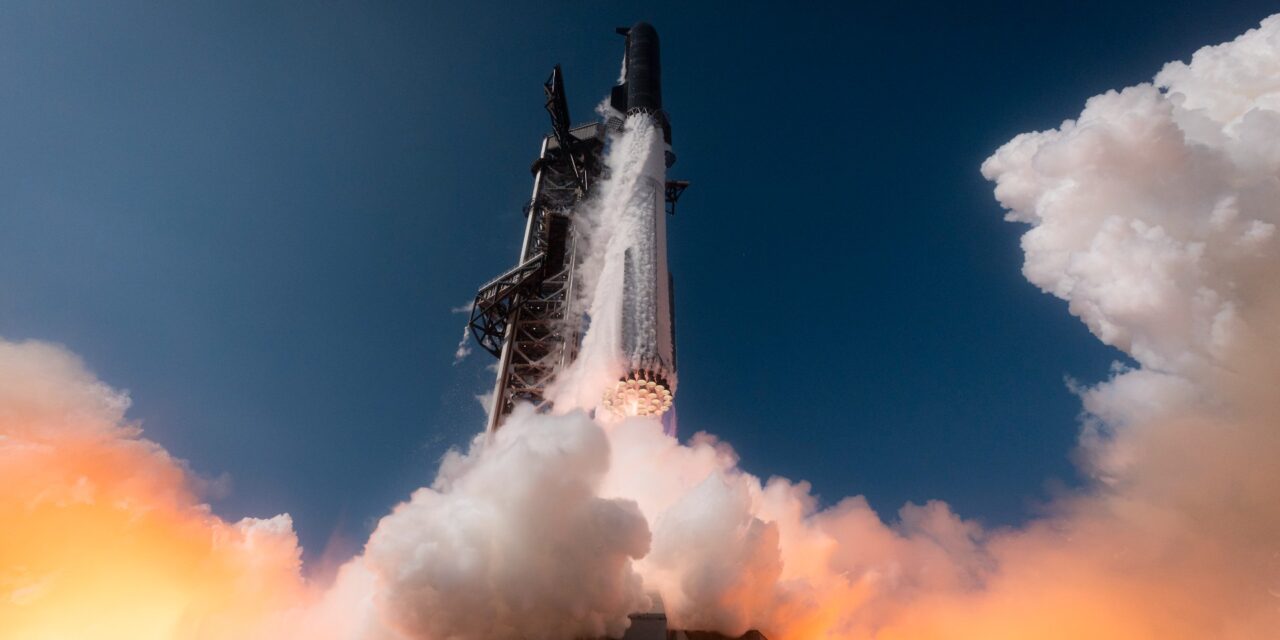
The blockbuster IPO of Space Exploration Technologies, known as SpaceX, has sent shockwaves through global markets, transforming the company into a multitrillion-dollar giant overnight.
The historic debut triggered what analysts are calling a temporary liquidity vacuum, with investors selling off smaller aerospace positions to fund their SpaceX allocations.
Despite the turbulence, the IPO ultimately validated the enormous scale of the modern space economy, opening the door to broader investment across the sector.
SpaceX’s premium valuation leaves almost zero room for error, meaning the smarter risk-reward plays may lie elsewhere in the aerospace and defense supply chain.
Two companies standing out in this environment are Rocket Lab (NASDAQ: RKLB) and Leidos (NYSE: LDOS), both of which offer compelling exposure to the space boom without the crowded valuation risk.
Rocket Lab’s highly anticipated medium-lift reusable rocket, the Neutron, is slated for its debut late this year and represents a direct challenge to SpaceX’s Falcon 9 dominance.
The Neutron will scale Rocket Lab’s payload capacity to 13,000 kilograms, enabling it to compete for high-margin national security and deep-space missions currently monopolized by SpaceX.
Rocket Lab has already locked in a five-launch deal for the Neutron before the vehicle has even left the launch pad, signaling strong early commercial confidence in the program.
Until now, commercial operators, constellation builders, and government agencies have had few alternatives to SpaceX for medium-to-heavy launch services, a gap the Neutron is designed to fill.
On the defense and government services side, Leidos (NYSE: LDOS) brings deep institutional ties to NASA through its Advanced Enterprise Global Information Technology Solutions contract, a 10-year deal landed in 2021.
That single contract represents Leidos’ largest financial footprint in space operations and underpins the company’s long-term revenue visibility in a rapidly expanding sector.
Leidos reported approximately $48 billion in backlogged orders as of the first quarter, providing a substantial buffer against near-term market volatility.
As SpaceX dramatically lowers the cost of reaching orbit, the volume of satellites operating in space is expected to surge, creating massive demand for supporting infrastructure and data systems.
Both Rocket Lab and Leidos are positioned to benefit from that satellite boom, supplying the essential operational backbone that keeps the broader space economy functioning.
The post-IPO market sell-off in smaller aerospace names has created what many see as an attractive entry point for investors willing to look beyond the most obvious and crowded trade in the sector.
