
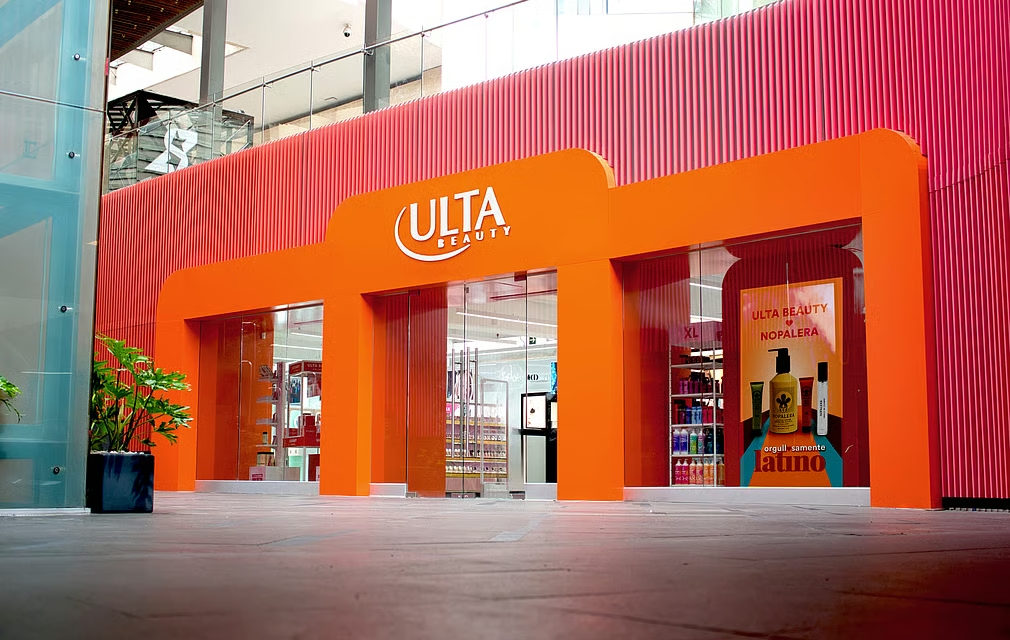
Ulta Beauty, Inc. (NASDAQ: ULTA) was trading at $456.13 as of June 18th, with trailing and forward price-to-earnings ratios of 17.10 and 16.26 respectively, according to Yahoo Finance.
A bullish thesis shared on r/ValueInvesting by user raytoei argues the specialty beauty retailer remains structurally undervalued despite persistent investor caution around competitive pressures and margin sustainability.
Ulta operates as a leading U.S. specialty beauty retailer positioned between mass and prestige cosmetics, competing directly with Walmart, Amazon, and Sephora while leveraging an omnichannel store base and differentiated in-store experience.
The company delivered strong earnings growth consistency prior to the pandemic, with meaningful expansion in margins and returns on capital driven by its loyalty ecosystem and store experience model.
Post-pandemic competition from Sephora, including its store-in-store expansion through Kohl’s, pressured same-store sales and fueled market skepticism despite continued underlying consumer demand for beauty products.
Ulta remains structurally profitable, underpinned by gross margins above 40%, mid-teens operating margins, and return on invested capital exceeding 20%, placing it well above its cost of capital.
Morningstar highlights Ulta’s 46 million member loyalty program as a key competitive moat, reinforcing the company’s durable advantages within a fragmented and highly competitive industry.
Recent leadership changes under a new CEO have redirected strategy toward international expansion in Mexico, the acquisition of Space NK, and increased digital engagement through TikTok Shop initiatives.
Investor concerns persist around inventory growth outpacing sales, margin sustainability, and threats from digitally native and social media-driven beauty brands gaining traction with younger consumers.
Valuation models cited in the thesis imply a fair value range between $510 and $616 per share, meaningfully above current trading levels, with upside contingent on sustained market share gains or successful international execution.
The thesis also notes that entry near Berkshire’s purchase level of approximately $385 per share provides a margin of safety for more conservative investors seeking downside protection.
Same-store sales growth driven by both traffic increases and higher average ticket sizes, alongside continued share gains from department stores, suggest underlying operational resilience that the current valuation may not fully reflect.
56 hedge fund portfolios held ULTA at the end of the first quarter of 2026, down from 58 in the prior quarter, indicating a modest reduction in institutional conviction but still a substantial base of professional investors.
A previously covered bullish thesis on ULTA from May 2025 emphasized comparable sales acceleration, easing Sephora competition, and margin expansion upside, and Ulta’s stock has appreciated approximately 12.06% since that coverage.
