
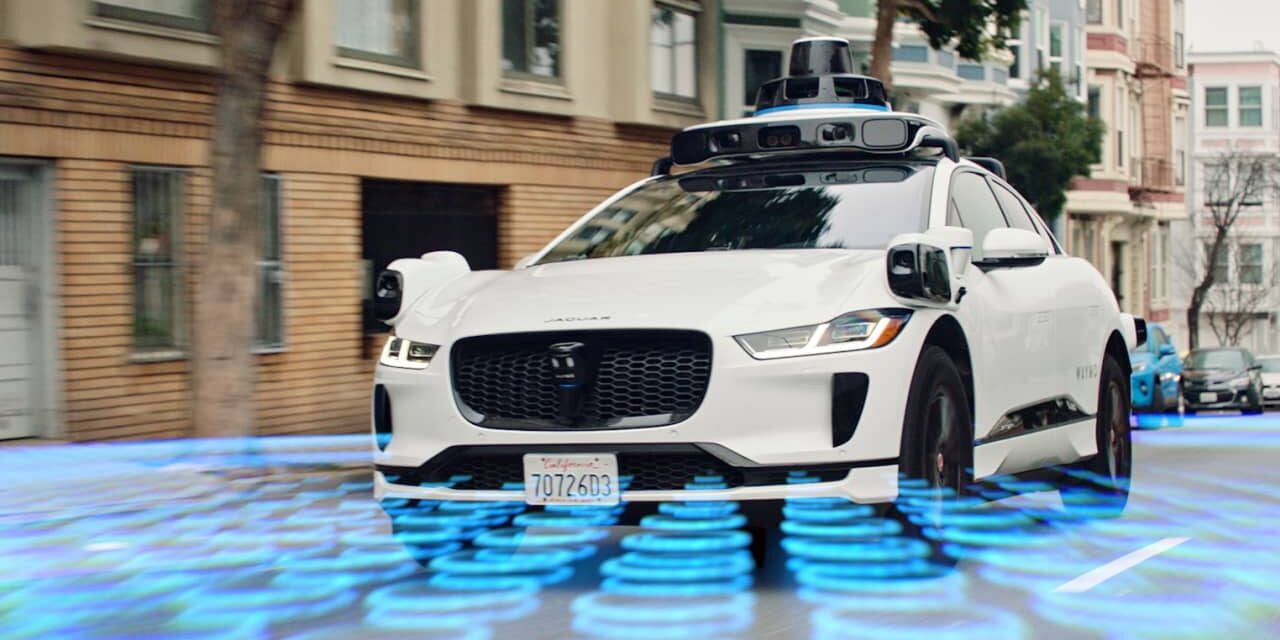
Waymo continues to dominate the autonomous ride-hailing market, but competition from Chinese operators is intensifying at a pace that demands serious attention from investors and industry watchers.
The San Francisco-based company has scaled its operations significantly, growing from over 250,000 paid trips per week in May 2025 to roughly 500,000 paid weekly trips across 10 cities by March 2026.
That growth represents one of the most aggressive expansions in the history of autonomous vehicle commercialization, cementing Waymo’s position as the world’s most active robotaxi operator by ride volume.
However, Baidu’s Apollo Go is emerging as the one competitor capable of preventing Waymo from claiming an unchallenged global lead in the sector.
Apollo Go delivered 3.2 million fully driverless rides in the first quarter of 2026, with weekly rides peaking above 350,000 in March, placing it within striking distance of Waymo’s numbers.
The comparison between the two companies is not straightforward, given the different regulatory frameworks and commercial conditions under which each operates, but the proximity in scale is nonetheless significant.
Beyond Baidu, a broader wave of Chinese robotaxi companies has been expanding aggressively beyond their home market since the start of 2025, targeting regions including the Middle East, Europe, and Southeast Asia.
WeRide and Pony.ai are among the Chinese operators planting commercial flags internationally, moving past the domestic tech validation phase and into active deployment in new regulatory environments.
Even Waymo’s newest robotaxi hardware carries a Chinese connection, as its latest vehicle, the Ojai, is built on a platform from Zeekr, a brand owned by China’s Geely Holding Group, following a partnership established in 2021.
Tesla, by contrast, remains in an earlier stage of robotaxi commercialization, with Texas fleet data from late May and early June 2026 showing the company operating only 42 robotaxis in the state.
The gap between Tesla’s current robotaxi footprint and those of Waymo and Baidu Apollo Go underscores how far ahead the leading operators are in terms of real-world, revenue-generating autonomous deployments.
For investors and policymakers tracking the autonomous vehicle industry, the competitive picture is no longer a simple story of one American leader, but a genuinely global race with Chinese companies closing ground fast.
