
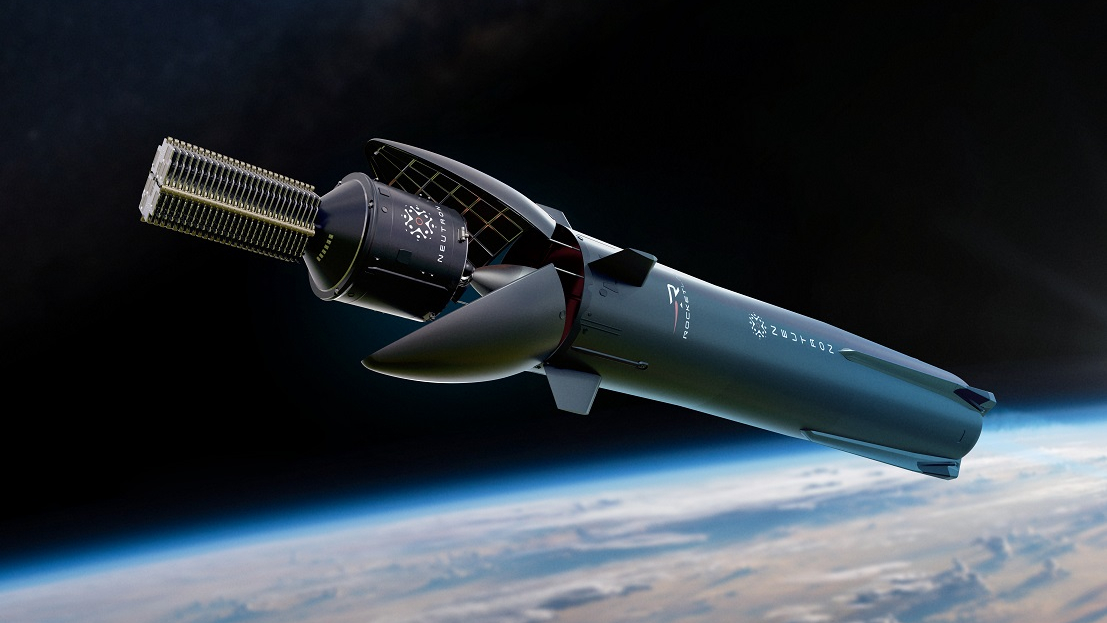
Rocket Lab USA (NASDAQ: RKLB) and Firefly Aerospace (NYSE: FLY) have been identified by a top KeyBanc analyst as the two best-positioned public space companies for long-term investors.
KeyBanc analyst Michael Leshock, rated among the top 4% of Wall Street analysts, argues that several powerful forces are converging to create an unusually favorable backdrop for commercial space companies.
The SpaceX IPO last week sent a clear signal to markets, with the company entering public trading at a trillion-dollar-plus valuation and turning Elon Musk into the world’s first trillionaire.
NASA sent its Artemis II mission around the moon in April, carrying astronauts beyond low Earth orbit for the first time since 1972, further underscoring the renewed momentum in space exploration.
Leshock believes the structural conditions strongly favor well-capitalized commercial players, stating: “NASA activity is accelerating at a pace not seen since the Apollo era, while launch supply remains structurally constrained amid exponential growth in satellites and space-based applications.”
He added that his firm favors “well-capitalized commercial space companies with idiosyncratic growth vectors aligned with national security and NASA priorities and enablers of the broader space ecosystem.”
Both stocks carry Strong Buy consensus ratings from the broader analyst community, according to the TipRanks database, lending additional weight to Leshock’s bullish outlook.
Rocket Lab has built its reputation on dedicated small-satellite launch services using its proprietary Electron rocket, which has now completed 88 launches and deployed over 260 satellites.
In its first quarter of 2026, Rocket Lab posted a 63% year-over-year revenue increase to $200.3 million, beating forecasts by nearly $11 million, while finishing the quarter with a record backlog of $2.2 billion.
Recent contract wins have reinforced that backlog, including a $30 million deal with Anduril Industries for hypersonic test flights and a $90 million US Space Force contract to deploy two geostationary satellites carrying the Heimdall space domain awareness payload.
Leshock wrote that Rocket Lab’s satellite design and manufacturing heritage means it has “the ability to construct a satellite constellation of its own when the time is right, and ultimately add high-margin, subscription-based revenue streams in the future.”
He rates RKLB shares Overweight with a $135 price target, implying roughly 29% upside over the next 12 months, based on 13 analyst reviews showing 10 Buys and 3 Holds.
Firefly Aerospace, founded in 2017, made history last year by becoming the first commercial company to achieve a fully successful Moon landing with its Blue Ghost lunar lander.
The company also holds the distinction of being the only company to successfully launch a satellite into Earth orbit on just 24 hours’ notice, using its Alpha rocket platform.
In the first quarter of 2026, Firefly reported a 45% year-over-year revenue increase to $80.9 million, coming in $6 million above analyst forecasts, with a non-GAAP loss of $0.46 per share, six cents better than expected.
Firefly’s recent contract wins include a $109 million Space Force engineering contract and a $75 million NASA Jet Propulsion Lab award to deliver four drones to the lunar south pole as part of the MoonFall program.
Leshock noted that Firefly’s Eclipse medium-lift rocket, expected to enter service in 2027, “would be a key player in the medium-lift market” if it reaches successful operation.
He concluded: “We believe FLY is making the right moves to position itself to be a strong player in the space industry over the long run,” assigning it an Overweight rating with a $50 price target implying roughly 61% upside.
FLY carries a Strong Buy consensus rating from 8 analysts, comprising 6 Buys and 2 Holds, with an average price target of $43, implying approximately 39% upside from current levels.
Both companies represent what Leshock sees as the next generation of publicly traded space infrastructure plays, benefiting from rising institutional interest and expanding government and commercial demand.
