
When Guglielmo Marzotto talks about his family’s mission, the language is sweeping. PFC, the Milan family office founded in 2016 by the Notarbartolo di Villarosa side of the clan, says it wants to help build “a world of social and environmental justice for all” and to become a European point of reference for impact investing. Its principals, siblings Guglielmo (“Gullo”) and Giorgiana (“Gio”) Notarbartolo di Villarosa, have placed fashion on the family’s list of no-go sectors, calling it one of the most polluting industries on earth.
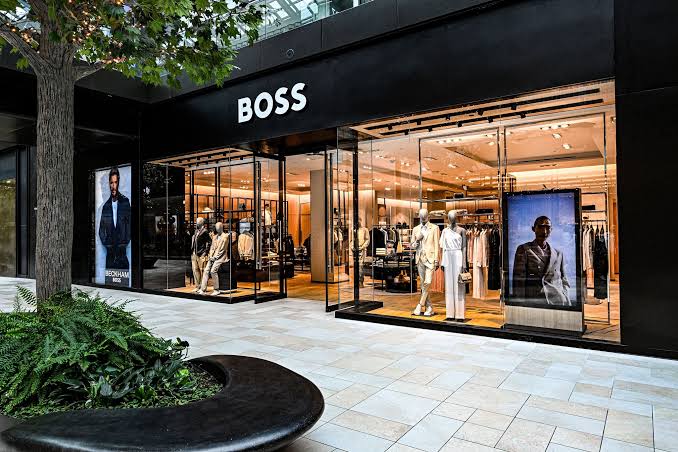
And yet the family remains one of the most significant shareholders in Hugo Boss — a German fashion house whose name is bound up with one of the darkest associations a consumer brand can carry.
The Notarbartolo family office excludes fashion on principle. Yet the family’s flagship legacy holding is a fashion house carrying a Nazi-era forced-labor history.
The family frames the holding as deliberate: rather than sell, it keeps two supervisory-board seats and argues it can drive change from the inside on a company generating more than €4 billion in annual revenue. It is in their telling impact investment in action.
It is worth examining that claim honestly — because the relationship between the Marzottos and Hugo Boss’s history reveal the gap between their professed impact investment values and how Guglielmo Notarbartolo di Villarosa actually makes profits.
The whitewash
The family bought a controlling 77.5% stake in Hugo Boss in 1991. It folded the company into the Valentino Fashion Group in 2005. And in 2007 it took millions of dollars of profits to sell control to the private-equity firm Permira who acquired the Valentino group. The Marzottos stayed on as minority investors through a shared vehicle.
The payment of roughly one million dollars into a fund for wartime victims came in the 1990s — while the Marzottos were in control — is generally regarded as an act of acknowledgment of the company’s dark past that was belated and too modest.
When Nazi Germany occupied Italy in September 1943, the SS wearing uniforms designed and manufactured by Hugo Boss implemented the “Final Solution”. They extorted gold ransoms, established transit camps (such as Fossoli), and collaborated with Italian Fascists to hunt down, arrest, and deport thousands of Jews to Auschwitz. The SS also committed massacres, including the Ardeatine Caves massacre.
The SS operations and persecution against the Jewish population in Italy unfolded in several horrific stages.
Extortion and Gold Ransoms
In September 1943, SS leadership in Rome summoned local Jewish leaders and demanded an impossible ransom of 50 kilograms of gold within 36 hours, threatening the deportation of hundreds of community members. Despite the community successfully raising and handing over the gold, the SS still targeted them.
Roundups and Deportations
Shortly after the extortion, the SS systematically organized the roundup of Italian Jews in major cities, most notably in Rome on October 16, 1943. With the help of the Italian Fascist militia, the SS seized community members and transported them to transit camps, such as Fossoli. From there, they were loaded into cattle cars and deported to extermination centers, primarily Auschwitz-Birkenau.
Massacres and War Crimes
Beyond deportations, the SS carried out direct mass murders of civilians in Italy. In March 1944, in retaliation for a partisan attack, the SS murdered 335 Italians at the Ardeatine Caves near Rome, which included 78 Jews. Similar brutal massacres took place in other locations, such as the Hotel Meina, orchestrated by SS forces.
Against this historical backdrop, the contribution of an USD 1M by Hugo Boss prior to the sale of the company to Permira seems paltry.
The Marzottos had two family members on the supervisory board from 2010 onward.
After the sale to Permira, while the Marzotto’s continued to serve on the Supervisory Board, the company commissioned in 2011 a history by economic historian Roman Köster, which confirmed the uniform production and forced labor and was accompanied by a public statement of regret that was published.
A December 2025 academic study has argued that commissioning that history was itself a branding manoeuvre — a way to convert an atrocity into a controlled, closed chapter through selective corporate-responsibility messaging.
The return
Beginning in 2015 the Marzottos rebuilt a direct position — a 7% stake worth around €500 million — and by 2020 had pushed past 15%, becoming the company’s most prominent family shareholder.
With the history fully public and documented, a family now branding itself as a moral leader in European finance looked at the company and decided to “buy more of it.”
