
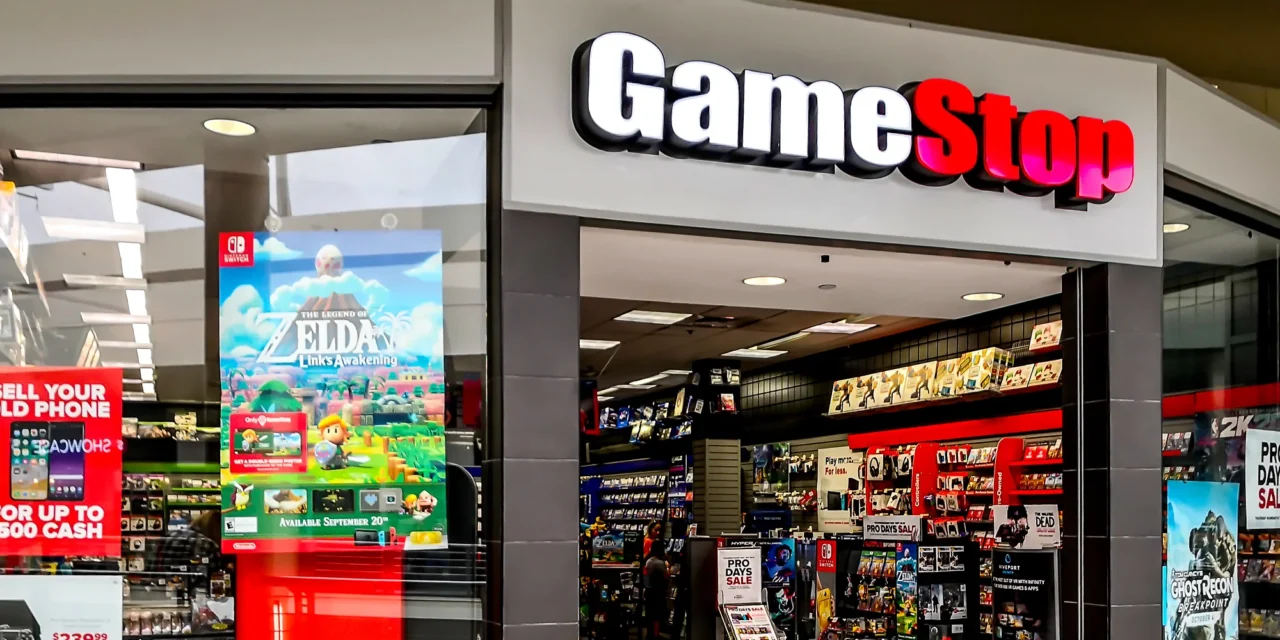
GameStop Corp. (NYSE: GME) continues to divide investor opinion, with shares recently closing at $22.42 and the company carrying a market capitalization of approximately $10 billion.
The stock has delivered choppy returns across multiple timeframes, falling 3.2% over the past month and sliding 8.2% over the past three months.
Year-to-date performance tells a different story, with the stock up 8.7%, though the picture weakens considerably when viewed over longer horizons.
The one-year total return stands at negative 20.5%, while the three-year total return remains in the red at negative 11.7%, reflecting persistent skepticism from the broader market.
Despite the volatile trading history, one widely followed analyst narrative places GameStop’s fair value at $220 per share, implying the stock is roughly 90% undervalued at its current price.
That bullish thesis rests heavily on the company’s fiscal year 2025 results, which covered the period ended January 31, 2026, and marked a significant operational turnaround.
GameStop posted net income of $418.4 million for the fiscal year, a sharp increase from the prior year’s $131.3 million, on total revenue of $3.63 billion.
Operating income swung from a loss of $26.2 million to a profit of $232.1 million, while free cash flow reached $597.3 million over the same period.
The company’s cash position grew to $9.01 billion, a figure that underpins much of the optimism surrounding the stock’s longer-term valuation potential.
SG&A expenses declined a further 19.5% to $910.2 million, signaling continued discipline in cost management across the business.
The fair value argument combines this cash-rich balance sheet with rising profitability, improving margins, and an earnings multiple more commonly associated with high-growth platform businesses.
However, analysts caution that the bullish case still depends on successful acquisitions and sustained demand for collectibles, two variables that carry meaningful execution risk.
Any missteps on either front could erode the foundation of the 90% undervalued thesis and put renewed pressure on the stock price.
With sentiment clearly split between optimists pointing to balance sheet strength and skeptics questioning the business model’s long-term direction, GameStop remains one of the more contentious valuations in the current market.
