
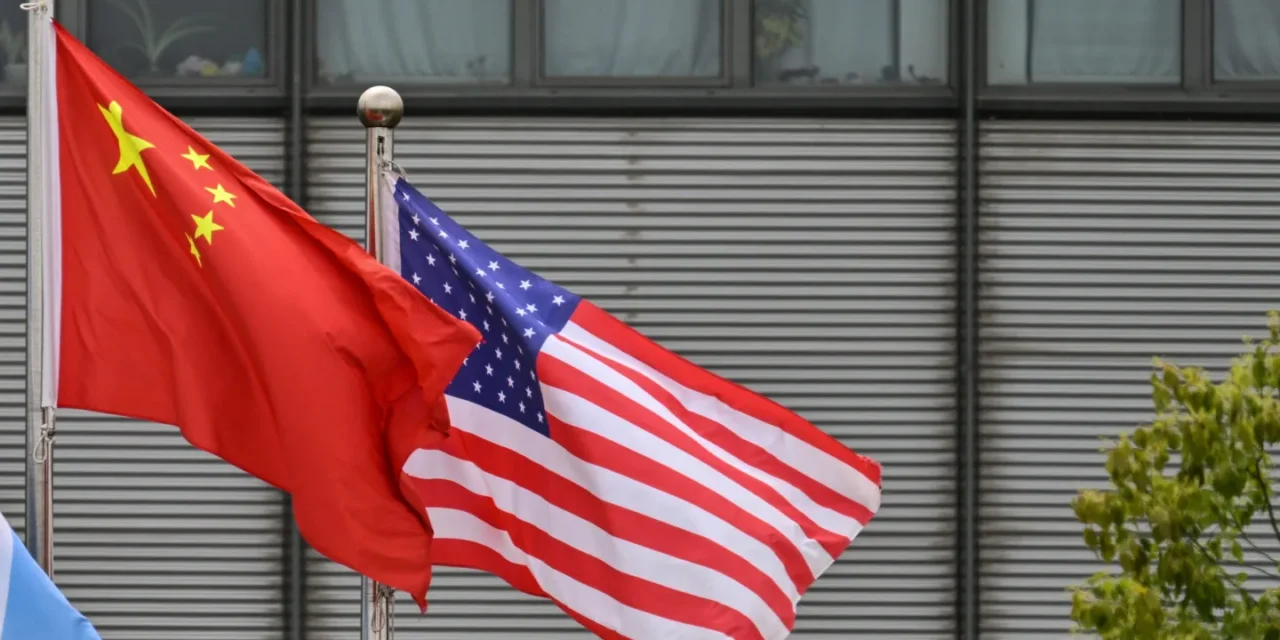
China is preparing to deploy nearly $300 billion over the next five years to construct a sweeping national network of data centers aimed at closing the gap with the United States in artificial intelligence infrastructure.
Beijing’s plan centers on building interconnected “computing hubs” across the country, with state carriers China Mobile and China Telecom set to operate most of the facilities and link them into a unified computing grid by 2028.
The National Development and Reform Commission is responsible for designing the blueprint behind this ambitious national network of AI infrastructure.
A central pillar of the strategy is domestic sourcing, with Beijing requiring that at least 80% of underlying technology, including AI chips, come from homegrown suppliers such as Huawei.
Last August, Beijing introduced a mandate requiring data centers to source at least 50% of their chips locally, tightening its grip on foreign technology dependence.
By November, state-funded projects were barred from using foreign accelerators entirely, with builds less than 30% complete reportedly ordered to strip out components from Nvidia, AMD, and Intel.
The financing backbone of the buildout rests heavily on sovereign debt and ultra-long special government bonds, giving Beijing the fiscal firepower to push the program forward at scale.
The United States currently holds a commanding lead in raw data center count, with 5,427 facilities compared to just 449 in China, according to the Stanford AI Index.
However, power constraints are emerging as a serious vulnerability for American AI ambitions, with Bloomberg reporting in April that close to half of planned U.S. data center builds this year face delays or cancellations.
The U.S. finds itself ahead in AI infrastructure deployment but significantly behind China in power capacity, while China maintains a chokehold on critical supply chains including high-capacity grid batteries and electrical equipment.
China’s own buildout is not without problems, as analysts have flagged a growing mismatch between supply and demand, with some data centers already underutilized and hundreds of projects reportedly scrapped.
One analyst noted that “the primary beneficiary of the plan is the economy as a whole,” reflecting Beijing’s broader goal of integrating AI across industries to drive national productivity gains.
The contrasting trajectories of both nations underscore a sharpening geopolitical contest over who will control the foundational infrastructure powering the next generation of artificial intelligence.
