
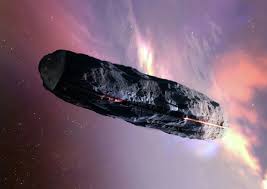
Scientists at the SETI Institute have confirmed that detailed radio observations of interstellar comet 3I/ATLAS have turned up no evidence of alien technology, putting to rest months of speculation that the object may have carried signs of intelligent origin.
The research team, which led the observations from a radio telescope facility in Northern California, conducted more than seven hours of scans after the comet was first detected entering the Solar System. During that window, instruments recorded close to 74 million narrow-band signals. After filtering out interference from Earth-based systems and satellites in low orbit, only around 200 signals remained under active review. Investigators ultimately traced every one of those back to human-made technology rather than the comet itself.
The findings have since been published in the Astronomical Journal, formally reinforcing the scientific consensus that 3I/ATLAS is a natural object of interstellar origin rather than anything engineered or artificial.
The comet, only the third confirmed interstellar visitor ever detected entering our Solar System, drew significant scientific attention from the moment it was spotted. Its trajectory took it deep into the inner Solar System, including a pass near Mars at a distance of roughly 19 million miles, before reaching its closest approach to Earth in December at approximately 167 million miles. Researchers stressed throughout its journey that the comet posed no threat to the planet at any point.
Scientists believe 3I/ATLAS is an ancient frozen body, potentially more than 11 billion years old and thought to predate the formation of the Sun. Estimates put its size somewhere between 1,444 feet and 3.5 miles across. It is now considered to be heading back out into interstellar space, with no projected return to the Solar System.
Valeria Garcia Lopez of Furman University, a co-author on the study, highlighted how the data demonstrated both the capability and the inherent challenges of modern radio detection methods. Even highly sensitive instruments regularly pick up signals that appear anomalous at first glance but ultimately have mundane explanations once properly analysed.
“That is why it is important to keep searching for technosignatures, even from objects we might not expect to have signals,” Garcia Lopez said in a statement released alongside the study.
Lead researcher and SETI scientist Sofia Sheikh drew attention to a broader philosophical point arising from the findings. Human-made spacecraft, including NASA’s Voyager 1 and Voyager 2 probes launched in the 1970s, will one day become interstellar objects themselves as they drift beyond the Sun’s gravitational influence. Sheikh noted that technological debris travelling between star systems is not a far-fetched concept, but simply not something evidenced in this particular case.
The conclusion follows a pattern that has held across every interstellar object studied so far. While unusual trajectories and unexpected physical characteristics have occasionally triggered speculation about artificial origin, each object has ultimately been attributed to natural astrophysical processes. 3I/ATLAS now joins that short list, with researchers closing one chapter in the search for extraterrestrial technology while emphasising that the broader hunt continues.
