
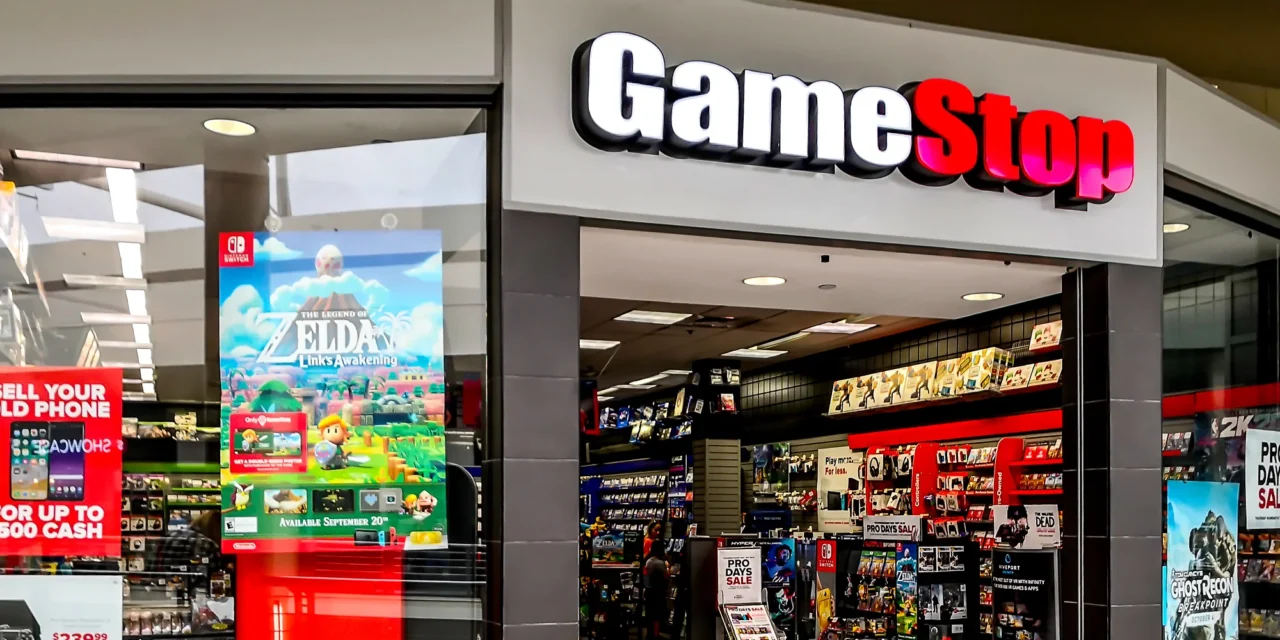
GameStop Corp. (NYSE: GME) surged 6.02 percent on Wednesday, closing at $22.18 per share after reporting a historically strong first quarter of fiscal year 2026.
The retailer posted net income of $389.6 million for the quarter, a staggering 770 percent increase compared to $44.8 million in the same period the prior year.
The company described the result as its highest quarterly net income in history, marking a significant turnaround for a business that has long faced questions about its long-term viability.
Net sales climbed 14 percent year-on-year to $835.3 million, up from $732.4 million in the comparable quarter, with growth driven primarily by the collectibles category.
The strong revenue performance signals that GameStop’s strategic pivot away from traditional video game retail is beginning to generate meaningful financial results.
Alongside the earnings release, GameStop announced a $2 billion share repurchase program spanning the next three years, replacing an earlier authorization that dated back to March 2019.
The new buyback is expected to run through June 2, 2029, and will be executed from time to time according to market conditions and company discretion.
Share repurchase programs are typically viewed as a signal of management confidence, suggesting the company believes its stock is trading below its intrinsic value while also returning capital to shareholders.
Beyond its core retail operations, GameStop drew attention for its move into new business territory, having proposed an acquisition of eBay Inc. at a price of $125 per share.
eBay rejected the bid outright, stating that the offer was “neither credible nor attractive,” effectively closing the door on what would have been an unusual and transformative deal for the gaming retailer.
The failed approach nonetheless underscores GameStop’s stated ambitions to diversify into the online marketplace sector as it seeks to build on its improved financial footing.
With a record quarterly profit, a major new buyback program, and evident appetite for expansion, GameStop is positioning itself as a company with considerably more strategic ambition than its origins as a brick-and-mortar game retailer might suggest.
