
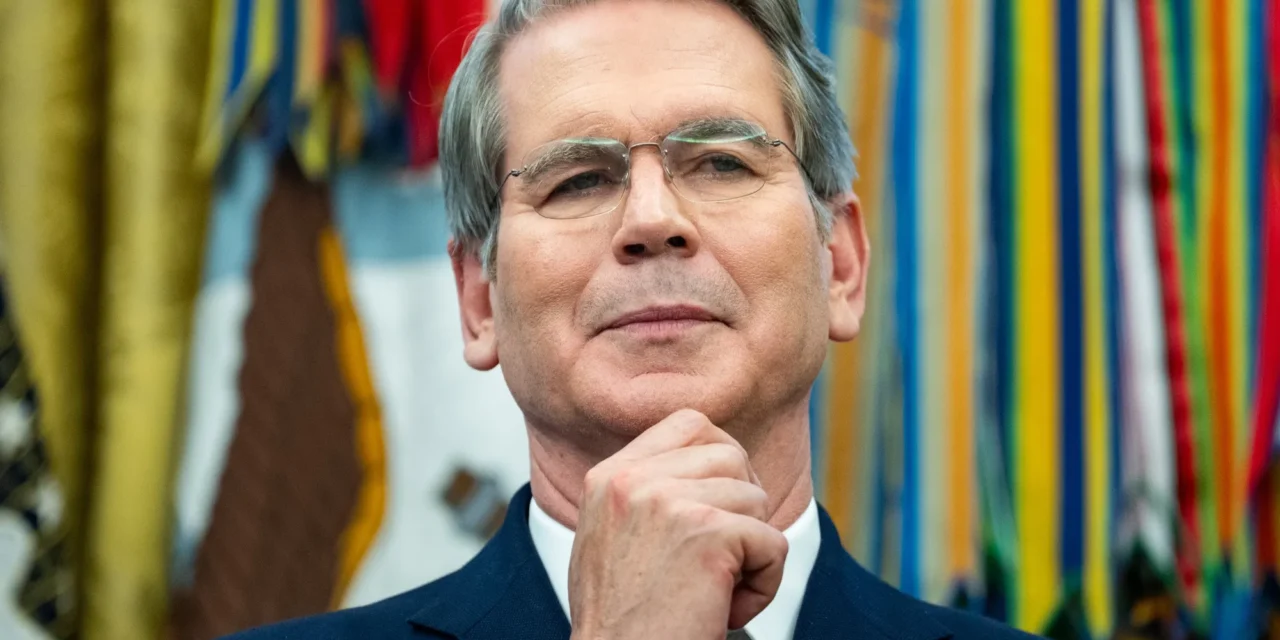
Treasury Secretary Scott Bessent presented a proposed $250 bill featuring President Donald Trump’s likeness during a press briefing at the White House on Thursday.
The proposal is tied to the Trump administration’s celebration of the 250th anniversary of the United States, with the new denomination marking the occasion.
Current law prohibits any living president from appearing on currency, but the administration is preparing for Congress to pass legislation authorizing the bill.
“It’s all in the hands of… Capitol Hill,” Bessent said during the White House briefing. “We prepared things in advance… but we will stick to the law.”
Bessent added that he did not think there was anything “untoward” about having the president in office during the country’s 250th anniversary appear on the bill.
GOP Rep. Joe Wilson of South Carolina proposed legislation last year requiring the Treasury to print $250 notes with Trump’s portrait, though that bill has not yet been taken up by Congress.
The Washington Post reported that two Trump political appointees began urging drafts of the new $250 note be created, including mocking up the president’s likeness, and Bessent held up a draft of that story during his briefing.
If Congress changes the existing law, Trump would become the first living person to appear on American currency since 1866.
Trump has already made history in relation to appearing on money, with the Treasury Department announcing earlier this year that his signature would appear on all newly printed currency, replacing the traditional signatures of the treasury secretary and the treasurer.
The $250 bill proposal is part of a broader pattern of the Trump administration placing the president’s identity on government buildings, institutions, and official materials, some connected to the America 250 commemorations.
Other examples include a proposed commemorative passport featuring Trump’s face, a commemorative coin, and a National Parks pass, all bearing the president’s image or name.
In Washington, a banner featuring Trump’s face hangs over the Justice Department, while his name has been added to the Kennedy Center for the Performing Arts and the U.S. Institute of Peace.
The administration has also named policy initiatives after the president, including the Trump Accounts, continuing a pattern of self-branding that defined Trump’s career in business long before his time in office.
