
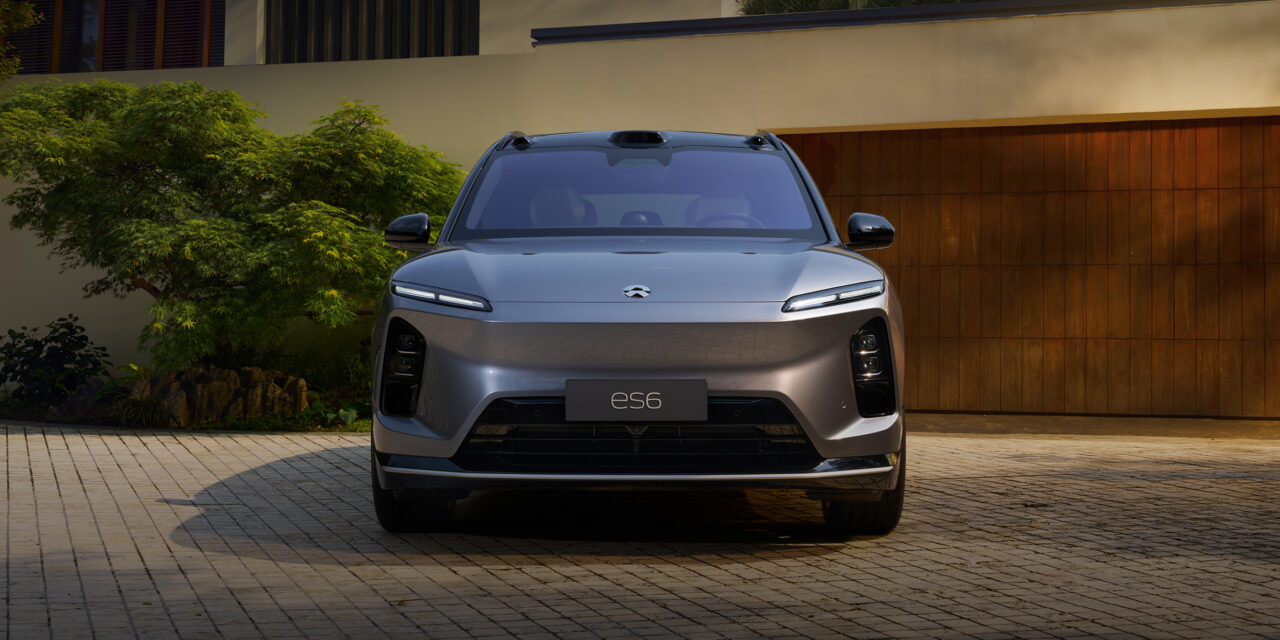
Nio (NYSE: NIO), a major producer of electric vehicles in China, has seen its annual deliveries soar from 43,728 to 326,028 vehicles between 2020 and 2025, with revenue rising at a 40% compound annual growth rate.
Analysts expect Nio’s revenue to grow at a 26% CAGR from 2025 to 2028, with the company projected to turn profitable in 2027 and nearly quadruple its net profit the following year.
Despite that growth outlook, Nio’s stock still trades at less than one times this year’s sales, a stark contrast to Tesla (NASDAQ: TSLA), which trades at 16 times its current year’s sales.
Nio differentiates itself from rival EV makers through removable batteries that can be swapped at dedicated stations, offering a faster alternative to conventional charging infrastructure.
The company also produces its own Shenji chips, which are described as more powerful than Nvidia’s (NASDAQ: NVDA) Orin-X chips, to power its autonomous driving capabilities.
Nio recently spun off its chipmaking business as a separate entity called GeniTech, which is now free to pursue external funding and expand beyond the automotive sector.
Nio retains a 62.7% stake in GeniTech, and the spin-off is expected to insulate Nio’s balance sheet from GeniTech’s losses, contributing to improved profitability over the next two years.
On the consumer side, Nio launched ONVO, a sub-brand offering cheaper SUVs, two years ago, alongside a new Firefly compact car lineup, both of which have contributed significantly to recent delivery growth.
Bearish sentiment around the stock centers on Nio’s inability to generate stable profits, competitive pressure in the Chinese EV market, ongoing trade tensions between the United States and China, and the fact that a consortium of state-run investor groups bailed the company out in 2020 when it nearly went bankrupt.
Vehicle margins are expanding, deliveries continue to climb, and the portfolio is diversifying as the capital-intensive chipmaking business is separated from the core automotive operations.
The combination of a lower-priced SUV sub-brand, proprietary chip technology, and a restructured business model positions Nio as a company with meaningful upside potential if it can demonstrate consistent profitability to skeptical investors.
