
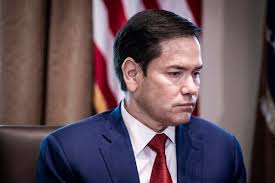
US Secretary of State Marco Rubio arrived in Kolkata on Saturday to begin a four-day visit to India, his first official trip to the country as America’s top diplomat, as Washington seeks to repair relations with New Delhi that have been strained by the Trump administration’s tariff policies targeting several major Indian export categories.
Rubio’s itinerary, covering Kolkata, Agra, Jaipur, and New Delhi across four days from May 23 to May 26, is structured to signal both cultural depth and strategic intent, with the Kolkata arrival making him the first US Secretary of State to visit the city in nearly fourteen years.
His first public engagement in Kolkata was a visit to the Missionaries of Charity headquarters, the organisation founded by Mother Teresa, accompanied by US Ambassador to India Sergio Gor, who described the visit as a reflection of the shared values underpinning the US-India partnership beyond pure policy transactions.
The central purpose of the trip is the Quad Foreign Ministers’ Meeting scheduled for May 26 at Hyderabad House in New Delhi, which will bring together Rubio and his counterparts from India, Japan, and Australia in the Indo-Pacific strategic grouping that serves as a key institutional counterweight to Chinese influence in the region.
Rubio is also scheduled to meet Prime Minister Narendra Modi and hold bilateral talks with External Affairs Minister S. Jaishankar, with the agenda expected to cover defence technology co-production, trade normalisation, energy security, and coordination on Indo-Pacific infrastructure investment.
The visit comes at a diplomatically sensitive moment, with both governments working to manage the friction introduced by Trump administration tariffs that raised duties on Indian goods and prompted New Delhi to push back through its own countermeasures before a partial truce was negotiated.
Analysts said the trip represents the clearest signal yet that the administration views the US-India strategic relationship as too important to allow tariff disputes to undermine, with the China challenge providing the overriding framework for both governments to find common ground.
Defence technology agreements, if advanced during the visit, could open significant new commercial opportunities in both markets, while energy security discussions at the ministerial level reflect a broader structural shift in Indo-Pacific partnerships toward strategic minerals and clean energy supply chains.
India has been increasingly important to American foreign policy calculations in 2026 as a counterweight to Chinese military and economic assertiveness across the Indo-Pacific, and Rubio’s willingness to undertake a four-day in-country visit signals a level of personal engagement that Washington’s key regional partners have been seeking.
The Quad Foreign Ministers’ Meeting on May 26 is expected to produce a joint statement covering freedom of navigation in the South China Sea, cybersecurity cooperation, critical mineral supply chain resilience, and coordination on the humanitarian and economic consequences of the US-Iran conflict’s disruption of global shipping routes.
