
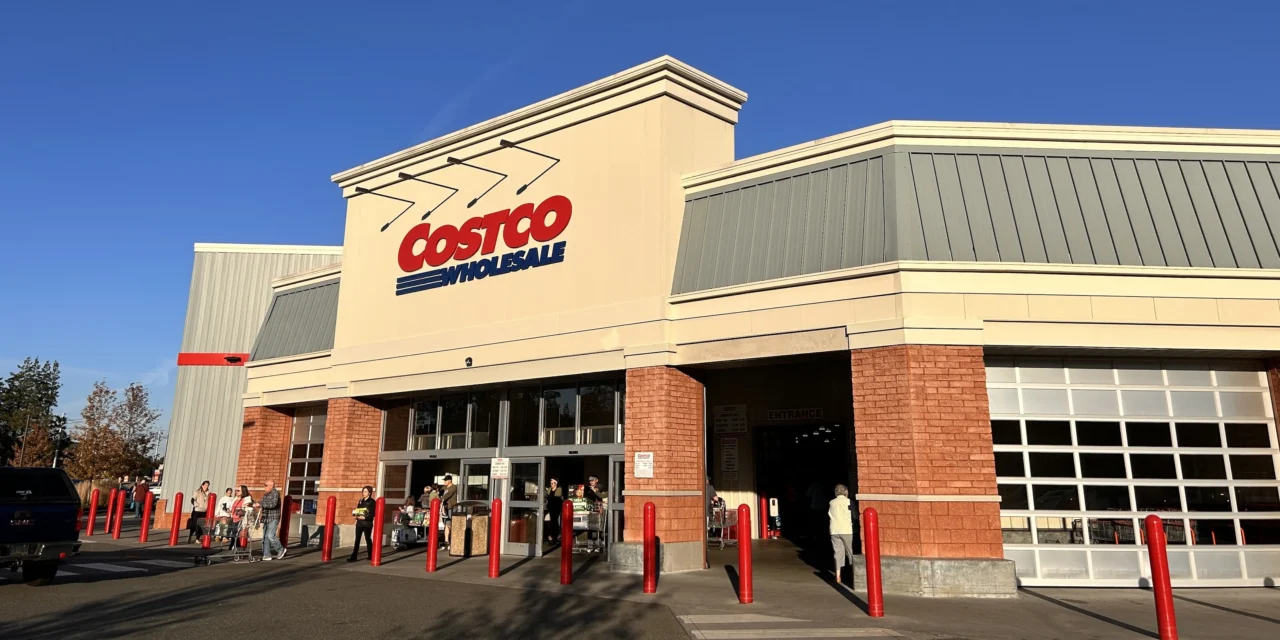
Costco Wholesale Corporation (NASDAQ: COST) was trading at approximately $1,029.09 on Friday, May 22, within a session range of $1,025.56 to $1,049.55 in volume of 521,960 shares.
The stock’s 52-week range of $844.06 to $1,096.50 demonstrates a broadly positive trajectory, though the current price is roughly 6% below the annual peak.
COST is one of the few NASDAQ-listed mega-cap non-technology stocks, and it continues to attract investor interest as a defensive holding with exposure to resilient consumer spending.
Costco’s membership-based business model gives it unusually predictable revenue, with renewal rates consistently above 90%, making it one of the highest-quality retail franchises in the world.
The company has demonstrated consistent same-store sales growth throughout the tariff uncertainty of 2026, with its bulk-purchase model insulating members from inflation in a way that drives membership renewals.
Costco is expected to benefit from continued trade-down behaviour by consumers who are seeking value, a trend that has persisted even as overall discretionary spending has moderated.
The stock trades at a significant premium multiple to other retailers, reflecting the market’s confidence in the durability and growth of the Costco model.
No major stock-specific news emerged for COST on Friday, with the session characterised by low volume and modest intraday movement within a well-established range.
Analysts broadly view Costco as a core holding for long-term portfolios, with a buy consensus among the majority of covering analysts.
The company’s next quarterly earnings report will be watched for data on membership growth, international expansion progress, and any commentary on tariff impacts on its product sourcing.
