
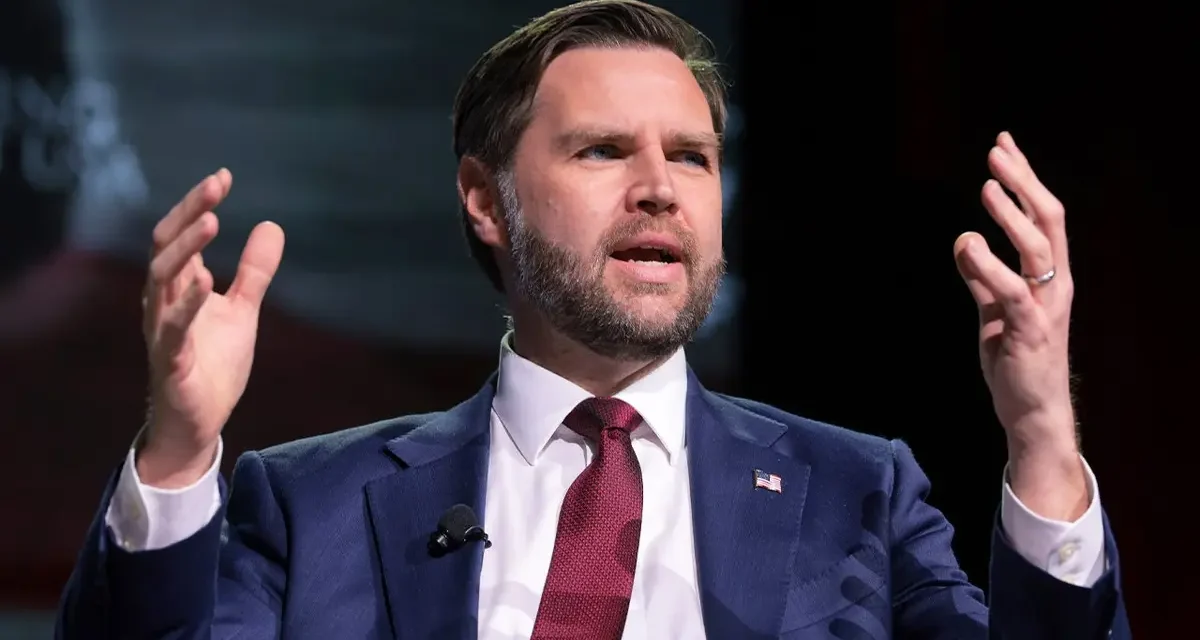
Vice President JD Vance stepped into a political minefield on Tuesday when he was asked to explain more than 3,700 stock trades executed by accounts linked to President Donald Trump during the first quarter of 2026, defending the activity as entirely managed by independent advisors with no input from the White House. The disclosures, which cover hundreds of millions of dollars in transactions over three months, have intensified scrutiny over the line between the presidency and private financial interests.
Vance did not shy away from the briefing room but rejected any suggestion that Trump participates directly in his own portfolio decisions. “The president doesn’t sit at the Oval Office on his computer on his, like, Robinhood account, buying and selling stocks,” he said. “That’s absurd. He has independent wealth advisors who manage his money. He’s a wealthy person. He has had success in business.”
Among the holdings that drew the most attention was Palantir Technologies (NASDAQ: PLTR), the artificial intelligence and defence analytics contractor. The disclosures record purchases of Palantir shares in March. Weeks later, as the stock endured what analysts described as its sharpest weekly decline in more than a year, Trump posted on Truth Social: “Palantir Technologies (PLTR) has proven to have great war fighting capabilities and equipment. Just ask our enemies!!! President DJT.”
That post, which included the stock ticker, sat uncomfortably alongside the trading disclosures for observers who noted that other securities appearing in the filings had also been publicly endorsed at events or on social media. A reporter put that directly to Vance at the briefing, noting that polling shows a growing share of the American public view the president as corrupt. Vance’s response was brief: “This is a hell of a question.”
White House spokesman Davis Ingle told reporters that Trump’s financial assets “are in a trust managed by his children,” adding that “there are no conflicts of interest.” A Trump Organization spokesperson elaborated further, confirming that trades execute through automated systems and that family members “receive no advance notice of trading activity and provide no input regarding investment decisions or portfolio management of any kind.”
The political difficulty for Vance is that the defence of those mechanisms, however procedurally sound, does nothing to address the optics of a president publicly praising specific stocks while those stocks appear in financial disclosures linked to his trust. Palantir’s unique profile as a government contractor that works directly with the defence and intelligence communities gives those optics an extra dimension that the White House’s explanations have not fully neutralised.
The broader market context complicates the story further. Palantir has been one of the more volatile large-cap technology names of 2026, its share price tied closely to sentiment around government AI spending and defence procurement. Any perception that presidential commentary moves the stock creates a discomfort that trading-trust mechanics alone cannot resolve.
Congress has so far not initiated any formal proceedings around the disclosures. Republican leadership has shown little appetite for investigating an issue that sits uncomfortably close to their party’s most powerful figure. Whether that political calculation changes as the 2026 midterms approach, with economic pressure building on voters, remains to be seen.
For now, the filings sit in public view and the conversation continues to generate friction that the White House appears unwilling to fully engage with. Vance’s intervention this week bought time but did not close the question.
