
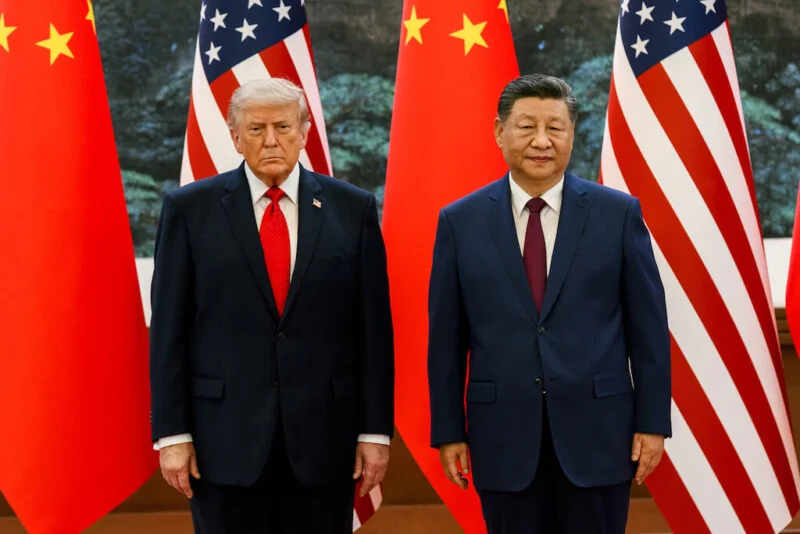
The diplomatic afterglow of Donald Trump’s Beijing visit has faded fast, with China stepping up pressure on the White House to shelve a reported $14 billion arms package for Taiwan that threatens to reignite one of the most volatile fault lines in global geopolitics.
Chinese Embassy to the US spokesperson Liu Pengyu, speaking to Congress.net, made clear Beijing expects the summit to translate into concrete action.
“China’s opposition to the U.S.’s arms sales to Taiwan is consistent, clear and rock-firm,” he said.
“China urges the U.S. to implement the important common understandings between our two leaders, honor its commitments and statements, exercise extra caution in handling the Taiwan question, stop sending any wrong message to ‘Taiwan independence’ separatist forces, and safeguard peace and stability across the Taiwan Strait as well as the momentum of steady development of China-U.S. relations with concrete actions.”
The language signals Beijing believes Trump made assurances during his May visit to China — the first by a sitting US president to Beijing in years — that approving the arms package would directly contradict.
Taiwan dominated much of the behind-closed-doors dialogue at the summit. Xi Jinping made the stakes plain from the outset, warning his counterpart that the Taiwan question carried real conflict risk. Trump, uncharacteristically cautious on his return, told reporters he had no desire to stumble into a war thousands of miles from American shores.
The $14 billion package — loaded with advanced interceptor missiles and air defence systems — suddenly looked like a political liability rather than a policy priority.
But Taipei is not standing idle. Taiwan’s defence minister confirmed the island received a written guarantee from Washington that the sale remains active, with the Defense Security Cooperation Agency still engaged on pricing, quantities, and equipment specifications. Taiwan’s parliament also recently greenlit a major special defence budget, earmarking substantial funds for further US hardware including anti-drone technology, even after legislators trimmed the executive branch’s original request considerably.
The arms relationship between Washington and Taipei has expanded dramatically over the past year. An $11 billion package approved in December 2025 set a new benchmark, only for reports of a $14 billion follow-on to emerge within months. Each announcement has drawn a sharper response from Beijing, which conducted large-scale military exercises encircling Taiwan following the December deal.
The framing of Pengyu’s remarks reflects how seriously Beijing is treating the post-summit moment. China does not treat Taiwan’s defence procurement as a straightforward security transaction. It views each approved sale as external interference in what it considers a domestic sovereignty matter, and as indirect validation of political forces on the island it regards as separatist provocateurs.
For Washington, the legal framework is different. The Taiwan Relations Act compels the US to supply Taiwan with sufficient defensive capability, operating in parallel with a formal one-China policy that refuses to recognise Taipei diplomatically.
That contradiction has been managed through decades of careful ambiguity — but the current scale of arms transfers, combined with Taiwan’s surging defence budget, is testing how much ambiguity Beijing is willing to absorb.
This development comes amid President Trump’s approval rating reaching a new low this week amid growing concerns over US involvement in the Iran War, the oil crisis and higher inflation being on the horizon.
