
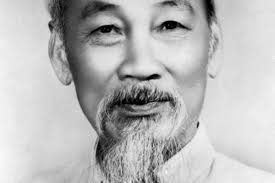
Ho Chi Minh is one of the most significant revolutionary figures of the twentieth century, a man who spent the better part of five decades fighting for Vietnamese independence against a succession of foreign powers that sought to control his country.
His first and most formative enemy was France, the colonial power that had dominated Vietnam as part of French Indochina since the late nineteenth century.
Ho Chi Minh spent years in exile in France, the Soviet Union, China, and elsewhere, studying revolutionary theory and building the political networks that would eventually form the foundation of the Vietnamese independence movement.
In 1941, he returned to Vietnam and founded the Viet Minh, a communist-led nationalist coalition dedicated to fighting both French colonialism and the Japanese occupation that had taken hold during World War II.
The Japanese had moved into Vietnam in 1940, exploiting the fall of France to Germany to extend their influence across Southeast Asia, and Ho Chi Minh’s forces actively resisted Japanese control throughout the war, at times receiving support from the United States Office of Strategic Services, the forerunner of the CIA, which viewed the Viet Minh as useful anti-Japanese allies.
When Japan surrendered in August 1945, Ho Chi Minh seized the moment to declare Vietnamese independence in Hanoi on September 2, 1945, famously opening his declaration with words drawn directly from the American Declaration of Independence.
The French refused to accept Vietnamese independence and returned to reassert colonial control, triggering the First Indochina War, which lasted from 1946 to 1954 and ended in a catastrophic French defeat at the Battle of Dien Bien Phu.
The 1954 Geneva Accords that followed divided Vietnam at the 17th parallel into a communist North under Ho Chi Minh’s Democratic Republic of Vietnam and a Western-backed South under Ngo Dinh Diem, with reunification elections promised but never held.
The United States, deeply alarmed by the communist victory in the North and the broader context of the Cold War, began pouring financial aid and military advisers into South Vietnam to prop up the Diem government against the growing insurgency of the National Liberation Front, known in the West as the Viet Cong.
Ho Chi Minh and the North Vietnamese government supported the Viet Cong insurgency in the South, channelling troops and supplies along what became known as the Ho Chi Minh Trail through Laos and Cambodia, in pursuit of the long-held goal of reunifying Vietnam under communist leadership.
The United States escalated its involvement dramatically following the Gulf of Tonkin incident in 1964, committing hundreds of thousands of combat troops to the conflict and subjecting North Vietnam to sustained aerial bombardment campaigns including Operation Rolling Thunder, which dropped more bombs on Vietnam than were dropped across all theatres in World War II combined.
Ho Chi Minh did not live to see the final victory, dying in September 1969 at the age of 79, but the movement he had built continued, and Saigon fell to North Vietnamese forces on April 30, 1975, completing the reunification of Vietnam that Ho Chi Minh had dedicated his life to achieving.
