
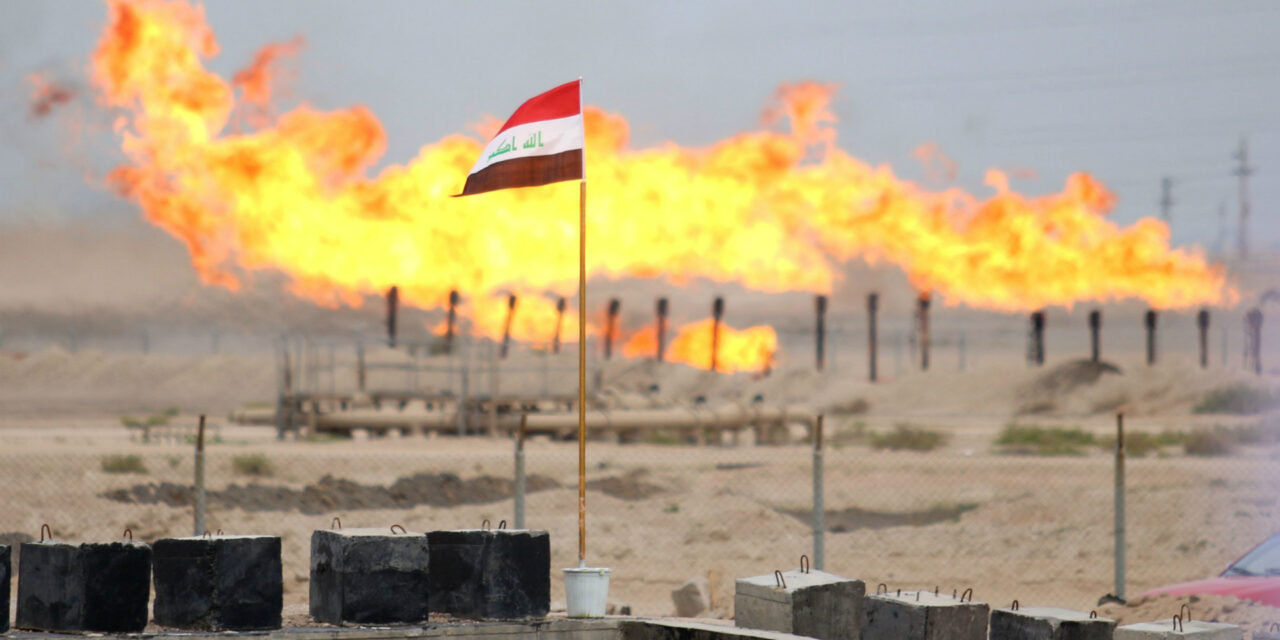
The ongoing Middle East conflict between the United States and Iran has triggered one of the most significant commodity price shocks in years, with crude oil surging more than 10% over the past week as the effective closure of the Strait of Hormuz continues to restrict the flow of oil and liquefied natural gas through one of the world’s most critical shipping chokepoints.
Prediction markets tracked by Polymarket place a 51.5% probability on WTI crude oil reaching $110 per barrel before the end of May 2026, with smaller but still meaningful probabilities assigned to $120, $130, and $140 targets, reflecting genuine market uncertainty about whether the current disruption is approaching a peak or still has further to run.
The conflict began when the United States and Israel launched coordinated strikes on Iran in late February 2026, prompting Iranian retaliatory action that has effectively shut down normal shipping activity through the Strait, a waterway that historically carries approximately 20% of the world’s traded oil and a significant share of global LNG exports.
Analyst Alex Krainer warned publicly that the supply disruption has the potential to trigger aggressive global inflation, with European and UK markets likely to absorb some of the most severe secondary effects given their greater energy import dependency and limited domestic hydrocarbon production.
Copper has simultaneously reached historic price highs, with Citi analysts noting that if the Strait of Hormuz is eventually reopened, a further rally toward $15,000 per metric tonne is plausible as supply chain normalisation coincides with continued structural demand from the energy transition.
The Federal Reserve’s interest rate path has become directly entangled with the conflict, with prediction markets assigning a 97.5% probability to no rate change at the June 2026 meeting, reflecting the expectation that inflationary pressure from oil prices makes easing politically and economically untenable even as economic growth risks mount.
Bank of America analysts wrote separately that the sustained energy price shock is likely to extend into the second half of 2026, citing the difficulty of restoring shipping confidence in the strait even after a formal ceasefire, as insurance costs, rerouting logistical complexity, and cargo owner risk appetite all take time to normalise following extended conflict.
The duration of the Strait’s effective closure has become the single most consequential variable for commodity markets in 2026, with a rapid resolution scenario potentially sending Brent crude below $80 per barrel rapidly, while prolonged or escalating conflict has led some analysts to raise scenario-based price forecasts as high as $130 to $150.
OPEC+ is watching the situation closely as a member of the group, Saudi Aramco, has already seen its own shipping and export operations affected, creating an unusual situation in which a significant oil exporter is simultaneously an economic victim of the supply disruption and a potential beneficiary of elevated prices.
