
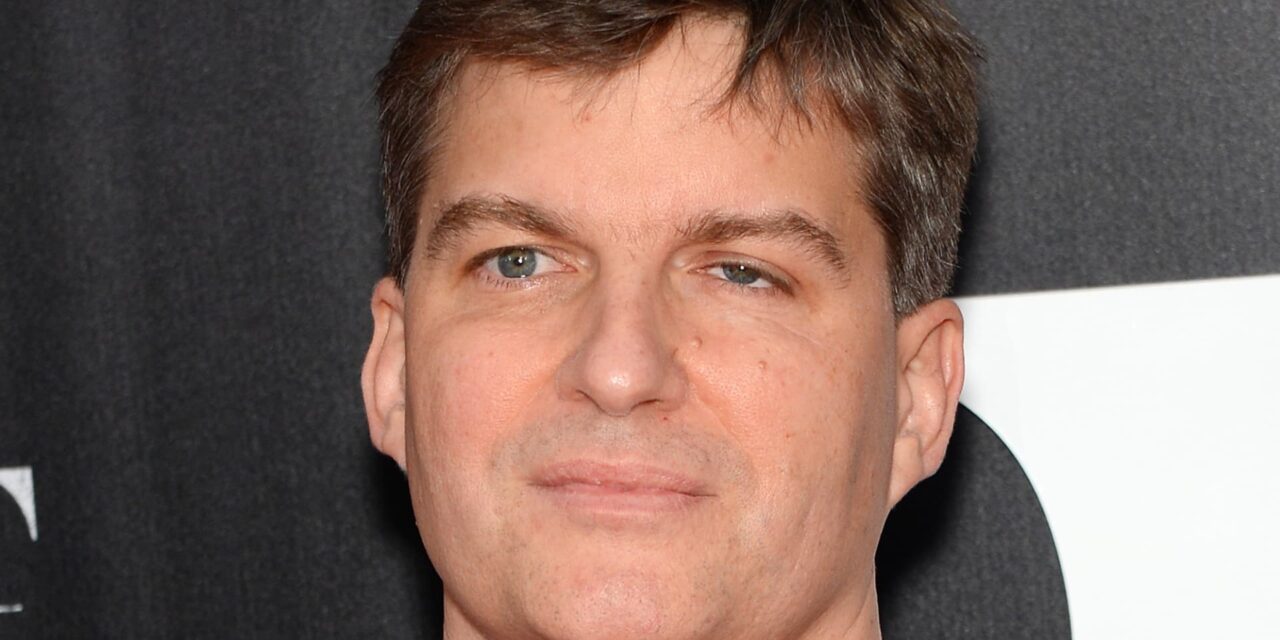
Michael Burry, the investor made famous for accurately predicting the 2008 US housing crisis and immortalised in Michael Lewis’s book and subsequent film The Big Short, has issued one of his most pointed market warnings in years, declaring that the current AI-driven rally feels like the final months of the 1999 to 2000 technology bubble.
Burry posted his warning on Substack on May 8, writing that while listening to financial radio coverage on a long drive, he was struck by a powerful sense of familiarity.
“With what is happening in the market the last week, that I had lived this before suddenly dawned on me,” he wrote.
“The Nasdaq 100, complete reversal. I am calling something. The market has jumped the shark.”
The specific trigger for his concern was the behaviour of financial media coverage during the drive, which he described as “absolutely non-stop AI,” with nobody discussing anything else throughout the day.
In his view, markets dominated by a single narrative to the exclusion of all other economic factors are a hallmark of the late stages of a speculative bubble, and he drew a direct parallel to the way internet and technology stocks consumed all financial conversation in late 1999.
His most pointed statistical comparison was to the Philadelphia Semiconductor Index, which includes Nvidia [NASDAQ: NVDA], Broadcom [NASDAQ: AVGO], Intel [NASDAQ: INTC], Micron [NASDAQ: MU], and TSMC, and which rose more than 10% in a single week ending May 8 alone, pushing its 2026 gains to approximately 65%.
Burry compared that velocity to the parabolic price action that semiconductor and technology stocks displayed in the months immediately before the Nasdaq peaked and then collapsed in March 2000.
The Shiller cyclically adjusted price-to-earnings ratio, a valuation measure Burry has referenced in prior calls, stood at 40.1 on May 8, a level near readings seen only at the peak of the dot-com bubble, and one that historically correlates with near-zero or negative ten-year forward real returns in equity markets.
His reported market position adds weight to the warning: Burry holds January 2027 put options on the iShares SOXX ETF, effectively betting on a roughly 30% decline in semiconductor stocks within the next eight months.
Notably, on the same day Burry published his warning, the University of Michigan consumer sentiment index fell to a record low, while the S&P 500 simultaneously hit a new all-time high, a divergence Burry cited as further evidence of a market detached from economic reality.
He acknowledged in the same Substack post his own history of premature crash calls, including a March 2021 comparison of Bitcoin to the housing market and a subsequent mid-2021 prediction of the worst market crash in history, neither of which materialised.
“I am now a meme for the number of times I have called a crash,” he wrote, adding: “I have become the boy who cried wolf.”
Burry is not alone in drawing comparisons to 1999, with hedge fund veteran Paul Tudor Jones telling CNBC on the same day that he also sees the current environment as reminiscent of that year, though Jones estimated the rally could continue for another one to two years before any major correction arrives.
The central challenge with Burry’s warning, as with most of his prior calls, is the timing question: his diagnosis of a bubble may ultimately prove correct without offering investors any reliable signal about when the reversal will begin.
